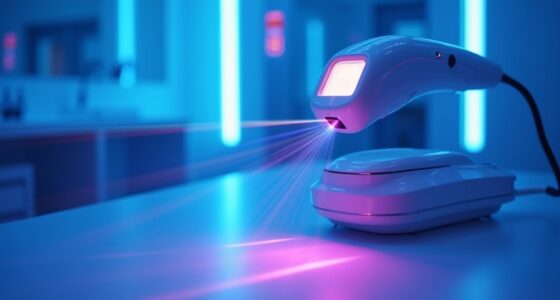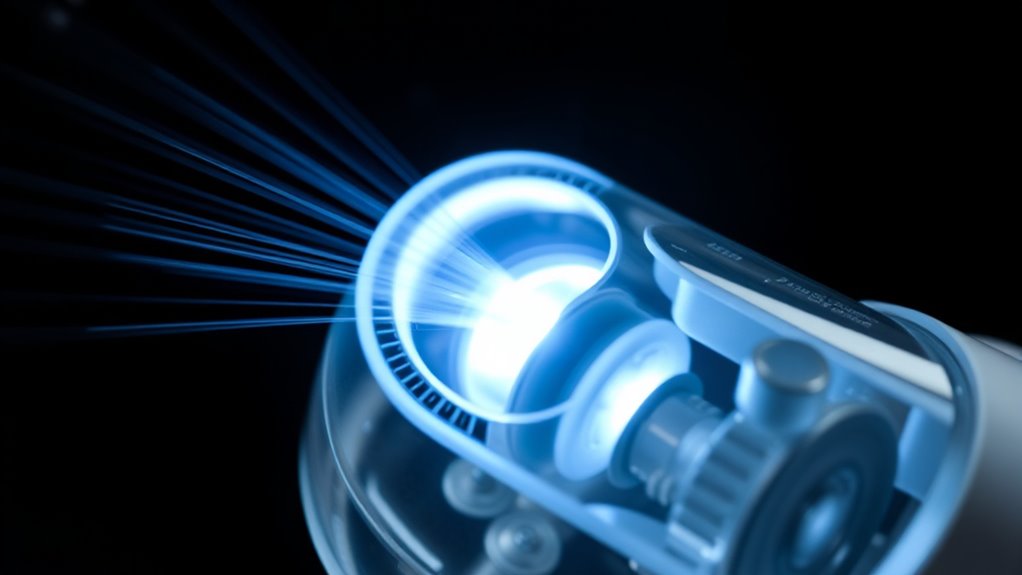

IPL technology uses broad-spectrum light to target multiple skin concerns at once. It emits various wavelengths through a handheld device, aiming at melanin in hair follicles and hemoglobin in blood vessels. This heats and disables targeted structures, helping with hair reduction and skin rejuvenation. Unlike laser, IPL covers more areas with less downtime and invasiveness. To understand how this safe, effective technology can work for you, keep exploring the details.
Key Takeaways
- IPL uses broad-spectrum light to target multiple skin concerns simultaneously by emitting various wavelengths through a handheld device.
- It selectively heats and disables structures like hair follicles and blood vessels by targeting melanin and hemoglobin.
- Unlike laser, IPL emits multiple wavelengths, allowing for versatile treatments such as hair removal, pigmentation, and skin rejuvenation.
- Proper calibration and safety measures, including protective eyewear and cooling, ensure effective and safe IPL procedures.
- IPL stimulates collagen production, improving skin elasticity, reducing aging signs, and promoting overall skin rejuvenation.
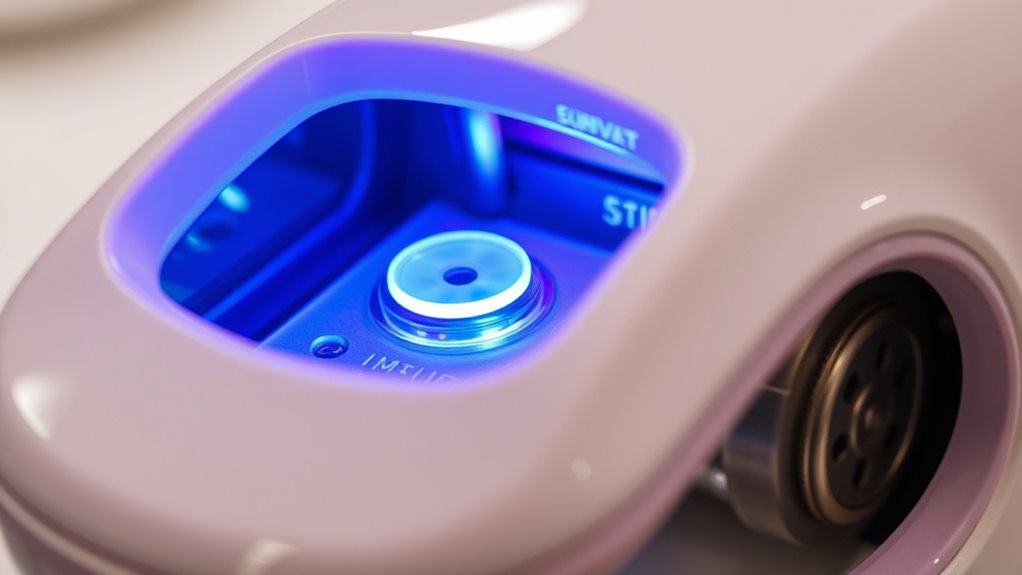
Have you ever wondered how IPL technology effectively removes hair or treats skin imperfections? Intense Pulsed Light (IPL) is a versatile treatment that uses broad-spectrum light to target various skin concerns. Unlike laser treatments, which emit a single wavelength, IPL delivers multiple wavelengths through a handheld device, allowing it to treat multiple issues in one session. When you undergo IPL therapy, the light penetrates your skin and is absorbed by specific targets, such as melanin in hair follicles or hemoglobin in blood vessels. This process heats and disables these structures, leading to hair reduction or the improvement of skin imperfections like redness, pigmentation, and fine lines.
One of the key factors in IPL treatments is understanding laser safety. Although IPL devices are generally safe when operated by trained professionals, it’s essential to follow safety guidelines to avoid potential side effects. Protective eyewear is mandatory during treatments to shield your eyes from intense light exposure. The device’s settings are carefully calibrated based on your skin type and the area being treated, minimizing risks like burns or pigmentation changes. Proper cooling mechanisms are also integrated into IPL devices to protect your skin and reduce discomfort during sessions. Knowing that the equipment adheres to safety standards helps you feel confident about the procedure’s safety and effectiveness.
Safety is paramount: always wear protective eyewear and trust calibrated devices operated by professionals.
In addition to hair removal, IPL is widely used for skin rejuvenation. It stimulates collagen production, which enhances skin elasticity and reduces fine lines and wrinkles. The light energy promotes blood circulation and encourages the regeneration of new skin cells, resulting in a more youthful, radiant complexion. IPL treatments can also diminish age spots, sun damage, and uneven pigmentation, providing a clearer skin tone. Many people choose IPL for skin rejuvenation because it’s minimally invasive with little downtime, making it suitable for busy lifestyles. Over a series of sessions, you’ll notice your skin becoming smoother, brighter, and more evenly toned. It’s an effective way to address skin aging and damage with a treatment that’s less aggressive than some laser options.
Understanding how IPL works and prioritizing laser safety ensures you make informed decisions about your skin health. Whether you’re aiming for hair removal or skin rejuvenation, knowing the science behind the technology helps you appreciate its benefits and limitations. When performed by a qualified professional, IPL can be a safe, efficient way to enhance your appearance and boost your confidence. Just remember, clear communication with your technician about your skin type and concerns is crucial for achieving ideal results while maintaining safety. Additionally, educating yourself about lifestyle factors that impact skin health can help maximize the benefits of IPL treatments.
Frequently Asked Questions
Is IPL Suitable for All Skin Types and Hair Colors?
IPL is not suitable for all skin types and hair colors. You should consider your skin compatibility, as IPL works best on fair skin with darker hair. People with darker skin tones or very light blonde, red, or gray hair may not see ideal results due to hair color limitations. To guarantee safety and effectiveness, consult a professional to assess your skin and hair before trying IPL treatments.
How Many Treatments Are Typically Needed for Effective Results?
You typically need around 6 to 8 IPL treatments for effective hair reduction, but this varies based on your hair and skin type. Treatment schedules are usually spaced 4 to 6 weeks apart to target hair in different growth phases. Consistency is key, so follow your technician’s advice to achieve the best results. Most people see significant reduction in hair after completing the recommended treatment course.
Are There Any Side Effects or Risks Associated With IPL?
You might wonder if IPL has risks—yes, but they’re usually minor. You could experience skin irritation or temporary pigment changes, which are common and typically fade quickly. Serious side effects are rare, especially when performed by a trained professional. Keep in mind, your skin’s response varies, so following aftercare advice minimizes risks. Overall, IPL is a safe, powerful tool for skin rejuvenation, with manageable side effects.
Can IPL Be Used on Sensitive or Delicate Skin Areas?
Yes, you can use IPL on sensitive or delicate skin areas, but you should be cautious. If you have skin sensitivity or thinner skin, consult your practitioner first. They may recommend adjusting the treatment settings or using a lower energy level to guarantee safety. Always follow professional advice to minimize risks and ensure treatment safety, especially in delicate areas where skin sensitivity is higher.
How Does IPL Compare to Laser Hair Removal?
You’ll find IPL is generally less expensive and offers shorter treatment durations compared to laser hair removal. While laser targets specific follicles with precise wavelengths, IPL uses broad-spectrum light, making it suitable for larger areas and a more cost-effective option. However, laser often provides faster, more permanent results, especially on darker hair and skin types. Consider your budget and desired results to choose the best option for you.
Conclusion
Now that you understand how IPL technology works, you’ll see its potential for effective hair reduction. Did you know that over 80% of users report significant hair reduction after just a few sessions? This statistic highlights IPL’s efficiency and growing popularity as a long-term solution. So, if you’re considering it, rest assured that IPL offers a scientifically backed, safe, and increasingly trusted method to achieve smoother skin.