
When combining LED therapy with topical skincare ingredients, you can boost your skin’s healing and rejuvenation. Apply antioxidants like vitamin C or E before your session to enhance cellular activity, and use hydrating agents such as hyaluronic acid afterward to support recovery. Avoid irritating ingredients like retinoids on treatment days to prevent sensitivity. Proper timing and product choice can maximize your results—keep going to discover how to get the most out of your skincare routine with LED therapy.
Key Takeaways
- Applying antioxidants like vitamin C before LED sessions enhances skin brightness and supports cellular recovery.
- Use hydrating ingredients such as hyaluronic acid post-treatment to maximize moisture and regeneration.
- Avoid retinoids and acids immediately before or after LED therapy to prevent irritation and sensitivity.
- Schedule LED treatments on non-irritating skincare days to optimize effectiveness and minimize adverse reactions.
- Combining LED with calming, nourishing products post-session promotes skin healing and enhances overall results.

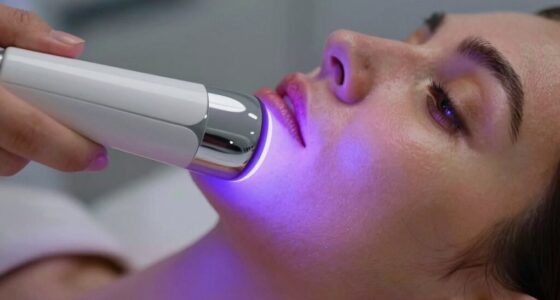
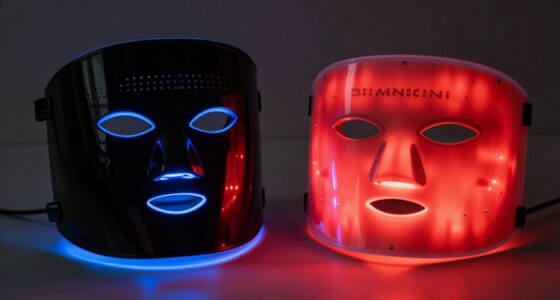
LED therapy has gained popularity for its ability to improve skin health and combat signs of aging, but understanding how it works alongside skincare ingredients can maximize your results. When you combine LED light treatments with the right skincare formulations, you create a powerful synergy that enhances the effectiveness of both. LED light, especially in specific wavelengths like red and near-infrared, penetrates deep into your skin, stimulating cellular activity and boosting collagen production. This process helps reduce fine lines, wrinkles, and inflammation, making your skin look firmer and more youthful. However, the way you incorporate skincare ingredients into your routine plays a vital role in amplifying these benefits.
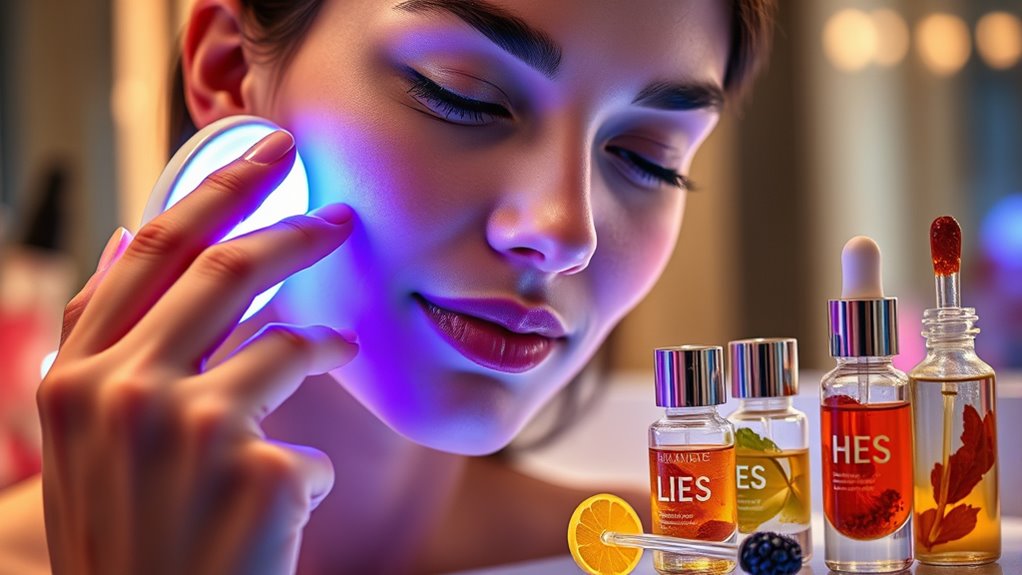
Certain ingredients work well with LED therapy because they complement the cellular responses triggered by light exposure. For instance, antioxidants like vitamin C and E can protect your skin from free radical damage while supporting collagen synthesis. When applied before or after LED sessions, these antioxidants can enhance your skin’s resilience and brightness. Likewise, ingredients like hyaluronic acid provide hydration, ensuring your skin stays plump and smooth during treatment. Using moisturizing formulations with hyaluronic acid or glycerin can prevent dryness and maximize the skin’s capacity to absorb nutrients during and after LED therapy.
On the other hand, some skincare formulations need to be used with caution. Ingredients like retinoids or acids, such as glycolic or salicylic acid, can increase skin sensitivity. If you plan to use these, it’s best to schedule your LED treatments on days when you’re not applying potentially irritating products. Alternatively, you can apply retinoids after LED sessions once your skin has calmed down, allowing the light therapy to work without interference. Always patch test new formulations and consult with a skincare specialist to avoid adverse reactions.
Another important aspect is the timing of your skincare routine. For maximum results, apply active ingredients either before your LED session to allow deeper penetration or after to support recovery and regeneration. Some professionals recommend applying calming and nourishing formulations post-treatment to reduce redness and promote healing. Remember, compatibility is key—some ingredients may diminish the effectiveness of LED therapy if they cause photosensitivity or irritation.
Frequently Asked Questions
Can LED Therapy Replace Topical Skincare Treatments Completely?
LED therapy can’t replace topical skincare treatments completely. It offers benefits like skin rejuvenation and reduced inflammation, but it doesn’t address all skin concerns alone. You need to take into account ingredient interactions and your treatment frequency for ideal results. Combining LED therapy with your regular skincare routine can enhance overall skin health, but relying solely on LED therapy isn’t enough for thorough care. Use both for the best outcomes.
How Long Should I Wait Between LED Sessions and Applying Skincare Products?
Think of your skincare routine as a well-choreographed dance. For best results, wait about 30 minutes between LED sessions and applying skincare products. This timing guideline ensures proper product layering without interference, allowing LED therapy to maximize its benefits. Rushing the process can diminish effectiveness, so give your skin space to absorb each treatment fully—your glow depends on the perfect rhythm of your skincare dance.
Are There Any Skin Types That Shouldn’t Combine LED With Certain Ingredients?
If you have sensitive skin, you should be cautious about combining LED therapy with certain ingredients. Some ingredients, like retinoids or acids, may cause irritation when used before or after LED sessions. Always consult with a dermatologist to avoid adverse ingredient interactions. For sensitive skin, it’s best to keep skincare simple around LED treatments, avoiding harsh products that could increase redness or discomfort during or after the therapy.
Is It Safe to Use LED Therapy Daily Alongside Active Skincare Ingredients?
Daily LED therapy can be safe if your skin isn’t sensitive or prone to irritation. However, you should be cautious because certain active ingredients, like retinoids or acids, might interact with light therapy, causing redness or discomfort. Always listen to your skin’s signals, start slowly, and consult a skincare professional if you notice any sensitivity or unusual reactions. Proper precautions prevent problems and promote healthy, harmonious skin.
Do Certain Skincare Ingredients Reduce or Enhance LED Therapy’s Effectiveness?
Certain skincare ingredients can impact LED therapy’s effectiveness through ingredient interactions. For example, ingredients like retinoids or acids may cause skin sensitivity, reducing LED benefits. Conversely, hydrating ingredients like hyaluronic acid are compatible and can enhance your skin’s response. To maximize results, check ingredient compatibility and avoid using harsh actives immediately before or after LED sessions. Always consult with a skincare professional to tailor your routine safely.
Conclusion
By combining LED therapy with the right skincare ingredients, you’re giving your skin a powerful boost. This duo can help improve your complexion and boost confidence. Remember, Rome wasn’t built in a day—patience and consistency are key to seeing results. Stay committed to your skincare routine, and you’ll find that the right combination can truly transform your skin over time. Trust the process, and watch your skin flourish.