
Many believe whitening lights drastically speed up teeth whitening, but studies show the active ingredients in gels—like hydrogen peroxide—are responsible for actual results. Lights mainly support the process but don’t substantially improve whitening, often serving as a marketing tool. If you want a brighter smile, focus on choosing products with proven ingredients instead of relying solely on lights. To learn more about how to get the best results, keep exploring.
Key Takeaways
- Whitening lights mainly activate gel ingredients, but studies show they do not significantly accelerate whitening results.
- The real whitening power comes from active ingredients like hydrogen peroxide, not the light itself.
- Marketing claims overstate the benefits of lights, often leading consumers to overlook effective gel formulations.
- Proper use of the active ingredients is essential for safe, effective whitening; lights are largely a supporting tool.
- Focusing on quality whitening gels and professional advice yields better results than relying solely on lights.

Smileactives Teeth Whitening Gel, Clinical-Grade Hydrogen Peroxide for Long Lasting White Teeth – Simply Add to Toothpaste to Permanently Remove Coffee Stains & More, 2 oz
BRIGHT AND VIBRANT SMILES: Enhance your confidence with a white smile! Smileactives Pro Whitening Gel helps you achieve…
As an affiliate, we earn on qualifying purchases.
As an affiliate, we earn on qualifying purchases.
Do Whitening Lights Actually Work?
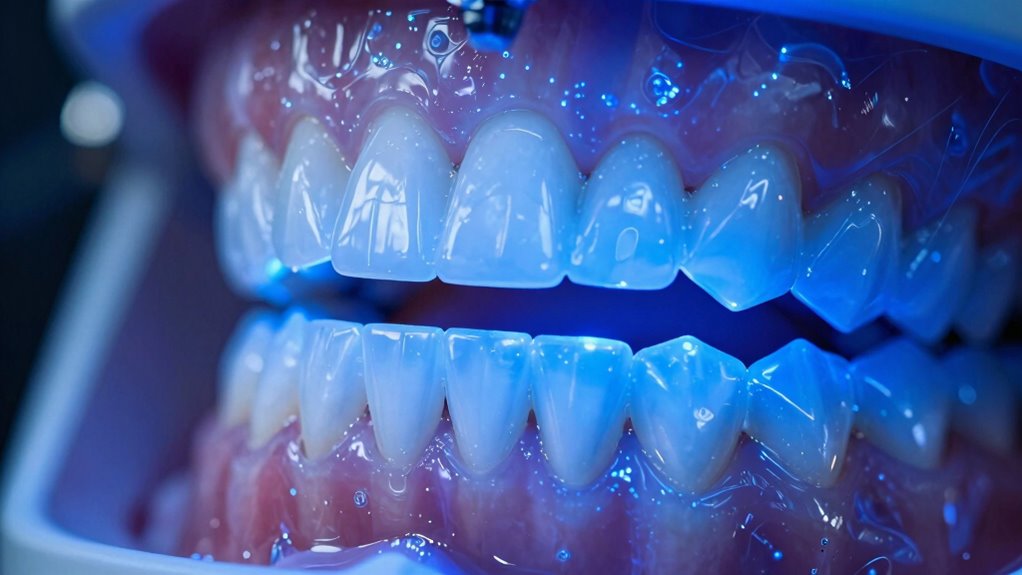
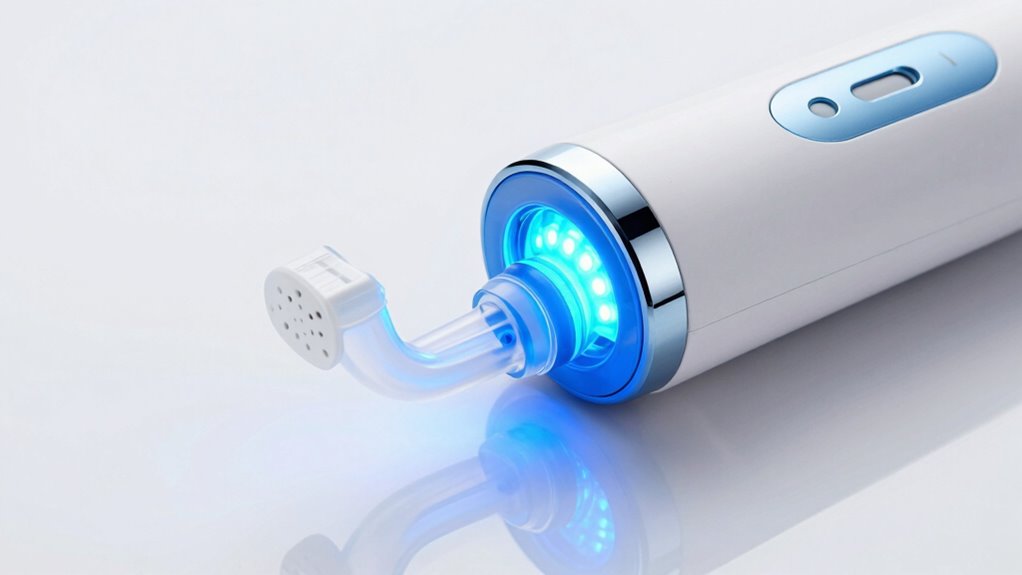
Do whitening lights actually deliver on their promises? Many people believe that LED illumination boosts teeth whitening results instantly. However, the truth is that these lights mainly serve to activate bleaching agents applied to your teeth. The LED emits specific wavelengths that can accelerate the chemical reaction of bleaching agents, but this effect is often minimal without the proper formulation of these agents. While some clinics claim that the light enhances whitening speed and effectiveness, scientific evidence is limited. If you’re considering a whitening treatment, remember that the real power lies in the quality of the bleaching agents used. The light itself isn’t a magic solution; it’s a tool that may support the process but doesn’t guarantee dramatic results on its own. Additionally, the light activation process is often overemphasized, and many experts argue that the primary factor is the strength and composition of the bleaching gel used. Research shows that scientific evidence supporting the effectiveness of whitening lights remains scarce, and understanding the chemical process can help set realistic expectations. Furthermore, clinical studies indicate that patient outcomes are often comparable whether or not a light is used during whitening procedures. An understanding of light’s role in activation can help consumers make more informed choices about whitening options.

Auraglow Teeth Whitening Kit, LED Accelerator Light, 35% Carbamide Peroxide Teeth Whitening Gel, 20+ Whitening Treatments, Whitens up to 10 Shades in 7 Days
POWERFUL WHITENING KIT — Most powerful teeth whitening kit that uses an LED light with 35% carbamide peroxide…
As an affiliate, we earn on qualifying purchases.
As an affiliate, we earn on qualifying purchases.
What’s in Teeth Whitening Gels That Makes a Difference?
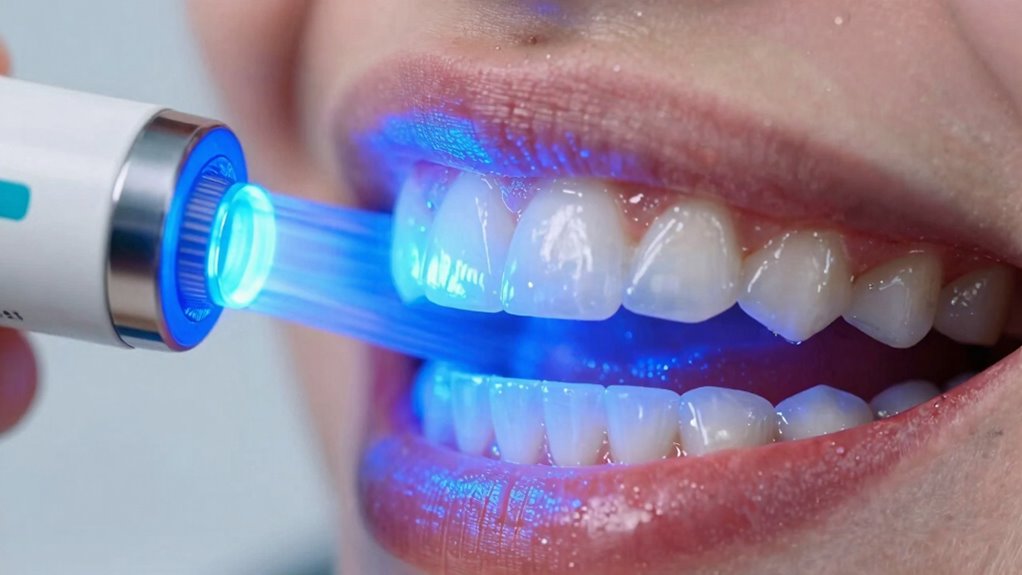
The main ingredients in teeth whitening gels that make a real difference are bleaching agents, primarily hydrogen peroxide or carbamide peroxide. These active ingredients break down stains and brighten your teeth through oxidation. The gel composition, including ingredient focus, determines how effectively it penetrates enamel and delivers results. Different formulations have varying concentrations, impacting speed and sensitivity. Here’s a quick look at common ingredients:
| Ingredient Focus | Effect | Purpose |
|---|---|---|
| Hydrogen Peroxide | Fast whitening | Breaks down stains quickly |
| Carbamide Peroxide | Gradual whitening | Converts to hydrogen peroxide |
| Glycerin | Moisturizes | Prevents dryness |
| Carbomer | Gel consistency | Ensures even application |
| Sodium Hydroxide | pH balance | Stabilizes formula |
Understanding gel composition helps you choose the right product for your needs. Active ingredients play a crucial role in how effectively the whitening process works and influence the overall safety of the product. Recognizing the ingredient focus can help consumers select products that align with their desired results and sensitivities. Additionally, formulation stability is essential to ensure the product maintains its effectiveness over time and avoids unwanted reactions. Proper formulation also ensures product safety, minimizing risks of irritation or adverse effects during use.

White Teeth Global 10 Syringes (3ml) New Strongest 44% Carbamide Peroxide Teeth whitening Gel (Mouth Trays NOT Included)
***This offer is for Gel ONLY *** Mouth trays are sold SEPARATELY.
As an affiliate, we earn on qualifying purchases.
As an affiliate, we earn on qualifying purchases.
How Do Whitening Lights Claim to Speed Up Results?
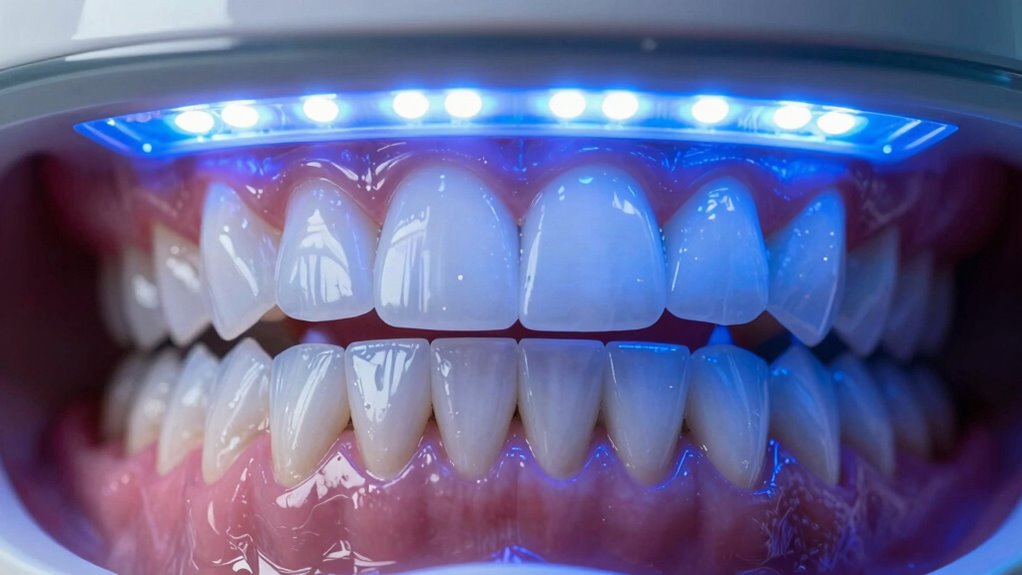
Whitening lights claim to accelerate the bleaching process by activating the peroxide gel more effectively. They use LED technology to produce specific wavelengths of light energy, which supposedly energize the molecules in the whitening gel. This activation is believed to break down stains faster, leading to quicker results. The light energy penetrates your teeth’s surface, supposedly speeding up the chemical reaction that whitens your teeth. Many manufacturers argue that this process enhances the gel’s effectiveness, reducing the time needed for noticeable whitening. Additionally, some studies suggest that the light activation effect may be minimal or negligible, raising questions about the actual benefits of LED whitening lights. The supposed acceleration relies heavily on the claimed efficacy of light-activated bleaching, though scientific consensus remains divided. By applying LED light, they suggest you get a brighter smile in less time than traditional whitening methods. However, the actual impact of LED technology on whitening speed is often debated, with some claiming it’s more of a marketing gimmick than a scientifically proven technique. Exploring AI Trends and Creative Applications highlights how innovative technologies are often marketed with exaggerated claims, similar to some teeth whitening products. Moreover, the scientific evidence supporting these claims is often limited or inconsistent. Some experts argue that the placebo effect may also play a role in perceived improvements after LED treatments.
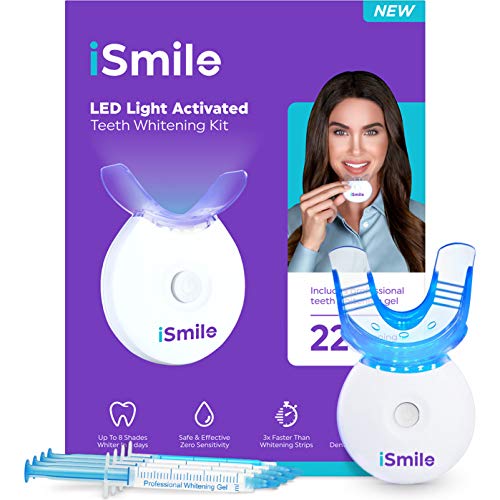
iSmile Teeth Whitening Kit – LED Light, 35% Carbamide Peroxide, (3) 3ml Gel Syringes, (1) Remineralization Gel, and Tray.
3x faster than strips|Zero sensitivity gel|Safe for enamel|Includes (3) whitening gel syringes containing 35% carbamide peroxide and a…
As an affiliate, we earn on qualifying purchases.
As an affiliate, we earn on qualifying purchases.
Is There Scientific Proof That Lights Make a Difference?
You might wonder if there’s solid scientific proof that whitening lights really work. While some studies suggest they can enhance results, the evidence isn’t conclusive across all research. Clinical trials show mixed results, so it’s worth examining what science actually says about their effectiveness. Additionally, affiliate marketing can influence product recommendations, making it important to consider unbiased evidence. Some vetted reviews highlight the variability in results depending on the whitening system used. It’s also helpful to understand scientific validation to differentiate between proven methods and marketing claims. Moreover, understanding wall surface finishes can shed light on how different treatments may interact with light-based whitening procedures. Knowing the essential DIY tools involved in dental care can help you better assess the safety and efficacy of at-home whitening options.
Scientific Evidence Availability
Is there solid scientific proof that teeth whitening lights actually make a difference? Not really. Most studies show that the perceived effects are largely due to the placebo effect, where patients believe they see results simply because they expect them. Many marketing claims highlight the supposed power of light therapy, but independent research doesn’t support these assertions. Instead, the active ingredients like peroxide gels are what genuinely whiten teeth. The lights themselves don’t seem to accelerate the process substantially. Despite the popularity of these devices, scientific evidence remains limited and inconclusive. If you’re looking for real results, focus on proven whitening agents rather than relying on unsubstantiated claims about light technology. Additionally, the cultural significance of dental aesthetics varies across regions, but scientific validation of these whitening methods remains universally limited. Furthermore, the efficiency of solar panels and their ability to support such devices can vary, but they do not influence the actual whitening process. Interestingly, some clinical trials have attempted to evaluate the effectiveness of light-activated whitening, yet results remain inconsistent and often inconclusive.
Effectiveness of Light Therapy
While many teeth whitening lights are marketed as effective tools, scientific studies have not conclusively proven that they markedly accelerate the whitening process. Some proponents claim light therapy offers alternative benefits, such as shorter treatment times or enhanced results, but evidence remains limited. If aesthetic concerns drive your interest, it’s important to recognize that the actual whitening effect may be comparable with traditional whitening gels alone. Light therapy might provide a psychological boost or a perceived improvement, but it doesn’t guarantee faster or more significant results. You should approach these claims with skepticism and consider whether the added cost is justified, especially since the core active ingredient—the whitening gel—remains the primary factor in achieving a brighter smile.
Clinical Study Results
Scientific research on the effectiveness of teeth whitening lights presents mixed results. Some studies show minimal benefits, while others suggest slight improvements in whitening. You might notice that these lights don’t substantially reduce dental anxiety or tooth sensitivity, which often concern patients. To understand better, consider these points:
- Several clinical trials report no statistically significant difference between light-assisted and traditional whitening.
- Some studies indicate lights may temporarily increase tooth sensitivity, especially in sensitive individuals.
- Evidence suggests that the perceived boost in whitening results is often due to the whitening agent itself, not the light.
- Overall, scientific proof remains inconclusive about whether lights truly enhance outcomes or just add to the cost.
Why Do Dentists Use Whitening Lights During Treatments?
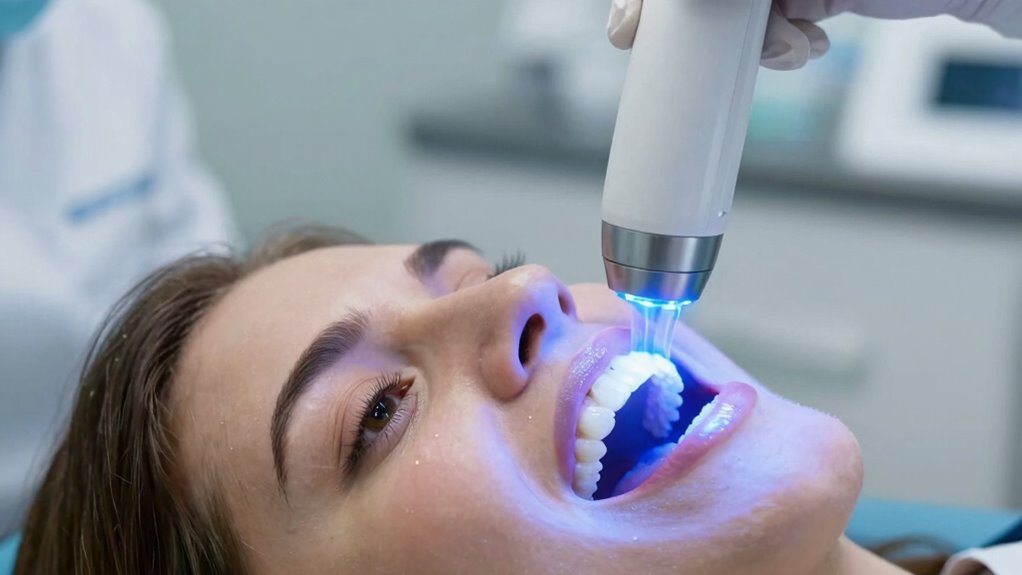
Dentists use whitening lights during treatments because these lights activate the bleaching agents more effectively, speeding up the whitening process. This helps achieve noticeable results in less time, which many patients appreciate. During the procedure, maintaining good dental etiquette is essential, ensuring clear communication and a comfortable environment. The use of lights is often designed to enhance patient comfort by reducing treatment duration and minimizing sensitivity. While some might see the lights as purely cosmetic, their role is to optimize the chemical reaction, making the whitening more efficient. As a patient, understanding that the lights are part of a controlled process can help you feel more at ease. Overall, their use aims to deliver faster, more comfortable whitening without compromising safety or quality.
Common Myths About Whitening Lights Debunked
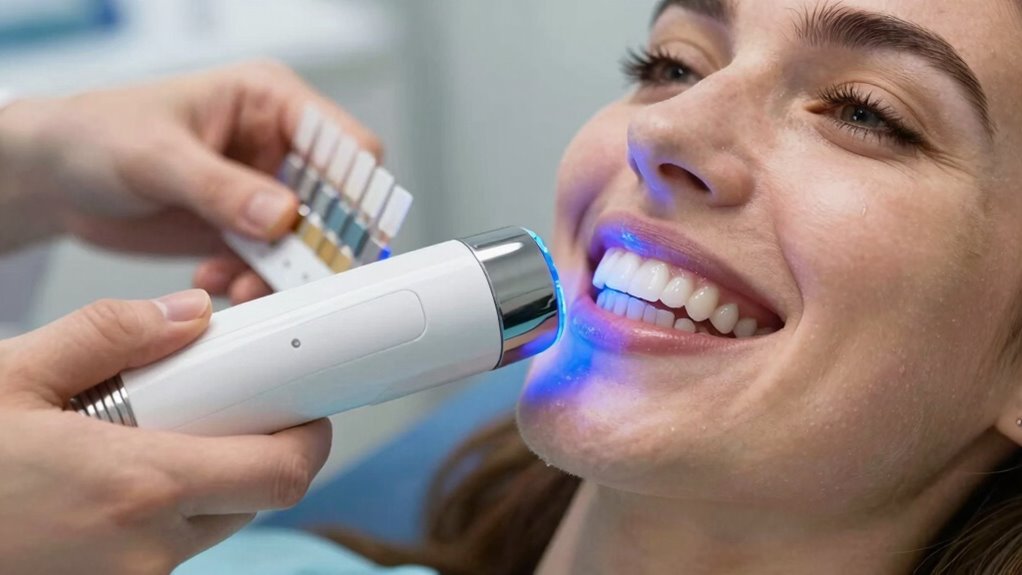
Many people believe whitening lights are a quick fix that guarantees instant, dramatic results. However, this is a common myth fueled by marketing hype rather than science. Here are some LED myths debunked:
- LED myths: Some think LEDs alone can bleach teeth considerably, but they mainly activate peroxide agents, not whiteners themselves.
- Instant results: Many believe results happen immediately; in reality, whitening takes multiple sessions over time.
- Safety concerns: Some assume LED lights are unsafe; in fact, they are generally safe when used properly.
- Long-lasting effects: People often think whitening lights create permanent whiteness, but maintenance is necessary to sustain results.
Understanding these misconceptions helps you avoid false hopes and focus on proven whitening methods.
How to Tell if a Whitening Kit Will Brighten Your Smile
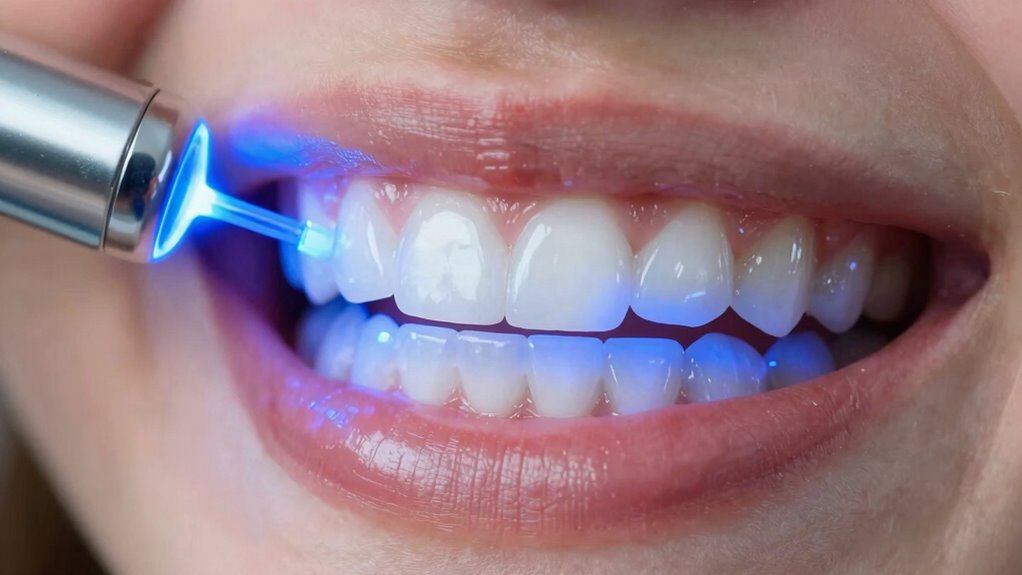
Knowing how to tell if a whitening kit will actually brighten your smile can save you time and money. Start with personalized consultations with your dentist to assess your teeth’s condition and determine if whitening is suitable. Look for kits with proven ingredients and a reputable brand, as these are more likely to deliver results. Consider the cost considerations; expensive options aren’t always better, so compare active ingredients and reviews. Check the instructions for realistic expectations—most kits can brighten teeth by a shade or two. Avoid products promising instant, dramatic results, as they’re often unrealistic. If you’re uncertain, a dental professional can guide you toward the most effective and safe whitening options tailored to your needs, ensuring you get the desired brightness without unnecessary expense.
Are Whitening Lights Safe? Risks You Should Know
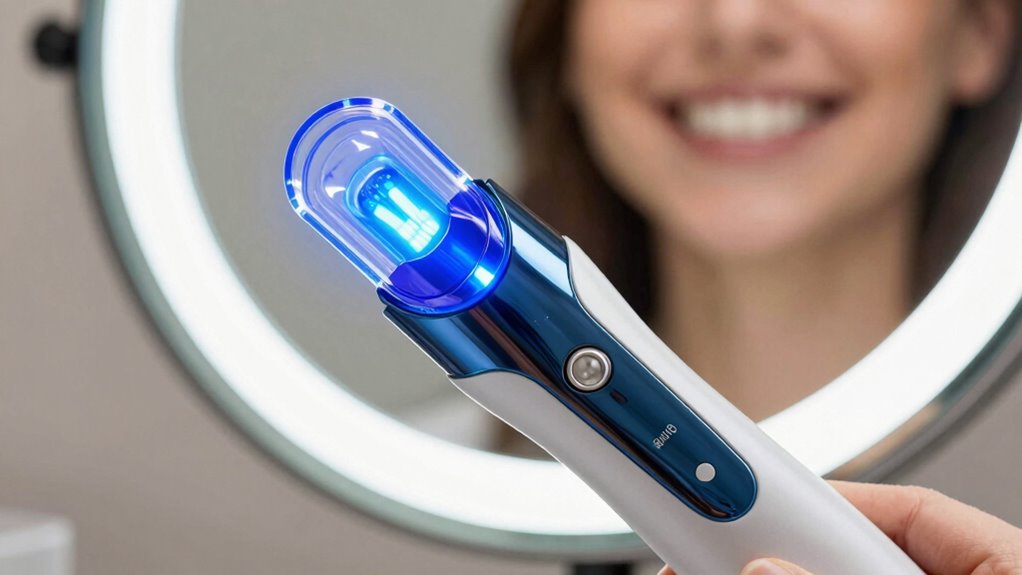
Whitening lights can cause side effects like tooth sensitivity or gum irritation if you’re not careful. It’s important to follow safety guidelines to minimize these risks. Knowing the proper safety measures helps protect your oral health during the whitening process.
Potential Light-Related Side Effects
While teeth whitening lights are generally considered safe, some people may experience side effects due to the intense light exposure. These light-related side effects can include discomfort or sensitivity. It’s important to be aware of the potential risks before proceeding. Here are four potential light-related side effects to watch for:
- Tooth sensitivity, especially in the first few hours after treatment
- Gum irritation or inflammation from prolonged exposure
- Mild burns or tingling sensations in the oral tissues
- Eye strain or sensitivity if proper eye protection isn’t used
Understanding these risks helps you decide if whitening lights are suitable for you, and ensures you’re prepared to minimize any adverse effects. Always follow safety guidelines to reduce your chances of experiencing these potential risks.
Proper Safety Measures
To guarantee your safety during teeth whitening treatments with lights, it’s essential to follow proper safety measures. Always consult a dental professional to ensure your dental hygiene is in good shape before proceeding. Avoid overusing whitening lights and adhere to recommended treatment durations to reduce risks. Use protective eyewear to shield your eyes from harmful UV or blue light exposure. Be aware that improper use can cause tooth sensitivity or gum irritation. Make informed decisions by understanding the risks involved in cosmetic dentistry procedures. Here’s a quick safety checklist:
| Safety Measure | Purpose |
|---|---|
| Regular dental checkups | Detect underlying dental issues |
| Follow professional instructions | Minimize side effects |
| Use protective gear | Protect eyes and gums |
| Limit treatment frequency | Prevent sensitivity |
Choosing the Best Teeth Whitening Method for You
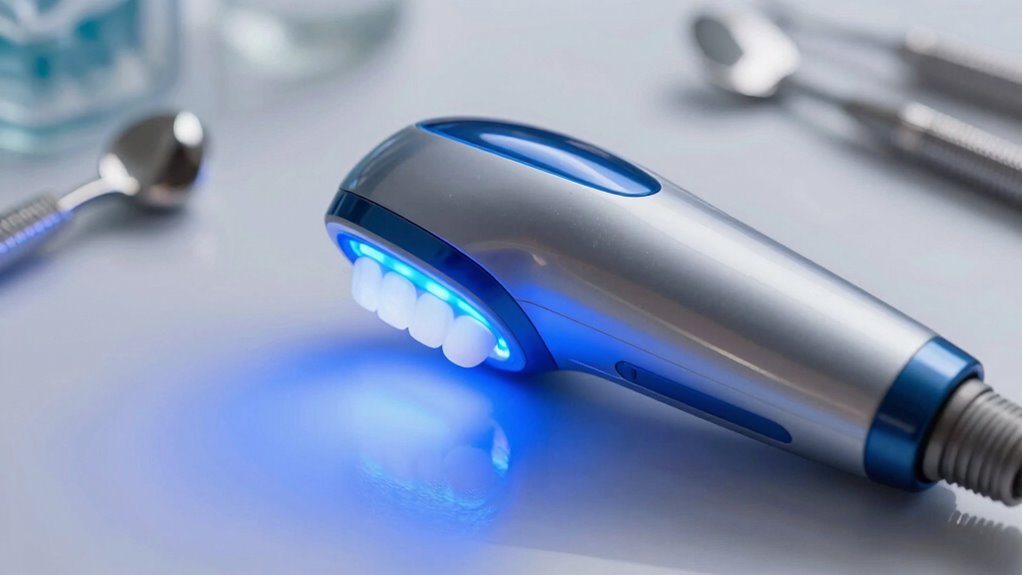
Choosing the right teeth whitening method depends on your specific needs, budget, and lifestyle. To make an informed decision, consider these factors:
Selecting the ideal teeth whitening method depends on your unique needs, budget, and lifestyle choices.
- Gel Composition: Different formulations contain varying active ingredients, affecting whitening strength and sensitivity.
- Light Technology: Some treatments use light to enhance results, but effectiveness varies; check if it’s necessary for your goals.
- Application Method: Options include professional in-office treatments or at-home kits, each with different convenience levels.
- Cost and Duration: Balance your budget with how quickly you want results, as some methods are more affordable but slower.
Why Active Ingredients Matter More Than the Light
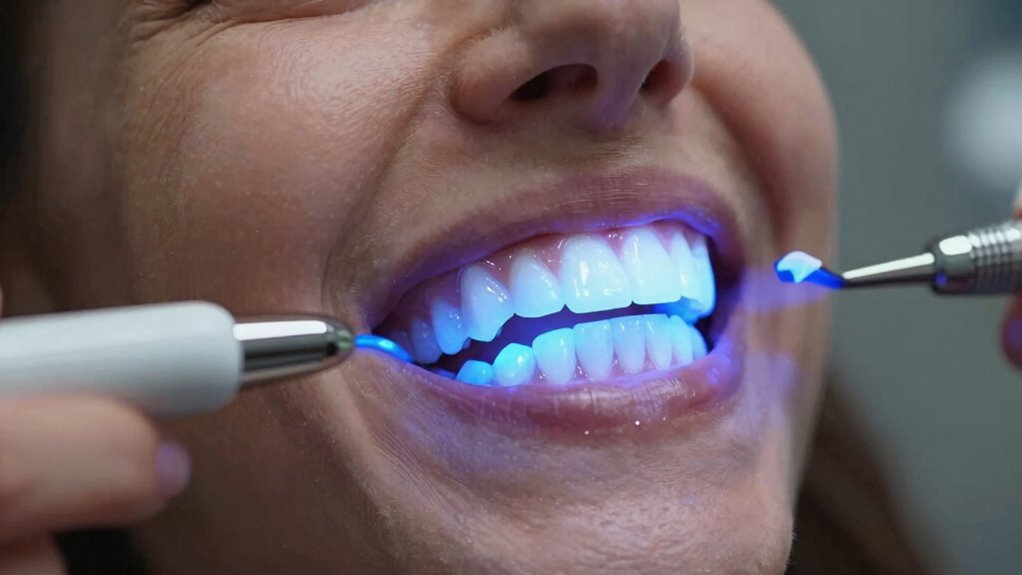
When selecting a teeth whitening approach, focusing on the active ingredients in the gel is more important than relying solely on the light used during treatment. The active ingredients, like carbamide peroxide or hydrogen peroxide, directly break down stains and whiten your teeth, impacting your dental aesthetics and overall smile. Lights may enhance the process slightly, but they don’t make up for ineffective or low-quality ingredients. In cosmetic dentistry, the strength and formulation of the whitening gel determine results, not the light source. Choosing a product with proven active ingredients ensures you achieve a brighter, healthier smile safely and efficiently. Remember, real whitening power comes from what’s in the gel, not the equipment used to activate it.
Frequently Asked Questions
Can Teeth Whitening Lights Cause Tooth Sensitivity or Damage?
Yes, teeth whitening lights can cause tooth sensitivity or damage if you’re not careful. High light intensity may weaken your tooth enamel or irritate nerves, leading to discomfort. To minimize risks, make certain the procedure is performed by a professional who adjusts light settings appropriately. Always follow aftercare advice and avoid overusing whitening treatments to protect your tooth enamel and prevent sensitivity.
Are At-Home Whitening Lights as Effective as Professional Treatments?
Are at-home whitening lights as effective as professional treatments? Probably not, and you might wonder why. DIY kits often lack the strength and precision of professional options, making them less reliable. Plus, they tend to cost less upfront, but you could end up spending more on ineffective results or damage. So, while DIY kits are tempting, investing in professional whitening guarantees safer, more noticeable, and longer-lasting results.
How Long Do Whitening Results Typically Last With Light Treatments?
Your whitening results from light treatments usually last about six months to a year, depending on your habits. To maintain your bright smile, focus on effective dental stain removal and enamel preservation by avoiding stain-causing foods and drinks. Regular touch-ups can prolong your results, but overuse might harm your enamel. Proper oral hygiene and professional advice will help you enjoy lasting brightness with minimal damage.
Do All Teeth Whitening Gels React the Same Way to Light Activation?
Not all teeth whitening gels react the same way to light activation. You see, gel composition and light wavelength are key factors—some gels are formulated to respond better to specific wavelengths, like blue or UV light. If you don’t match the right gel to the appropriate light, it’s like trying to fit a square peg in a round hole. To get ideal results, choose your gel and light combo wisely.
Are There Any Long-Term Health Risks Associated With Whitening Lights?
There are minimal long-term health risks associated with whitening lights, but safety concerns exist if used improperly. You might experience temporary tooth sensitivity or gum irritation, especially if the procedure is overused or done without professional guidance. To guarantee long-term health, follow manufacturer instructions and consult your dentist. Proper use minimizes risks, so you can enjoy brighter teeth without worrying about adverse effects on your long-term health.
Conclusion
Ultimately, choosing the right whitening method depends on understanding what truly works. For example, Sarah tried a whitening kit with powerful active ingredients and saw real results in just days, while relying solely on lights didn’t make much difference. Remember, the active ingredients in gels are what actually bleach your teeth, not the light. Focus on proven ingredients and consult your dentist to find the safest, most effective option for your smile.