Wearing goggles when using an LED mask isn’t always necessary, but it depends on the device’s brightness and your sensitivity. Most masks are safe if used according to instructions, as they don’t emit harmful UV rays or heat. However, protecting your eyes from excessive light exposure can reduce strain and prevent potential damage. If you want to understand how to keep your eyes safe during treatments, there’s more you should consider before your next session.
Key Takeaways
- Proper eye protection, such as goggles, is recommended if exposure to intense light or prolonged sessions occurs.
- Wearing goggles helps prevent eye strain, discomfort, or potential damage from LED light exposure.
- Follow manufacturer instructions regarding eye safety and protective gear during LED mask use.
- Maintaining appropriate distance and avoiding staring directly into LEDs reduces the need for goggles.
- Consult an eye care professional if experiencing discomfort or visual changes during or after LED therapy.
How Do LED Masks Work and Are They Safe?

LED masks work by emitting specific wavelengths of light that penetrate the skin to stimulate cellular activity. This process, known as LED light therapy, enhances skin rejuvenation by encouraging collagen production, reducing inflammation, and improving circulation. When you use an LED mask, the light energy targets your skin cells directly, helping to repair damage and promote a healthier, youthful appearance. These devices are generally considered safe because they don’t produce heat or UV rays that can harm your skin or eyes. Instead, they offer a non-invasive way to boost skin vibrancy without downtime. As long as you follow the manufacturer’s instructions, LED masks provide an effective and safe option for skin rejuvenation, making them popular in both professional and at-home skincare routines. Proper DIY safety precautions are essential when using any skin treatment device, especially considering the importance of light therapy technology and its safety standards. Additionally, understanding the authenticity of LED devices can help ensure safe and effective treatment outcomes. Being aware of market standards and certifications can further enhance your confidence in choosing a reliable device, and verifying that your device adheres to established safety standards can prevent potential risks.
Are LED Mask Lights Safe for Your Eyes?

You might wonder if LED mask lights are safe for your eyes, especially considering light intensity and how long you use them. The risks depend on factors like brightness levels, exposure time, and whether you follow eye protection advice. Being aware of LED light safety guidelines can help prevent potential eye strain or damage. Additionally, understanding light exposure duration is crucial to minimizing risks during extended use. Properly managing environmental lighting conditions can further reduce eye fatigue and enhance safety during LED mask use. Being informed about recommended usage periods can also help prevent overstimulation and protect your eye health.
Light Intensity Levels
The light intensity emitted by LED masks varies widely, raising questions about their safety for your eyes. Higher intensity levels can lead to deeper light penetration, especially if the device emits infrared radiation, which can affect your eyes over time. You should consider:
- The brightness level, which influences how much light reaches your retina
- The wavelength of light, affecting its potential to penetrate skin and eyes
- The risk of infrared radiation exposure, which can cause tissue heating and damage
- The importance of inclusive casting and diverse standards in designing these devices, ensuring safety features are accessible to all users.
Additionally, understanding light penetration depth helps in assessing potential eye risks associated with different LED intensities. Lower intensity LEDs generally pose less risk, but high-intensity lights may require protective measures. Always verify the device’s specifications for safe exposure limits and consider your eye sensitivity. Proper understanding of light penetration can help determine if goggles are necessary to prevent potential eye harm. Recognizing eye safety guidelines can further help users make informed decisions about protective gear when using LED masks. Moreover, consulting scientific research on light exposure can provide further insights into safe usage practices.
Duration of Exposure
While shorter exposure times generally reduce the risk of eye discomfort or damage, prolonged use of LED masks can increase the likelihood of adverse effects. The duration effects of extended exposure may include eye strain, dryness, or temporary visual disturbances. To minimize risks, follow recommended exposure guidelines, which often suggest limiting sessions to 10-20 minutes per day. Overusing the mask beyond these guidelines can amplify the potential for harm, especially if combined with high-intensity light. Pay attention to how your eyes feel during and after use—discomfort or visual changes are signs to cut back. Staying within suggested durations helps protect your eyes while still allowing you to benefit from LED therapy safely. Additionally, understanding light exposure limits can help you make informed decisions about safe usage. Recognizing the importance of proper mask fit can also contribute to safer and more effective therapy sessions. Being aware of eye health considerations ensures you maintain safety throughout your LED mask regimen.
Eye Protection Recommendations
LED mask lights are generally safe when used properly, but taking proactive precautions can help safeguard your eyes. Follow safety guidelines to minimize risk and ensure eye protection during use. Always wear the mask at the recommended distance to avoid direct exposure to intense light. Limit treatment sessions to the advised duration, and avoid looking directly into the LEDs. Consider wearing protective goggles if you have sensitive eyes or are exposed to bright lights frequently. Hidden Foodie Gems in Southeast Asia can inspire your travel planning, but when it comes to skincare devices like LED masks, always prioritize eye safety. To stay safe, keep these safety guidelines in mind: – Use the mask as directed by the manufacturer – Avoid staring directly into the LEDs – Consult an eye care professional if you experience discomfort. Being aware of light exposure risks and understanding how to minimize them can further enhance your safety during LED mask treatments. It is also beneficial to understand dog breeds and their specific needs to maintain overall health and well-being. Since the market for LED masks and related devices is continually expanding, staying informed about market trends and insights can help you make better safety choices. Remember that proper usage is key to preventing potential eye damage and ensuring the effectiveness of your treatment. Implementing these eye protection measures ensures safer, more effective LED mask treatments.
Should You Wear Goggles When Using an LED Mask?
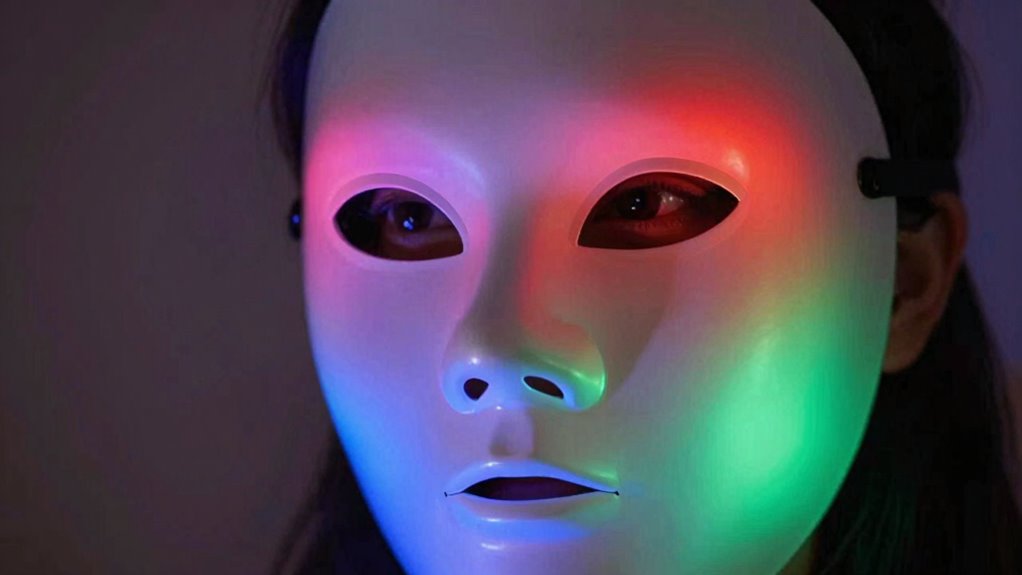
Wearing goggles while using an LED mask can substantially enhance your eye safety, especially during prolonged or intense treatments. Goggles provide an extra layer of eye protection by shielding your eyes from direct exposure to LED light, reducing the risk of potential irritation or damage. Following safety guidelines is essential, and if the manufacturer recommends goggles, it’s best to adhere to these instructions. Even if goggles aren’t explicitly required, wearing them can give you peace of mind and prevent accidental exposure to intense light. Consider your treatment duration and intensity; longer sessions or high-powered devices make goggles more advisable. Additionally, understanding the light perception associated with LED therapy can help you make informed safety choices. Ultimately, prioritizing eye protection ensures you minimize risks and enjoy the benefits of LED therapy safely.
What Factors Affect Eye Safety During LED Mask Treatments?

Several factors influence how safe your eyes are during LED mask treatments. First, the intensity of the LED lights plays a big role; higher brightness levels increase the risk of eye strain and potential vision damage. Second, the duration of each session matters—longer exposure can heighten the chance of discomfort and harm. Finally, the proximity of the mask to your eyes affects safety; closer contact may lead to accidental overstimulation. Be mindful of these factors to protect your vision. Using goggles can help mitigate risks, but understanding these elements lets you make informed choices. Always follow manufacturer guidelines, and avoid staring directly into the lights for extended periods to prevent eye strain and irreversible vision damage.
How to Protect Your Eyes While Using LED Masks

To safeguard your eyes during LED mask treatments, it’s essential to follow simple safety practices. First, ensure the mask provides adequate UV protection, minimizing the risk of eye damage from intense light exposure. Always follow the manufacturer’s recommended treatment duration to reduce eye strain and prevent discomfort. If the mask doesn’t include built-in eye protection, consider wearing protective goggles designed for LED therapy. Take breaks if you experience any eye discomfort or visual disturbances. Keep the treatment area well-ventilated, and avoid staring directly into the light source. Proper positioning of the mask ensures the light targets your skin without unnecessary exposure to your eyes. These steps help you enjoy the benefits of LED therapy safely, without risking eye fatigue or damage.
When Should You See an Eye Care Professional About LED Mask Safety?
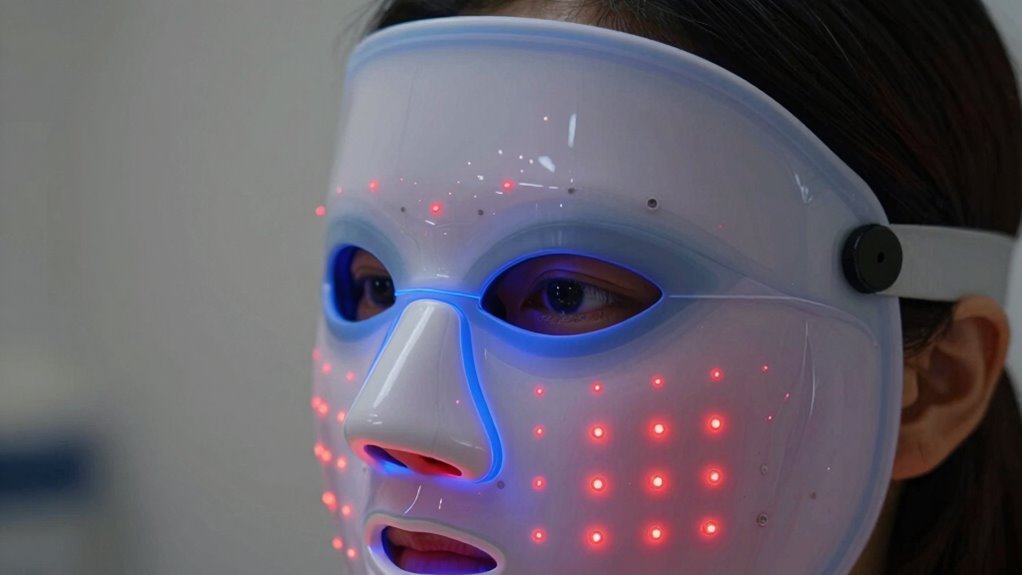
If you notice persistent discomfort, unusual visual changes, or pain during or after using your LED mask, it’s time to see an eye care professional. Ignoring symptoms can lead to serious issues like eye injury or even vision loss. Seek help if you experience:
- Continuous eye discomfort or light sensitivity
- Blurred or distorted vision after use
- Any signs of eye redness, swelling, or pain
Prompt evaluation by an eye specialist can prevent further damage and guarantee your safety. They can assess whether your eyes are affected and recommend appropriate treatments. Don’t delay if symptoms worsen or persist, as early intervention is essential to avoid permanent eye injury or vision loss caused by improper LED mask use.
Frequently Asked Questions
Can LED Masks Cause Long-Term Eye Damage?
LED masks can pose a risk of long-term eye damage if you don’t prioritize eye protection. You should conduct a risk assessment before use and follow safety guidelines. Wearing goggles or protective eyewear minimizes exposure to intense light, reducing potential harm. Always use LED masks as directed and limit exposure time to protect your eyes from possible long-term effects. Proper eye protection is essential for safe LED mask use.
Are There Specific LED Wavelengths That Are Safer for Eyes?
You should look for LED masks with wavelengths that prioritize LED wavelength safety and meet eye protection standards. Generally, blue and green wavelengths are considered safer for your eyes compared to UV or infrared. Always check device specifications, seek masks with certified safety features, and follow recommended usage guidelines. Protect your eyes by choosing masks with appropriate wavelengths, adhering to safety standards, and avoiding prolonged exposure to potentially harmful light.
How Do I Know if My LED Mask Is Approved by Safety Standards?
You can determine if your LED mask is approved by safety standards by checking for safety certifications from recognized organizations like UL or CE. Look for labels or documentation that indicate compliance with eye safety standards. These certifications guarantee the mask has been tested for safe light intensity and wavelength, reducing eye injury risks. Always verify these details before use to protect your eyes during treatments.
Can Children Safely Use LED Masks Without Goggles?
Children should not use LED masks without goggles, as their eyes are more sensitive and vulnerable to potential harm. Ensuring child safety is vital, and parental guidance is essential in monitoring their use. Always follow manufacturer recommendations and consult safety guidelines. Providing proper eye protection minimizes risks, making it safer for children to enjoy LED therapy. Never compromise on safety standards to protect their vision and overall well-being.
Are There Alternative Eye Protection Methods Besides Goggles?
You can consider alternative eye protection methods besides goggles, like DIY eye shields made from clear, lightweight materials such as plastic or acrylic. These shields can offer a barrier against direct LED light exposure while allowing visibility. Make certain your DIY eye shields fit well and cover your eyes completely. Always prioritize safety, and if you’re unsure, consult a professional to find the best protective solution for your LED mask use.
Conclusion
So, next time you enthusiastically slap on that LED mask, remember—your eyes aren’t invincible, no matter how “safe” the hype. Skipping goggles might just turn your eye health into a tragic sitcom. But hey, who needs sight when you’ve got glowing skin, right? Protect those precious peepers now, or prepare for a future starring the blindfolded version of yourself—because that’s the real glow-up you don’t want.