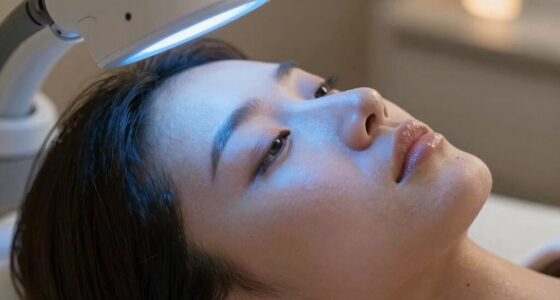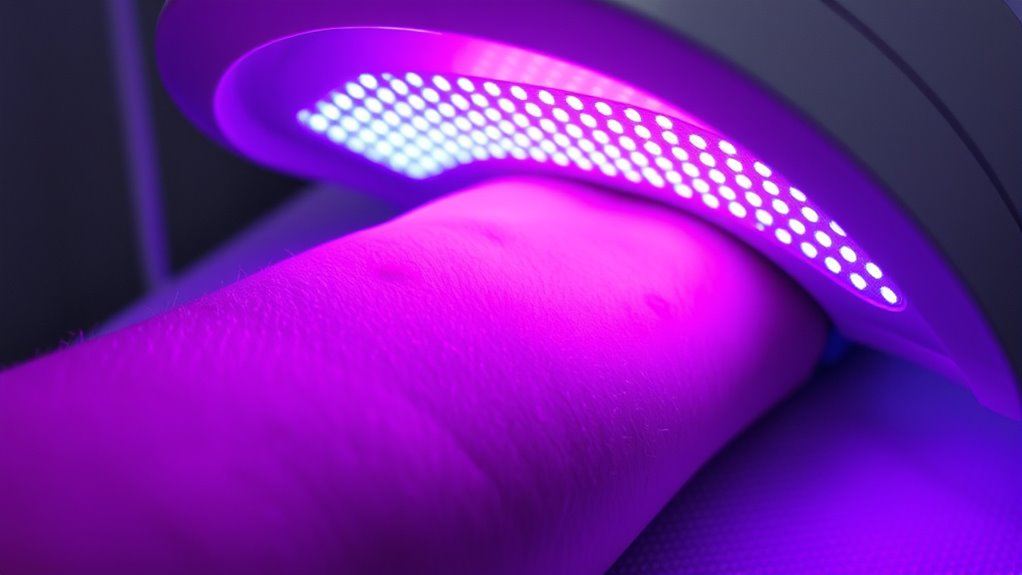

LED therapy uses specific light wavelengths to boost your body’s natural healing process and improve scar appearance. It penetrates your skin to stimulate cellular activity, promote collagen production, and reduce inflammation. This non-invasive treatment can speed up wound healing, soften scars, and improve skin texture with minimal discomfort. Whether done in a clinic or at home, consistent use helps maintain healthy skin long-term. Keep exploring to discover how LED therapy can work best for you.
Key Takeaways
- LED therapy stimulates cellular activity, promoting faster wound healing and reducing inflammation.
- It encourages organized collagen production, leading to flatter, smoother scars over time.
- The therapy enhances blood flow and nutrient delivery, supporting tissue regeneration and repair.
- It is a safe, non-invasive treatment suitable for various skin types and ages, with minimal discomfort.
- Regular use accelerates healing, improves skin texture, and can be safely continued at home for maintenance.
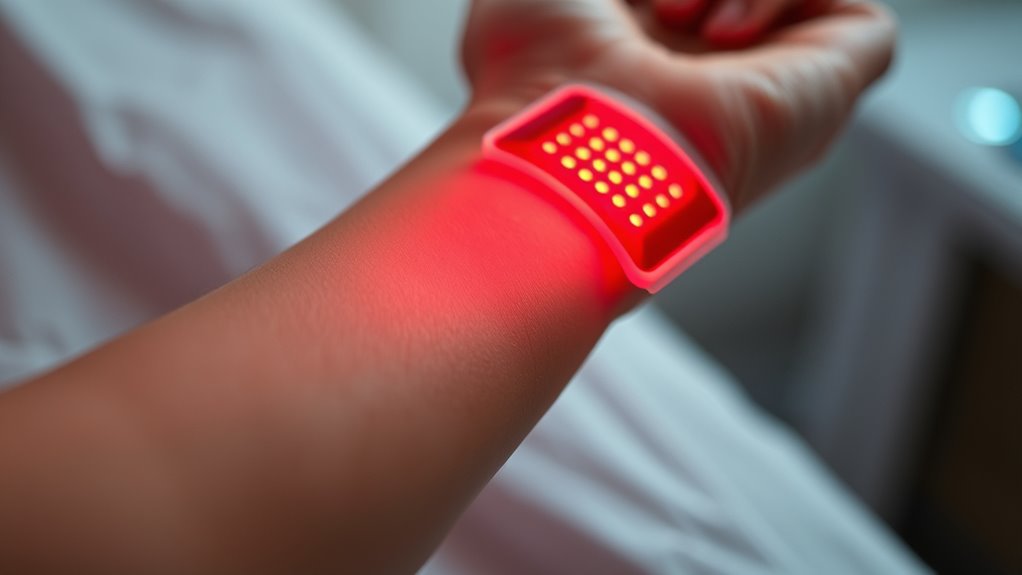
Have you ever wondered how LED therapy can accelerate wound healing and reduce scars? The answer lies in its ability to harness light’s power through a process called photobiomodulation therapy. This non-invasive technique uses specific wavelengths of light to stimulate cellular activity, promoting faster tissue repair and minimizing the appearance of scars. When you undergo LED therapy, you’re effectively activating your body’s natural healing mechanisms. The light penetrates the skin, reaching the cells responsible for tissue regeneration, and enhances their function. This stimulation encourages increased blood flow, oxygen delivery, and nutrient supply—all essential components for effective wound healing. As a result, the healing process becomes more efficient, and the risk of infection or complications diminishes.
One of the key benefits of LED therapy is its role in scar tissue remodeling. Scar formation is a complex biological response, often leading to uneven, raised, or discolored skin. Through targeted light therapy, you can influence the remodeling process, encouraging the production of healthier, more organized tissue. The specific wavelengths used in LED therapy help break down excess collagen deposits and promote the synthesis of new, properly aligned collagen fibers. This process helps to flatten and smooth out scars, making them less noticeable over time. Additionally, LED therapy reduces inflammation and minimizes redness, which are common concerns during scar healing. The result is a more natural skin appearance and improved texture. Moreover, at-home devices make it accessible for ongoing skin health maintenance outside clinical settings.
The beauty of LED therapy for wound healing and scar reduction is its safety and ease of use. You can receive treatments in a clinical setting or even at home with portable devices designed for safe personal use. Sessions are typically quick, often lasting just 15 to 30 minutes, and involve minimal discomfort. Because it’s a gentle approach, LED therapy is suitable for various skin types and ages, including sensitive skin. Over a series of treatments, you’ll notice your wounds healing more swiftly, with reduced swelling and scarring. The therapy not only speeds up healing but also supports long-term skin health by stimulating ongoing cellular activity and collagen production.
Frequently Asked Questions
Are LED Therapy Sessions Suitable for All Skin Types?
Yes, LED therapy sessions are generally suitable for all skin types, including those with varying skin pigmentation. The treatment is non-invasive and gentle, making it accessible for many people. It minimizes risks related to pigmentation changes or irritation, guaranteeing treatment accessibility across diverse skin tones. However, it’s always best to consult a specialist to tailor the session to your specific skin needs and guarantee optimal results.
How Long Does It Typically Take to See Results?
Think of it like waiting for a dial-up modem to connect; you’ll usually see some visible improvements within a few sessions. Typically, the treatment timeline varies, but most people notice changes after around 4 to 6 treatments. Results can differ based on individual skin conditions, but patience pays off. Consistent sessions often lead to quicker, more noticeable outcomes, helping you achieve smoother, healthier skin faster.
Can LED Therapy Be Combined With Other Wound Treatments?
Yes, you can combine LED therapy with other wound treatments as adjunct therapies. Combining approaches often enhances healing outcomes, so discuss with your healthcare provider about integrating LED therapy into your current treatment plan. It works well alongside methods like dressings, antibiotics, or debridement. Using combined approaches may speed up recovery and improve scar reduction, giving you a more thorough and effective wound management strategy.
Are There Any Side Effects or Risks Involved?
Think of LED therapy as a gentle sunbeam—usually safe but with some caution. You might experience potential skin irritation if your skin is sensitive, and there’s a small risk of eye damage if proper eye protection isn’t used. While rare, these risks highlight the importance of following safety guidelines. Overall, when used correctly, LED therapy is a safe, effective treatment with minimal side effects.
How Often Should Treatments Be Administered for Optimal Results?
You should aim for treatment frequency of about two to three sessions per week for ideal scheduling. Consistency is key, so spacing your treatments every 48 to 72 hours allows your body to respond effectively. While individual responses vary, following this schedule helps maximize benefits without overdoing it. Always consult your provider to tailor the treatment frequency to your specific needs and guarantee safe, effective progress.
Conclusion
You can see how LED therapy accelerates wound healing and diminishes scars by stimulating cellular activity. Studies show that over 80% of patients experience significant improvements after just a few sessions. This non-invasive treatment offers a promising alternative to traditional methods, with minimal side effects. If you’re seeking a safe, effective way to promote skin recovery and reduce scars, LED therapy could be a game-changer for your healing process.