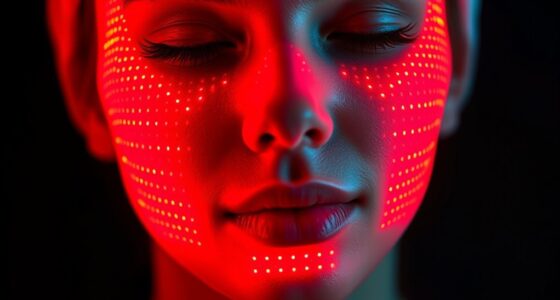
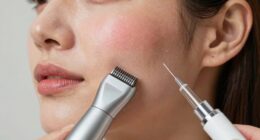
If you’re considering LED treatments, it’s important to be aware of potential risks and contraindications. People with active skin infections, open wounds, or severe skin conditions like eczema or psoriasis might experience worsened symptoms. Photosensitive individuals or those on certain medications should exercise caution to avoid burns or irritation. Pregnant women, individuals with medical implants, or those with sensitive eyes need proper protection and consultation. To understand how to stay safe, consider exploring the details that follow.
Key Takeaways
- LED treatments may worsen active skin infections, open wounds, or severe skin conditions like eczema or psoriasis.
- Photosensitive medications or underlying health issues can increase risks of burns or adverse reactions.
- Overexposure or improper use may lead to skin irritation, redness, or burns; adherence to recommended session durations is essential.
- Bright LED lights pose eye safety concerns; protective goggles should always be used during therapy.
- Pregnant women, individuals with medical implants, or those with metal devices near treatment areas should consult healthcare providers before treatment.

While LED treatments are generally considered safe and non-invasive, they do carry some risks you should be aware of. Understanding LED safety is vital before undergoing any session, especially if you’re prone to certain skin conditions or sensitivities. Most people tolerate LED therapy well, but it’s important to follow treatment precautions to minimize potential adverse effects. Being informed helps you make confident decisions and guarantees you get the most benefit from the procedure without unnecessary risks.
LED treatments are safe but require proper precautions to avoid risks and maximize benefits.
One key aspect of LED safety involves knowing your skin type and any underlying health conditions. If you have active skin infections, open wounds, or severe skin conditions like eczema or psoriasis, LED treatments might exacerbate these issues. In such cases, consulting your healthcare provider is essential before proceeding. Additionally, individuals with photosensitive conditions or who are taking medications that increase light sensitivity should exercise caution. Certain drugs, such as antibiotics or acne medications, can heighten your skin’s sensitivity to light, potentially leading to burns or irritation during treatment.
Treatment precautions also include adhering to recommended session durations and intervals. Overexposure to LED light can lead to skin irritation, redness, or even burns, especially if the device is used improperly or at too high a intensity. Always follow your provider’s guidance on treatment frequency and duration, and avoid trying to self-administer sessions without proper training or supervision. Improper use of LED devices can compromise your safety and diminish the treatment’s effectiveness.
Another important safety consideration is eye protection. LED devices emit bright lights that, if directed improperly or used without protective eyewear, could cause eye discomfort or damage. Whether you’re receiving in-office treatments or using at-home devices, wearing appropriate goggles or shields is a simple yet essential treatment safeguard. Never look directly into the light source during therapy, and ensure the device has safety features to prevent accidental exposure to your eyes.
Finally, be cautious if you’re pregnant or have certain medical implants. While LED treatments are usually safe for most, women who are pregnant should consult a healthcare provider before starting therapy. Those with pacemakers or other metal implants near the treatment area may need to avoid LED therapy altogether, as the electrical fields could interfere with device functioning or cause discomfort. Additionally, proper device calibration is crucial to ensure safe and effective treatment, as incorrect settings can increase risks.
Frequently Asked Questions
Can LED Treatments Cause Long-Term Skin Damage?
LED treatments generally don’t cause long-term skin damage when used properly. You won’t have to worry about lasting effects on your skin integrity if you follow recommended guidelines. Most studies show that LED therapy is safe, with minimal risk of long-term effects. Just make sure to consult a professional and avoid overuse, so your skin stays healthy and your skin integrity remains intact over time.
Are LED Treatments Safe for People With Certain Medical Conditions?
While LED treatments are generally safe, you should be cautious if you have certain medical contraindications or allergy concerns. People with conditions like epilepsy or those on photosensitive medications might experience adverse effects. Always consult your healthcare provider beforehand, especially if you have medical concerns, to confirm the treatment aligns with your health profile. This way, you can enjoy benefits while minimizing any potential risks.
What Are the Potential Risks for Pregnant Women Undergoing LED Therapy?
During pregnancy, LED therapy’s pregnancy safety isn’t fully established, so you should consult your healthcare provider before proceeding. Although LED treatments are generally considered safe, there’s limited research on their effects on fetal health. To protect your baby, it’s best to avoid LED therapy until you get medical approval. Prioritizing your health and fetal well-being guarantees you make informed, safe choices during this important time.
How Do LED Treatments Interact With Skincare Products or Medications?
You shouldn’t assume LED treatments play nice with all skincare products or medications. Some skincare ingredients, like retinoids or acids, can cause sensitivity, making LED therapy less effective or irritating your skin. Also, certain medications might increase photosensitivity, leading to unexpected side effects. Always double-check with your practitioner about skincare product interactions and medication side effects before booking a session, so you don’t bite off more than you can chew.
Are There Age Restrictions for Receiving LED Treatments?
There are generally no strict age restrictions for LED treatments, making you eligible regardless of age. However, treatment eligibility depends on your skin condition and overall health. If you’re a minor, a parent or guardian usually needs to give consent. Always consult with a skincare professional to determine if you’re suitable for LED therapy, especially if you have underlying health issues or skin sensitivities.
Conclusion
While LED treatments can seem like a gentle wave washing over your skin’s surface, they carry hidden currents you should respect. Ignoring risks or contraindications is like sailing into treacherous waters blindfolded—you might find yourself caught in unforeseen storms. Always listen to your body and consult professionals, because beneath the surface, unseen dangers lurk. Steering LED therapy safely ensures your skin’s journey remains a smooth, promising voyage rather than a turbulent storm.