Magnifying lamps combine bright, adjustable lighting with lenses that enlarge objects for better detail and precision. The diopter value determines how much they magnify—higher diopters mean bigger images, but can cause distortion if too strong. Choosing the right light color temperature and high CRI enhances clarity and reduces eye strain, making your work more comfortable. Proper use and maintenance are key to staying comfortable and getting the most out of your lamp—keep reading to learn more.
Key Takeaways
- Magnifying lamps combine lenses and bright illumination to enhance detail visibility and reduce eye strain during close work.
- Diopters measure lens strength; higher diopters increase magnification but may cause distortion if too high.
- Light color temperature (4000K-6500K) influences contrast and comfort; adjustable settings help reduce eye fatigue.
- High CRI lighting ensures true color rendering, aiding tasks requiring color accuracy and visual clarity.
- Proper positioning, regular maintenance, and ergonomic design promote eye comfort and optimal magnification performance.
What Are Magnifying Lamps and How Do They Work?

Magnifying lamps are specialized lighting tools that combine a built-in magnifying lens with bright illumination to help you see small details more clearly. The magnifying lenses are designed to enlarge objects, making intricate work easier and reducing eye strain. These lamps also feature effective light diffusion, which spreads the light evenly across your workspace, minimizing harsh shadows and glare. This even light helps you focus on fine details without straining your eyes or causing discomfort. By integrating both magnification and ideal illumination, these lamps provide a practical solution for tasks like crafting, reading tiny print, or detailed repairs. Their design ensures you get clear, well-lit views, making your work more precise and comfortable. Proper lighting is essential for optimizing the benefits of magnifying lamps and reducing eye fatigue during prolonged use. Proper lighting also enhances the visual clarity needed for delicate tasks, improving overall accuracy and comfort.
How Do Diopters Affect Magnification and Your Work?

Diopters measure the strength of a magnifying lens and directly impact how much your view is enlarged. Higher diopter values mean greater magnification, allowing you to see fine details more clearly. Proper diopter calibration guarantees your magnification is accurate, so you’re not over- or under-zoomed, which can strain your eyes or reduce work quality. When choosing a magnifying lamp, consider your specific task and how much magnification you need. Too high a diopter may cause distortion or eye fatigue, while too low might not provide enough detail. Understanding how diopters affect magnification helps you select the right lamp for comfort and precision, ultimately improving your work efficiency and reducing eye strain. Additionally, selecting the appropriate magnification level ensures your work remains comfortable and precise throughout your task, and paying attention to lighting quality can further enhance visual clarity and reduce eye fatigue. Proper lens calibration is also essential to maintain consistent and accurate magnification during extended use, preventing potential visual distortion that can result from improper settings.
What Are the Best Light Colors for Magnifying Lamps?
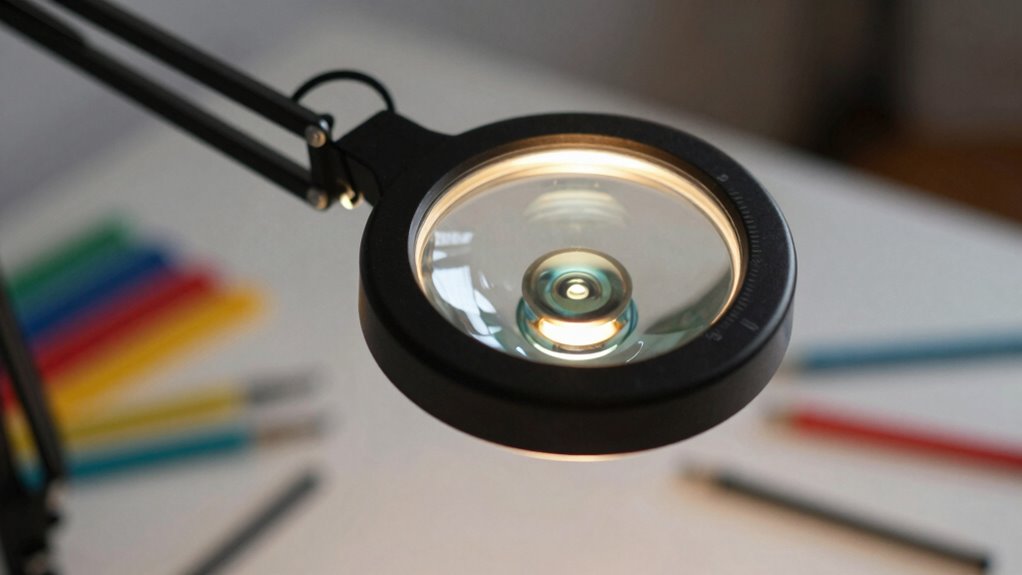
Choosing the right light color for your magnifying lamp is essential for ideal clarity and reducing eye strain. The preferable color temperature usually falls between 4000K and 6500K, offering a balance that mimics natural daylight. A light spectrum with high CRI (Color Rendering Index) ensures colors appear true and vibrant, aiding detailed work. Cooler light shades (above 5000K) enhance sharpness and contrast, while warmer tones (around 4000K) create a softer, more comfortable environment. Here’s a quick comparison:
| Color Temperature | Light Spectrum | Best For |
|---|---|---|
| 4000K – 5000K | Neutral to cool white | Precision tasks |
| 5000K – 6500K | Bright daylight spectrum | Fine detail work |
| 3000K – 4000K | Warm white | General use, comfort |
Choosing the right color temperature can make a significant difference in your work quality and eye comfort. Additionally, selecting a lamp with adjustable light color modes can further optimize your workspace for different tasks and preferences. The spectral distribution of the light also plays a crucial role in reducing eye fatigue during prolonged use. Proper light spectrum selection not only improves visual clarity but also minimizes potential eye strain over extended periods. Moreover, understanding the color temperature ranges can help you tailor lighting to specific activities, enhancing overall productivity and comfort.
Why Is Eye Comfort Important When Using Magnifying Lamps?

When your eyes stay comfortable during use, this reduces strain and fatigue. This helps you see details more clearly without squinting or discomfort. Prioritizing eye comfort guarantees you get the best visual clarity from your magnifying lamp. Using the correct light color can also enhance visibility and reduce eye strain during prolonged use. Additionally, selecting appropriate lighting techniques can further support eye health and improve overall working conditions. Maintaining proper ergonomic posture while working with magnifying lamps can also help prevent unnecessary eye and neck strain. Being aware of lighting quality can make a significant difference in creating a comfortable and effective workspace. Ensuring proper cable management can also prevent accidental damage or hazards that might compromise safety and lighting consistency.
Reduced Eye Strain
Since eye comfort directly affects how long you can work comfortably, reducing eye strain is essential when using magnifying lamps. When eye strain is minimized, you’ll experience less fatigue, fewer headaches, and greater focus. A good magnifying lamp offers glare reduction, which prevents harsh reflections that cause discomfort. An ergonomic design ensures the lamp’s height, angle, and light placement align with your posture, preventing unnecessary tension. This combination helps you work longer without discomfort. Additionally, choosing lamps with appropriate light color settings can further enhance visual clarity and reduce eye fatigue. Incorporating ergonomic features into your workspace can also help maintain proper posture and decrease overall eye and neck strain.
- Feel energized and avoid fatigue during extended tasks
- Maintain focus and precision without distraction
- Protect your eyes from long-term strain and damage
Prioritizing eye comfort with glare reduction and ergonomic features keeps your vision safe and your work enjoyable.
Improved Visual Clarity
Eye comfort is indispensable for achieving clear, sharp visual detail when using magnifying lamps. When you maintain an ergonomic posture, you reduce muscle strain, allowing your eyes to focus more effectively. Proper positioning helps prevent fatigue and ensures consistent clarity during prolonged tasks. Additionally, ambient lighting plays a crucial role; balanced lighting minimizes glare and shadows, enhancing the lens’s magnification. When your workspace is well-lit, your eyes don’t have to work as hard to distinguish fine details. Maintaining optimal lighting conditions can further reduce eye strain and improve overall visual clarity. Good ergonomic posture can also help prevent discomfort and maintain steady focus during extended use. Incorporating appropriate magnification levels tailored to your needs can significantly enhance comfort and precision. Prioritizing eye comfort through good posture and suitable ambient lighting results in improved visual clarity. This means you can work longer without discomfort and see intricate details more clearly, making your overall experience more productive and less tiring. Additionally, using correct magnification ensures that your eyes are not overexerted, promoting sustained comfort. Paying attention to ergonomic workspace setup can further support your eye health and reduce fatigue during prolonged use.
How to Choose the Right Magnifying Lamp for Your Needs

Choosing the right magnifying lamp depends on understanding your specific needs and the tasks you’ll perform. To find the perfect match, consider these factors:
- Magnification clarity – Make sure the lens provides sharp, detailed views suited to your work.
- Lighting ergonomics – Opt for adjustable, even lighting that reduces eye strain and enhances comfort.
- Task-specific features – Think about whether you need hands-free operation or portability for your work environment.
- Consider the importance of effective personal finance planning—just as selecting the right lamp improves your work, proper planning helps you achieve financial goals with confidence.
Key Features to Look for in a Magnifying Lamp

When selecting a magnifying lamp, focusing on its key features guarantees you get the best tool for your needs. Look for adjustable magnification levels to suit different tasks, ensuring clarity without strain. An ergonomic design is essential for comfort during prolonged use, reducing fatigue and enhancing stability. Features like adjustable arms or flexible joints help you position the lamp precisely. Consider light quality and color temperature for optimal visibility. The table below highlights important features:
| Feature | Description |
|---|---|
| Magnification Levels | Multiple options for different detail needs |
| Ergonomic Design | Comfortable, user-friendly adjustments |
| Light Quality | Bright, natural light for clear visibility |
Prioritize these features to improve your experience and protect your eyes.
Troubleshooting Common Problems With Magnifying Lamps

If your magnifying lamp isn’t working properly, start by checking for lighting issues to see if the bulb or power source is the problem. You should also adjust the diopter settings to guarantee the magnification matches your needs. Finally, make sure the lamp is properly positioned for maximum illumination and comfort.
Identifying Lighting Issues
Are you noticing that your magnifying lamp isn’t providing consistent or adequate illumination? This can be frustrating, especially when your work relies on clear visibility. Here are some common lighting issues to watch for:
- Flickering light bulbs that disrupt your focus and strain your eyes.
- Uneven lighting, which affects lighting aesthetics and makes detailed work harder.
- Dull or dim light that diminishes the decorative designs on your workspace.
These problems can stem from loose connections, aging bulbs, or incompatible fixtures. Identifying these issues quickly helps you restore proper illumination and enhances your workspace’s ambiance. Proper lighting not only improves functionality but also elevates your decor, making your space more inviting and comfortable. Addressing these issues guarantees your magnifying lamp supports your vision and style effectively.
Adjusting Diopter Settings
Adjusting the diopter settings on your magnifying lamp can considerably improve your viewing experience and reduce eye strain. Proper diopter calibration ensures the lens is focused correctly for your vision, preventing blurriness or eye fatigue. To make adjustments, locate the focal adjustment ring or dial on your lamp. Turn it slowly until the magnified image appears sharp and clear. If your lamp has a built-in focus feature, test different settings to find the most suitable point. Keep in mind that improper diopter calibration can cause eye strain and make detailed work difficult. Regularly check and fine-tune your focal adjustment to maintain clarity. This simple step helps you achieve a comfortable, precise viewing experience, especially during long periods of detailed work or reading.
Ensuring Proper Positioning
Proper positioning of your magnifying lamp is essential to avoid common issues like glare, shadows, or blurry images. To achieve this, focus on ergonomic positioning and ideal lamp placement. First, ensure the lamp is at eye level to reduce neck strain and improve comfort. Second, position the light so it illuminates your work directly without causing glare on your eyes or reflections on the surface. Third, keep the lamp close enough to your work to maximize clarity but far enough to maintain a comfortable viewing distance. Remember, proper positioning isn’t just about visibility — it’s about protecting your eyes and maintaining comfort during prolonged use. Adjust your lamp regularly to find the perfect setup and avoid unnecessary fatigue or frustration.
Which Type of Magnifying Lamp Is Best for Your Tasks?

Choosing the right magnifying lamp depends on the specific tasks you need it for. If you require detailed inspection or intricate work, opt for a lamp with higher magnification levels to see fine details clearly. For general tasks like reading or crafts, lower magnification might suffice. Consider light intensity as well; a brighter lamp ensures better visibility without straining your eyes, especially during extended use. If you work in a well-lit environment, a lamp with adjustable brightness can be helpful. For precision tasks such as jewelry making or electronics repair, look for lamps with adjustable magnification and light settings to customize your view. Matching the lamp’s features to your specific needs will enhance your comfort and efficiency.
Tips for Proper Use and Maintenance of Your Magnifying Lamp
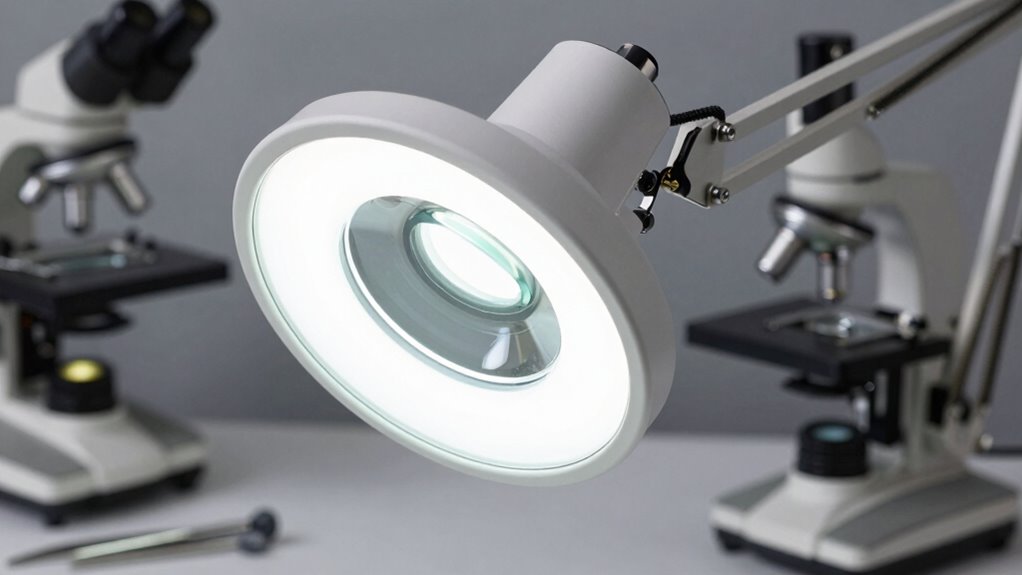
To guarantee your magnifying lamp functions effectively and lasts longer, it’s essential to use it correctly and perform regular maintenance. Proper cleaning techniques help prevent dust buildup and ensure the best light quality. Here are three tips to keep your lamp in top shape:
Ensure optimal performance and longevity with proper use and regular maintenance of your magnifying lamp.
- Clean the lens regularly with a soft, lint-free cloth and a gentle cleaner to avoid scratches and maintain clear magnification.
- Check the bulb and wiring periodically to replace any dim or flickering lights, ensuring consistent illumination.
- Store the lamp properly when not in use, shielding it from dust and moisture to preserve its components.
Frequently Asked Questions
How Long Do Magnifying Lamps Typically Last?
Your magnifying lamp typically lasts between 2,000 to 5,000 hours, depending on the bulb type. To maximize its lifespan, follow maintenance tips like regularly cleaning the lens and replacing bulbs when they dim or flicker. Proper care guarantees consistent brightness and eye comfort. Keep an eye on bulb lifespan, and don’t hesitate to change bulbs early to maintain ideal performance and prevent strain during detailed work.
Can Magnifying Lamps Be Used for Medical or Laboratory Purposes?
You can indeed use magnifying lamps for medical applications and laboratory uses. Their bright, focused light helps you observe tiny details with precision, much like a gentle spotlight revealing hidden secrets. These lamps assist in delicate procedures, examinations, and research tasks, making your work easier and more accurate. Just verify the lamp’s specifications meet safety standards for medical or laboratory environments, so you get the best results without any fuss.
Are LED Magnifying Lamps More Energy-Efficient Than Fluorescent Ones?
Yes, LED magnifying lamps are more energy-efficient than fluorescent ones. LED efficiency means you get brighter, longer-lasting light while consuming less power. When comparing fluorescent lamps, LEDs use considerably less electricity, produce less heat, and have a longer lifespan. This makes LED magnifying lamps a smarter choice for sustained use, helping you save on energy costs and reduce environmental impact.
Do Magnifying Lamps Emit Any Harmful UV or IR Radiation?
Magnifying lamps generally emit minimal UV or IR radiation, making them safe for your eyes if used properly. Most modern models are designed with UV safety in mind, reducing IR exposure and protecting you from potential harm. However, it’s wise to check the specifications of your lamp and make sure it has UV filters or safety features. Always follow manufacturer guidelines to minimize any risk and enjoy clear, comfortable viewing.
What Safety Precautions Should I Follow When Using a Magnifying Lamp?
Think of your safety as a lighthouse guiding your work. Always wear eye protection to shield your eyes from intense light, and make certain electrical safety by checking cords and plugs for damage. Keep the lamp stable and avoid overheating. Follow the manufacturer’s instructions carefully, and turn off the lamp when not in use. These precautions help you work confidently while protecting your vision and maintaining a safe environment.
Conclusion
Choosing the right magnifying lamp can dramatically improve your work comfort and precision. Remember, about 80% of eye strain comes from improper lighting, so selecting a lamp with the right diopters and light color is key. Prioritize eye comfort and maintenance to make certain your lamp lasts. With the right setup, you’ll reduce fatigue and work more efficiently—making those detailed tasks much easier and less stressful.