
To keep your home safe from RF radiation, make sure all your devices are certified by reputable agencies like FCC or CE. Place wireless routers and cordless phones away from high-traffic areas and avoid keeping them near bedrooms or workspaces. Limit your use of wireless gadgets, turn off devices when not needed, and guarantee proper maintenance. If you’re curious about more effective practices, you’ll find helpful tips that can further protect you and your family.
Key Takeaways
- Ensure all RF devices are properly certified by regulatory agencies like FCC or CE before use.
- Place routers and wireless devices away from bedrooms and high-traffic areas to reduce exposure.
- Limit the duration of wireless device usage near the body and turn off devices when not in use.
- Regularly update device firmware and avoid hardware modifications that could increase radiation emissions.
- Use wired connections when possible and keep devices well-maintained to ensure safety and optimal performance.
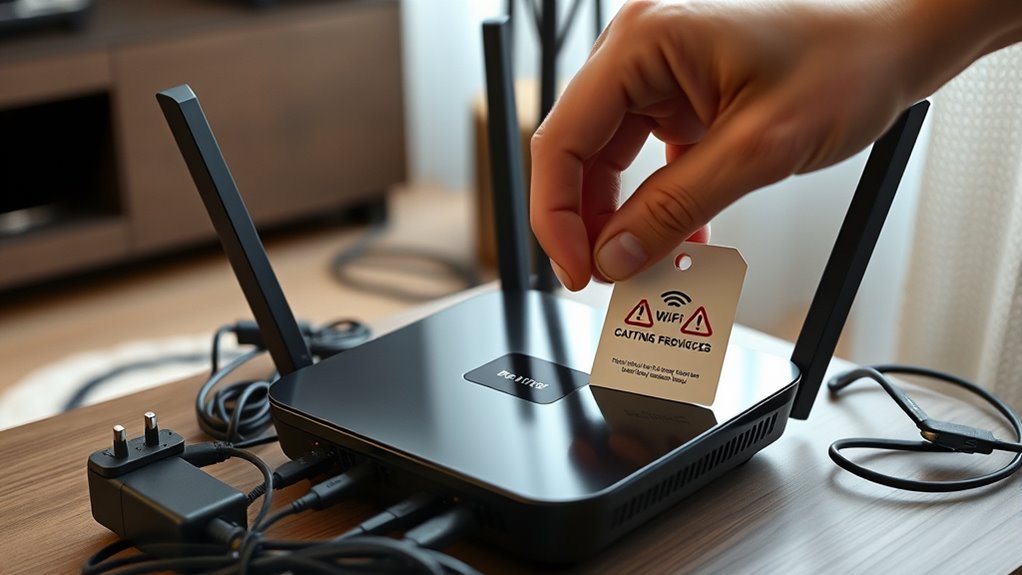
With the increasing use of home RF devices like Wi-Fi routers, cordless phones, and smart home gadgets, understanding safety guidelines is more important than ever. These devices emit radiofrequency radiation, which can raise concerns about radiation exposure, especially with prolonged or close-range use. To minimize health risks, you should prioritize choosing devices that have proper device certification. Certification ensures that the product has undergone safety testing and complies with established standards set by regulatory agencies. When purchasing new RF devices, always check for certification labels from trusted authorities like the FCC, CE, or other relevant bodies. Certified devices are designed to operate within safe radiation levels, reducing your exposure risks.
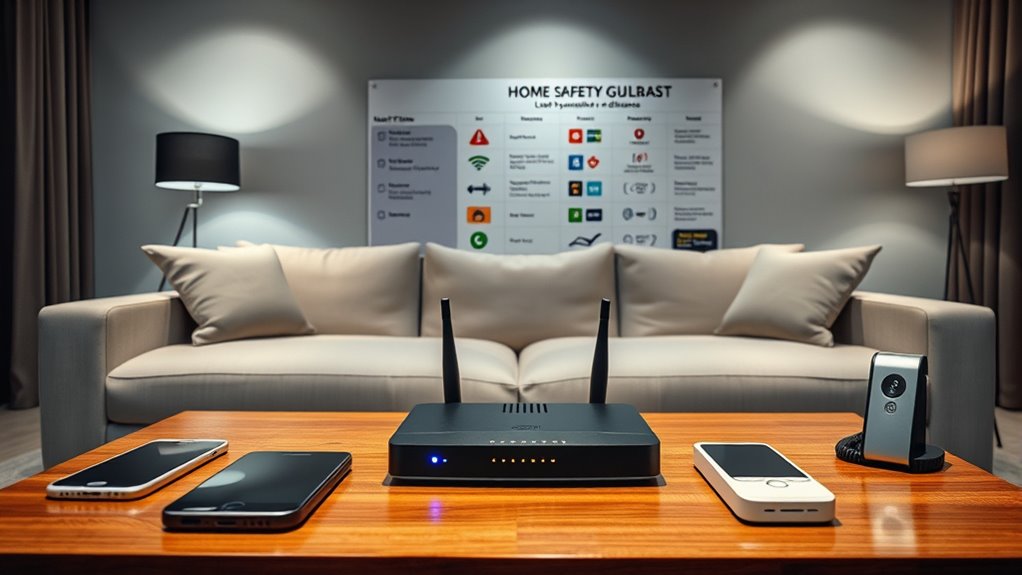
Once you have certified devices, placing them correctly in your home is key. Keep Wi-Fi routers and cordless phones away from areas where you spend a lot of time, such as bedrooms or home offices. Positioning your devices at a distance decreases your overall radiation exposure. For example, situate your Wi-Fi router in a central location but away from your bed or workspace. Use wired connections whenever possible to cut down on wireless radiation altogether. This not only limits your exposure but also often results in a more stable internet connection.
You should also be mindful of how long you remain near active RF devices. Limit prolonged use of wireless gadgets, especially in close proximity to your body. For smart home devices, like voice-activated assistants or security cameras, consider turning them off when not in use or placing them farther away from your main living areas. Regularly updating your device firmware is another good practice, as manufacturers often improve safety features and reduce emissions with updates. Additionally, considering the placement of devices based on proximity to humans can help reduce potential exposure, especially for devices emitting higher levels of radiation.
Furthermore, practicing good device maintenance can mitigate potential risks. Unplug devices that are not in use or that seem to emit excessive radiation. Keep your devices clean and well-maintained, and avoid modifying or tampering with their hardware, which could compromise safety standards. Remember, certified devices are tested to meet safety guidelines, but improper use can still lead to unnecessary radiation exposure.

TP-Link AX1800 WiFi 6 Router (Archer AX21 V5) – Dual Band Wireless Internet, Gigabit, Easy Mesh, Works with Alexa – A Certified for Humans Device, Free Expert Support
- Dual-Band WiFi 6: Faster speeds and reduced congestion
- AX1800 Speed: Up to 1.8 Gbps total bandwidth
- Connect More Devices: Supports multiple devices simultaneously
As an affiliate, we earn on qualifying purchases.
As an affiliate, we earn on qualifying purchases.
Frequently Asked Questions
Are There Specific Brands With Higher RF Safety Standards?
Some brands with higher RF safety standards focus on strong reputation and certification standards. You should look for manufacturers that prioritize safety, have reputable brand recognition, and meet recognized certification standards like FCC or IC compliance. These brands typically invest in rigorous testing and transparent safety practices, giving you peace of mind. Always check product labels and user reviews to verify the device adheres to safety standards before making a purchase.
How Often Should I Test My Home RF Device Emissions?
Think of your RF device as a musical instrument that needs tuning. You should test your device emissions at least once every six months to guarantee it’s playing in harmony. Regular emission monitoring helps catch any deviations early, and device calibration keeps it functioning safely. By staying diligent, you prevent unwanted noise and keep your home environment safe, just like a well-tuned instrument produces beautiful music.
Can RF Devices Cause Long-Term Health Effects?
RF devices can cause long-term health effects through biological impacts from chronic exposure. While research is ongoing, some studies suggest prolonged exposure to RF radiation might affect your nervous system or increase certain health risks. To stay safe, limit your exposure when possible, especially for sensitive groups like children. Regularly monitoring your device emissions and following safety guidelines helps reduce potential biological impacts from long-term RF radiation exposure.
What Are the Legal Limits for RF Exposure at Home?
The legal limits for RF exposure at home are set by agencies like the FCC, which limit RF power levels to prevent health risks. To stay compliant, you should use RF shielding around devices emitting high signals and reduce exposure to avoid signal interference. Keep devices at a safe distance, especially from your body, and follow manufacturer instructions to guarantee you’re within safe limits and minimizing potential health effects.
Do RF Safety Guidelines Differ for Children and Pregnant Women?
Yes, RF safety guidelines do differ for children and pregnant women. You should prioritize child safety since children are more vulnerable to RF exposure due to their developing tissues. For pregnancy considerations, it’s wise to minimize exposure to protect the fetus. Follow specific recommendations that may include reducing device use and maintaining distance from RF sources, ensuring both your child’s and your own safety with these extra precautions.

Panasonic Cordless Phone with Answering Machine, Advanced Call Block, Bilingual Caller ID and High-Contrast Display, Expandable System with 2 Handset Cordless Telephones – KX-TGD832M (Metallic Black)
- Advanced Call Blocking: Pre-blocks robocalls and telemarketing calls
- Call Block Capacity: Block up to 1,000 numbers with one button
- 2-Way Call Recording: Record and replay important calls
As an affiliate, we earn on qualifying purchases.
As an affiliate, we earn on qualifying purchases.
Conclusion
By following these safety guidelines, you protect your health, your home, and your peace of mind. Stay informed, stay cautious, and stay responsible. Keep devices at a safe distance, monitor their usage, and turn them off when not in use. Prioritize safety over convenience, awareness over assumption, and caution over complacency. When you take these steps, you create a safer environment, a healthier home, and a more confident you. Your safety begins with what you do today.
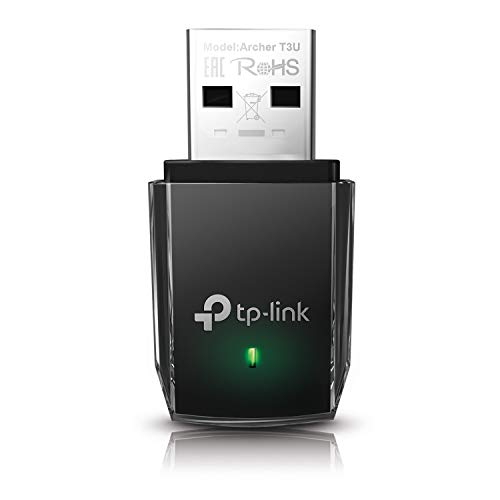
TP-Link AC1300 USB WiFi Adapter(Archer T3U)- 2.4G/5G Dual Band Wireless Network Adapter for PC Desktop, MU-MIMO WiFi Dongle, USB 3.0, Supports Windows 11, 10, 8.1, 8, 7, XP/Mac OS X 10.9-10.14
- Dual Band Wi-Fi: Supports 2.4G and 5G bands
- MU-MIMO Technology: Ensures lag-free, stable connections
- USB 3.0 Speed: 10x faster than USB 2.0
As an affiliate, we earn on qualifying purchases.
As an affiliate, we earn on qualifying purchases.

ERICKHILL 3 in 1 EMF Detector, Electromagnetic Field Radiation Detector for EF, RF, MF, WiFi,5G Signal,Triple Alarm Modes, Type-C Charging, EMF Meter for Home, Office, and Paranormal Investigation
- All-in-One EMF Detection: Measures EF, MF, RF fields
- Instant, Easy Operation: Ready to measure with no setup
- Color-Coded Display: Visual radiation level indicators
As an affiliate, we earn on qualifying purchases.
As an affiliate, we earn on qualifying purchases.