
AI skin analysis tools can offer quick, personalized insights but often fall short in accuracy, especially for darker skin tones or variable lighting conditions. They rely on algorithms that may be biased or limited in evaluating underlying issues, making them unreliable for serious skin concerns. While convenient, they shouldn’t replace professional dermatologist advice. If you want to understand whether these tools are worth your time and money, there’s more to consider beyond the surface.

Get wellness gear delivered free — and shop member deals
- Fast, free delivery on millions of items
- Access to Prime Big Deal Days deals on October 6–7
- Prime Video, Amazon Music and more included
Key Takeaways
- AI skin analysis tools offer quick, objective insights but often struggle with accuracy across diverse skin tones and lighting conditions.
- Their assessments depend heavily on image quality; poor lighting or resolution can lead to unreliable results.
- These tools are useful for monitoring superficial skin features but cannot replace professional diagnosis of underlying conditions.
- Algorithm biases and limited training data can cause inaccuracies, especially for darker skin or unique skin types.
- AI tools should complement, not replace, dermatologist consultations for accurate diagnosis and personalized skin care.
As an affiliate, we earn on qualifying purchases.
What Are AI Skin Analysis Tools and How Do They Work?

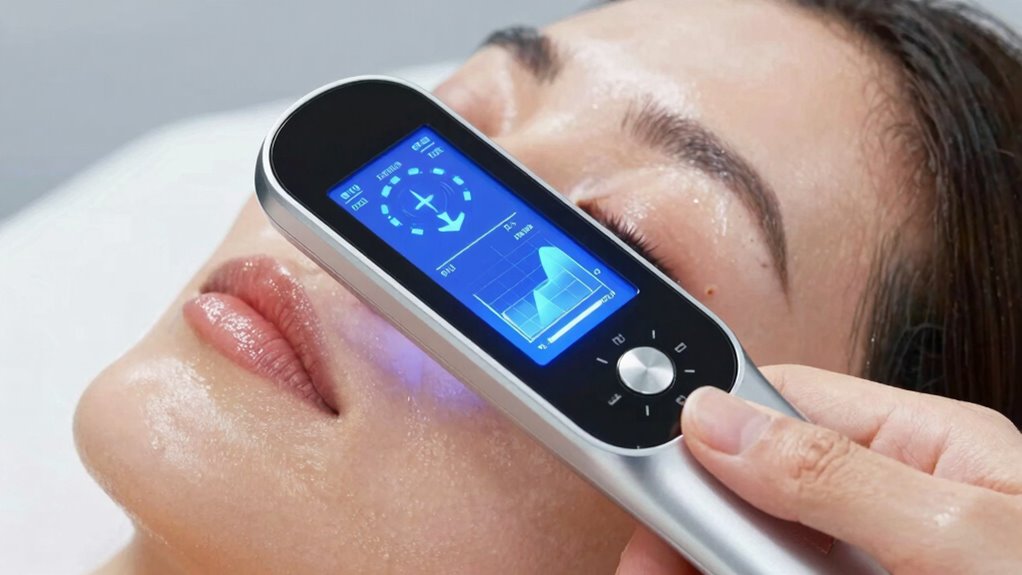
Have you ever wondered how AI skin analysis tools can evaluate your skin so accurately? These tools use advanced technology integration to assess various aspects of your skin health quickly. They analyze high-resolution images of your face, detecting issues like wrinkles, spots, and uneven tone. By applying sophisticated algorithms, AI can measure skin moisture, oil levels, and pigmentation with remarkable precision. This process involves capturing detailed images and processing them through neural networks trained on thousands of skin samples. As a result, AI skin analysis tools provide personalized insights, helping you understand your skin’s condition better. Their ability to deliver fast, objective evaluations makes them a popular choice for skincare, bridging the gap between technology and personal skin health management. Additionally, Free Floating concepts like natural light conditions and skin positioning can affect the accuracy of these assessments, emphasizing the importance of controlled environments for optimal results. Understanding the accuracy factors involved can further enhance the reliability of these tools. Moreover, the use of advanced imaging techniques can significantly improve assessment consistency and precision, especially when combined with standardized testing protocols.
As an affiliate, we earn on qualifying purchases.
How Accurate Are AI Skin Assessments Compared to Dermatologists?

You might wonder how AI skin assessments stack up against dermatologist evaluations. While AI can analyze images quickly and objectively, its accuracy depends heavily on image quality and diagnostic precision. Understanding these factors helps you see where AI excels and where human expertise still leads. Additionally, comedogenic ratings and other skin-specific data can influence the assessment’s reliability. For example, diagnostic accuracy can vary based on the algorithms used and the dataset diversity, highlighting the importance of comprehensive validation. Moreover, website performance metrics are crucial in ensuring that these AI tools function efficiently for users. Incorporating advanced skincare ingredient analysis can further enhance the reliability of AI assessments by providing detailed insights into skin compatibility. Recognizing the impact of dataset diversity is essential for improving AI’s overall accuracy across different skin types.
Diagnostic Precision Compared
AI skin assessments are increasingly matching the diagnostic accuracy of experienced dermatologists, thanks to advancements in machine learning algorithms. This progress indicates that AI tools are becoming more reliable over time, providing users with confidence in their evaluations. This means you can rely on AI tools to evaluate your skin health with impressive predictive accuracy. However, some nuances still require human judgment. Here’s how AI compares:
- Consistency: AI provides consistent results, reducing human error and variability. Standardized evaluation methods help ensure uniformity across assessments.
- Speed: It analyzes images rapidly, offering quick insights into skin conditions.
- Limitations: While AI excels at detecting common issues like acne or pigmentation, complex diagnoses or rare conditions still benefit from a dermatologist’s expertise.
- Diagnostic accuracy continues to improve as AI models learn from larger datasets, enhancing their ability to interpret subtle skin variations.
Image Quality Impact
While advancements have boosted the diagnostic accuracy of AI skin assessments, the quality of the images used plays a significant role in determining how reliable those results are. Poor lighting conditions can distort skin tones and obscure details, leading to inaccurate assessments. Similarly, low image resolution hampers the AI’s ability to detect subtle skin features, such as fine lines or small lesions. High-quality images with consistent lighting and sharp resolution enable AI algorithms to analyze skin conditions more effectively, bringing results closer to a dermatologist’s expertise. Conversely, subpar images increase the risk of misinterpretation, making AI assessments less trustworthy. To guarantee accurate outcomes, capturing well-lit, high-resolution images is vital, whether you’re using a smartphone or a professional device. Additionally, understanding safety tips for capturing images ensures you avoid common errors that could compromise your assessment. Paying attention to image quality standards can significantly improve the reliability of AI skin analysis results.
Subjective Versus Objective
Although AI skin assessments have improved markedly, questions remain about their accuracy compared to dermatologists. While AI offers objective data, it sometimes struggles with subjective judgment influenced by personal preferences. You might find that:
- Dermatologists consider nuances like skin tone variations that AI might overlook.
- Personal preferences can sway subjective assessments, making them less consistent.
- AI provides standardized results but may miss context-specific details a dermatologist notices.
- Recognizing symbolic meanings in skin features or shapes can influence interpretation and assessment accuracy.
- Understanding minimalist principles can help in appreciating the value of precise, uncluttered data for skin analysis.
- Incorporating clinical context can enhance the interpretation of AI-generated results and bridge the gap with human judgment.
AI tools excel at quantifying skin features, but they lack the personal touch and nuanced understanding a dermatologist brings. This gap highlights how subjective judgment can influence assessments, making AI either a reliable supplement or an insufficient replacement depending on the situation. Ultimately, the balance between objective data and subjective insight shapes skin evaluation accuracy.
high-resolution facial skin scanner
As an affiliate, we earn on qualifying purchases.
As an affiliate, we earn on qualifying purchases.
Do AI Skin Tests Work Equally Well for All Skin Types and Tones?

Have you noticed that AI skin tests may not perform equally well across all skin tones and types? These tools can sometimes struggle with accuracy and reliability, especially for darker skin or unique skin conditions. It’s important to contemplate potential biases and limitations in the algorithms behind these assessments. Additionally, safety tips for using portable oil radiators highlight the importance of considering environmental factors and device limitations to ensure accurate results. Recognizing that algorithmic bias can influence outcomes is crucial for understanding the reliability of AI skin analysis across diverse populations.
Accuracy Across Diverse Tones
AI skin analysis tools are designed to assess skin health and conditions, but their accuracy can vary markedly across different skin tones. Factors like color accuracy and lighting conditions play a significant role. You might notice that these tools perform well on lighter skin but struggle with deeper tones. Here are some key points:
- Color accuracy can be compromised for darker skin tones, leading to less reliable results.
- Inconsistent lighting conditions, especially in home settings, can distort color perception for AI algorithms.
- Some tools are better calibrated for certain skin tones, but many still lack universal precision.
Ultimately, while AI tools can be helpful, their effectiveness across diverse tones depends heavily on proper calibration and controlled lighting.
Skin Type Detection Reliability
Are AI skin tests equally reliable for all skin types and tones? Not always. These tools often struggle to accurately assess skin hydration or pore size across diverse skin tones and textures. Variations in pigmentation and surface features can cause inconsistent results. To illustrate, consider the following:
| Skin Type | Hydration Level | Pore Visibility |
|---|---|---|
| Light | Clear, even | Small, less visible |
| Medium | Slightly dry | Moderate |
| Dark | Opaque, dull | Larger, prominent |
| Oily | Excess shine | Enlarged pores |
| Sensitive | Flushed, dry | Tight, small pores |
This variability indicates that AI may misjudge skin characteristics or overlook subtle differences, impacting the reliability of skin type detection across all tones and textures. Additionally, algorithm bias can further affect accuracy, especially in underrepresented skin groups.
Bias and Algorithm Limitations
Despite advances in technology, biases embedded in AI algorithms can lead to uneven performance across different skin types and tones. Algorithm bias often results from limited training data, making the systems less accurate for darker skin tones or ethnic diversity challenges. You might find that certain skin conditions are overlooked or misclassified, especially if the dataset lacks representation. To understand this better:
- AI models trained mainly on lighter skin tones struggle with darker complexions.
- Diversity challenges mean some skin issues aren’t detected reliably across all populations.
- Biases can lead to false positives or negatives, affecting trust in skin analysis results.
These limitations highlight that AI skin tests aren’t yet universally effective. Addressing algorithm bias and expanding datasets are critical for fair, accurate skin assessments for everyone.
As an affiliate, we earn on qualifying purchases.
What Are the Main Limitations and Risks of Relying on AI for Skin Care?

While AI-powered skin analysis offers promising insights, it also comes with significant limitations and risks. One major concern is privacy, as your sensitive skin data needs to be stored securely. Data security breaches could expose personal health information, leading to misuse or identity theft. Additionally, AI models may produce inaccurate results if the training data isn’t diverse enough, risking misdiagnosis or inappropriate treatments. Overreliance on AI can also cause you to ignore professional medical advice. Here’s a quick overview:
| Limitation/Risk | Explanation |
|---|---|
| Privacy concerns | Risk of data breaches and misuse |
| Data security | Potential for hacking and unauthorized access |
| Accuracy issues | Misdiagnoses from imperfect algorithms |
| Overdependence | Ignoring professional healthcare advice |
| Bias and limitations | Skewed results based on biased data |
What Features Make an AI Skin Analysis App Reliable?

To trust an AI skin analysis app, you need to look for features that guarantee its evaluations are accurate and dependable. First, it should have advanced algorithms trained on diverse datasets, ensuring reliable skin hydration and acne detection across different skin types. Second, look for real-time feedback and clear explanations of results, so you understand what the app is assessing and why. Third, consistent updates and validation from dermatologists or skincare experts show the app’s assessments stay current and accurate. These features help reduce false positives and negatives, giving you confidence in the app’s recommendations. Reliable AI tools focus on precision, transparency, and ongoing improvement—key to making your skincare routine more effective. Additionally, software traceability ensures that the development process maintains quality standards and compliance, supporting the app’s reliability and trustworthiness. Incorporating validation protocols can further enhance user confidence by demonstrating the app’s commitment to ongoing accuracy and improvement.
Are AI Skin Assessments Worth the Cost?

Are AI skin assessments worth the cost? It depends on what you’re looking for. These tools can provide valuable insights into your skin hydration levels, helping you understand if you need more moisture or better skincare routines. They also assess UV damage, giving you an idea of how much sun exposure has affected your skin and guiding you to take protective measures. While the technology isn’t perfect, it offers a quick, non-invasive way to monitor your skin’s health over time. If you’re serious about skincare and want detailed, personalized info, investing in an AI assessment might be worthwhile. However, if you’re on a tight budget or skeptical about the accuracy, it’s wise to weigh the benefits against the costs before making a purchase.
What Do Users Say About AI Skin Analysis Tools?

What do users really think about AI skin analysis tools? Based on user feedback and reviews, opinions are quite mixed. Some users find these tools helpful for gaining personalized skincare insights quickly and conveniently. They appreciate the ease of use and the detailed reports. However, others express skepticism about the accuracy, citing discrepancies between AI assessments and professional dermatologist opinions. Many users also mention that results can vary depending on lighting, camera quality, or app updates. Overall, reviews highlight that while AI skin analysis tools can be useful as a starting point, they shouldn’t replace expert advice. Users value transparency about the technology and realistic expectations, making their feedback *vital* for improving these tools.
How Should You Choose a Trustworthy AI Skin Analysis App?

Choosing a trustworthy AI skin analysis app requires careful evaluation of several key factors. First, confirm the app accurately assesses your skin tone, as this influences personalized product recommendations. Look for apps that use advanced algorithms and have transparent data sources to guarantee reliable results. Check if the app provides clear explanations of how it analyzes your skin, so you can understand its assessments. Reviews and user feedback can reveal consistency and accuracy in skin tone detection and product suggestions. Additionally, verify the app’s privacy policy to protect your personal data. A reputable app will prioritize security and be transparent about data usage. By considering these factors, you can select an app that offers trustworthy insights and helpful product recommendations tailored to your skin.
Can AI Skin Tests Replace a Visit to the Dermatologist?

While AI skin tests can provide quick insights into your skin’s condition, they shouldn’t replace a visit to a dermatologist. AI tools can help monitor skin hydration levels and suggest sun protection tips, but they lack the expertise to diagnose complex issues. Consider these points:
- AI cannot assess underlying skin conditions that require professional diagnosis.
- It might miss signs of skin cancer or other serious concerns.
- A dermatologist offers personalized advice, including tailored sun protection routines and hydration treatments.
Using AI as a starting point is helpful, but for accurate diagnosis and treatment, seeing a dermatologist remains essential. Relying solely on AI can lead to missed diagnoses and inadequate care, especially for skin health concerns that need expert attention.
Frequently Asked Questions
How Do AI Skin Analysis Tools Handle Privacy and Data Security?
You can trust AI skin analysis tools to prioritize your privacy by using data encryption to protect your information and ensuring user consent before collecting any data. These tools typically inform you about how your data is used and give you control over sharing personal details. By combining strong security measures with transparent practices, they aim to keep your data safe and respect your privacy throughout the analysis process.
Are There Any Regulatory Approvals for AI Skin Assessment Devices?
Did you know that over 60% of AI skin assessment devices seek regulatory approval before hitting the market? These devices often need certification from authorities like the FDA or CE to guarantee safety and accuracy. This regulatory approval process verifies the device’s reliability, giving you confidence in its results. So, yes, many AI skin analysis tools do obtain device certification, making them more trustworthy for your skincare needs.
Can AI Tools Detect Rare Skin Conditions Effectively?
AI tools can detect rare skin conditions effectively, but their diagnostic accuracy varies. You should understand that while some AI systems excel at rare condition detection, others may struggle without extensive data. Use these tools as a supplement, not a substitute, for professional diagnosis. Keep in mind that AI diagnostic accuracy continues to improve, but always verify findings with a healthcare professional to guarantee accurate diagnosis and appropriate treatment.
How Often Should Users Retake AI Skin Assessments for Best Results?
You should retake AI skin assessments every 4 to 6 weeks to guarantee accurate results. While some believe more frequent assessments improve tracking, research shows that assessment intervals aligned with skin changes are most effective. Retaking assessments too often may lead to inconsistent data, whereas waiting too long could miss early signs of issues. Regularly updating your assessment schedule helps maintain a precise understanding of your skin’s health.
Do AI Skin Analysis Apps Offer Personalized Skincare Recommendations?
Yes, AI skin analysis apps do offer personalized skincare recommendations. They analyze your skin’s condition and then suggest products tailored to your specific needs. Many apps also allow for app customization, so you can adjust your skincare routine based on changing skin concerns. Regular use helps refine these recommendations over time, ensuring you get targeted advice that adapts to your skin’s evolving needs for better results.
Conclusion
Just like the legendary Pandora’s box, AI skin analysis tools hold incredible promise but come with risks. While they can offer quick insights, they aren’t a substitute for professional dermatologists. Use them wisely, understanding their limitations, and treat them as a helpful guide rather than gospel. When in doubt, remember that even the most advanced algorithms can’t replace the trusted wisdom of a skincare expert—because your skin’s health deserves more than just a digital guess.
Fall Picks
fall essentials
As an affiliate, we earn on qualifying purchases.