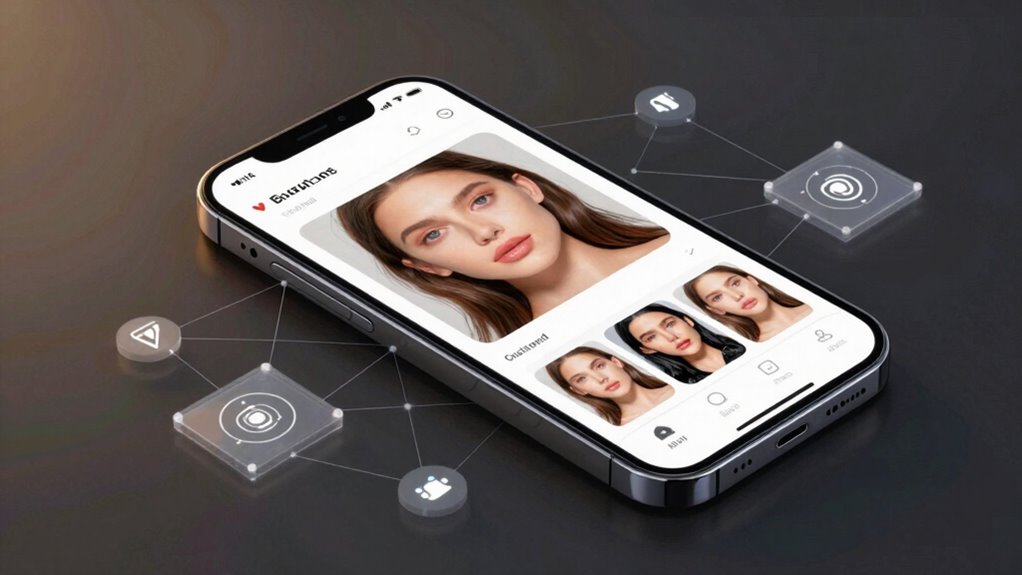

Beauty apps on smart devices collect your facial images, skin details, location data, and personal preferences to offer tailored skincare and makeup tips. They often use photo scans, facial detection, and skin analysis to customize recommendations. Location tracking helps suggest nearby salons or products. Be aware that uploading photos or videos poses privacy risks, especially if data is shared or stored without clear control. To learn how to protect your privacy better, keep exploring these important details.
Key Takeaways
- Beauty apps collect personal data such as facial features, skin condition, preferences, location, and user interactions to personalize recommendations.
- They use advanced imaging and facial mapping techniques, capturing multi-angle photos and videos for detailed skin and facial analysis.
- Location data is often gathered to offer localized services, store visits, or targeted advertising, raising privacy concerns if shared without consent.
- User control over data sharing, privacy settings, and permissions is critical to protecting personal information and complying with regulations like GDPR.
- Risks include data misuse, breaches, unauthorized sharing, and challenges in controlling media once uploaded, emphasizing the need for security and transparency.
What Types of Personal Data Do Beauty Apps Collect and Why?

Beauty apps collect a range of personal data to personalize user experiences and improve their services. When you use these apps, they often gather information about your skin type, facial features, and preferences, which helps tailor recommendations to your beauty routines. They also track your interactions, such as which cosmetic trends you follow and products you like or skip. This data allows the app to suggest trending looks and customized skincare tips aligned with your style. Additionally, some apps access your location or device data to offer localized beauty advice. All this information helps enhance the user experience, making it easier for you to stay updated on current beauty trends and refine your routines based on personalized insights. Understanding the data collection practices of these apps is essential for maintaining your privacy and making informed choices about sharing personal information.
How Do Beauty Apps Capture Facial and Skin Details?

Beauty apps use image capture techniques to take your photos quickly and accurately. They rely on facial feature detection to identify key points like eyes, nose, and mouth. Skin analysis algorithms then examine your skin’s condition, revealing details about texture, tone, and imperfections. Additionally, some apps incorporate support breakfast features to enhance user experience through personalized recommendations. These tools often utilize nutritional information to provide holistic health and beauty insights tailored to individual needs. Furthermore, the integration of data security protocols is crucial for protecting user information and maintaining trust. Moreover, many of these apps collect user data to improve their services and offer more precise results, raising important considerations about privacy protection and data security.
Image Capture Techniques
To capture facial and skin details accurately, beauty apps utilize advanced image capture techniques that go beyond simple photo-taking. They often use multi-angle shots and specialized lighting to enhance detail and reduce shadows, ensuring a clearer view of your skin. These apps may also incorporate depth sensing or 3D imaging to create accurate models of your face, enabling features like virtual try-ons and realistic makeup tutorials. Some apps guide you through the process, instructing you to hold your device steadily or adjust lighting for ideal results. By employing these sophisticated techniques, they gather detailed data on skin texture, tone, and facial contours. This precise capture allows for personalized beauty recommendations, but it also raises privacy concerns about how this sensitive visual data is stored and used. Additionally, image capture techniques are continually evolving to improve accuracy and user experience, which may impact how your data is protected. Advances in depth sensing technology are making these methods even more precise, further increasing the amount of detailed facial information collected. Moreover, the integration of machine learning algorithms helps enhance the analysis, providing more tailored beauty insights. These developments also involve data processing practices that require careful management to ensure user privacy is maintained as technology advances. As these technologies advance, privacy safeguards become increasingly important to protect user data from potential misuse.
Facial Feature Detection
Facial feature detection is the process that allows beauty apps to identify and analyze key points on your face with high accuracy. They use advanced facial recognition algorithms to map features like eyes, nose, and mouth. This data helps customize filters or virtual makeup, but also raises privacy concerns. To protect your information, many apps implement data encryption, securing your facial data during transmission and storage. Some apps create a detailed facial map, storing it locally or in the cloud, which can be vulnerable if not properly protected. Proper data security measures are essential to prevent misuse or unauthorized access to sensitive facial information. Understanding the importance of privacy protection is crucial in today’s digital landscape. Here’s a quick comparison:
| Feature | Purpose | Privacy Consideration |
|---|---|---|
| Facial recognition | Identifies unique facial features | Needs secure data encryption |
| Data encryption | Protects your facial data | Essential for privacy |
| Local storage | Keeps data on device | Reduces external risk |
| Facial mapping | Creates detailed models of facial features | Raises additional privacy concerns. Additionally, the accuracy of facial detection can improve over time with machine learning, which involves collecting and analyzing user data. The ongoing development of these technologies underscores the importance of regulatory measures to safeguard user rights. |
Skin Analysis Algorithms
Since skin analysis algorithms rely on capturing detailed facial and skin features, these apps use sophisticated imaging techniques to gather accurate data. They analyze images for skin health indicators like pores, wrinkles, spots, and texture. By evaluating these details, the algorithms provide personalized skincare advice and product recommendations, driving beauty innovation. You upload a photo or use your device’s camera, and the app’s software examines color, tone, and surface irregularities. Advanced algorithms identify problem areas or signs of aging, giving you insights into your skin’s condition. This technology enables tailored routines that promote healthier skin. Additionally, the collection of detailed facial data raises privacy concerns, as the sensitive information can be misused or inadequately protected. The data collection involved often includes storing and sharing facial images, which heightens the risk of privacy breaches. Understanding the underlying algorithms and data practices is essential to evaluate the privacy implications associated with these apps. This data is often processed using machine learning techniques that continuously improve accuracy but also amplify potential privacy risks. Overall, skin analysis algorithms are transforming skincare by combining precision with convenience, empowering you to improve your skin health effectively.
Do Beauty Apps Track Your Location for Personalization?
Many beauty apps collect your location data to personalize your experience, but this often happens without you realizing it. While location tracking can improve recommendations and offers, it also raises privacy concerns and potential misuse. You should review your privacy settings to control what data you share and understand the risks involved. Regularly monitoring your app permissions can help prevent unintended data sharing, especially considering user control and preferences options available. Additionally, cookie management tools can assist in overseeing how your data is used across different apps and websites.
Location Data Collection
Beauty apps often collect your location data to personalize your experience, whether that means recommending nearby salons, stores, or products tailored to your region. This involves geolocation tracking, which continuously or periodically determines your device’s position. However, before accessing your location, these apps should seek your user consent, clearly explaining how your data will be used. If you grant permission, your precise or approximate location helps improve recommendations and offers relevant to your area. While this feature enhances convenience, it also raises privacy concerns, especially if your location data is stored or shared without proper safeguards. Always review app permissions carefully and ensure you understand when and how your location information is being used.
Personalization Benefits and Risks
Personalization features in beauty apps can offer significant advantages, making your experience more tailored and efficient. By tracking your location, these apps can recommend products suited to your climate or nearby stores, enhancing convenience. However, this benefits come with risks. When your location data is collected, it must be protected through data encryption to prevent unauthorized access. Additionally, apps should obtain your user consent before tracking your location, ensuring you’re aware of how your data is used. While personalization can improve your experience, it also raises concerns about privacy and data security. You need to stay vigilant, understanding when your data is being shared or stored, and ensure apps follow best practices for safeguarding your information.
Privacy Settings Control
Since location tracking can be used to personalize your experience, it’s important to understand how your privacy settings control this feature. Many beauty apps allow you to manage location permissions directly within the settings menu. You can choose to grant or deny access, giving you control over when your location data is shared. Reputable apps often use data encryption to protect your information from unauthorized access. Additionally, they require your user consent before collecting any location data, ensuring you’re aware of what’s being tracked. Regularly reviewing and adjusting these settings helps you maintain privacy while still enjoying personalized features. Remember, staying informed about how your data is handled empowers you to make safer choices and protect your privacy effectively.
What Privacy Risks Come With Uploading Photos and Videos?

Uploading photos and videos to beauty apps can expose you to several privacy risks. Your photo privacy might be compromised if the app shares or stores images without clear consent, leading to unauthorized use or distribution. Video security is also a concern; videos containing personal details or unique features could be accessed by hackers or third parties. Once your media is uploaded, controlling how it’s used becomes difficult, increasing the chance of misuse. Even if the app claims to delete your content, backups or server copies may still exist. Be cautious about what you share, especially sensitive or identifying images. Protect your privacy by understanding the app’s data policies, limiting uploads, and avoiding sharing images that could be exploited or misused.
How Do Beauty Apps Collect and Use Your Preferences and Behavior?
Beauty apps track your preferences and behavior through methods like surveys, browsing habits, and interaction data. They use this information to personalize recommendations and target advertising. Understanding how they collect and utilize your data helps you make more informed privacy choices.
Data Collection Methods
Beauty apps gather your preferences and behaviors through a variety of methods, primarily by tracking how you interact with the app. They monitor your clicks, time spent on features, and choices you make, building detailed profiles. Many apps use algorithms that analyze this data to personalize recommendations. However, the transparency of these algorithms varies, and some apps don’t explain how they process your information. User consent is a critical aspect; apps should clearly ask for your permission before collecting sensitive data. Still, many don’t, raising privacy concerns. By understanding these collection methods, you can better assess how your data is being used and push for more transparent practices that respect your privacy rights.
Usage of Personal Data
Your preferences and behaviors are the main ingredients that beauty apps collect to personalize your experience. When you use these apps, they gather data on your skin type, favorite products, and browsing habits. This information helps tailor recommendations and tutorials suited to you. To protect your information, reputable apps use data encryption, ensuring your personal details stay secure during transmission and storage. However, before collecting any data, they require your user consent, giving you control over what’s shared. Once consent is given, your behavior and preferences are analyzed to improve service, suggest products, or even share insights with third parties, depending on privacy policies. Always review these policies carefully to understand how your data is used and protected.
Do Beauty Apps Share Your Data With Third Parties?
Many beauty apps collect user data, but have you ever wondered if they share that information with third parties? In many cases, these apps engage in third party partnerships, sharing data to improve services or for advertising purposes. It’s important to review their data sharing policies, which outline how your information is used and with whom it’s shared. Some apps may sell or rent data to marketing firms, while others share details with partner companies to personalize ads or offer targeted products. Not all apps are transparent about these practices, so it’s wise to read privacy policies carefully. If you’re concerned about your privacy, knowing whether an app shares data with third parties helps you make informed decisions about what information you’re willing to share.
How Can You Manage Privacy Settings in Beauty Apps?

To effectively protect your privacy while using beauty apps, it’s essential to understand how to manage their privacy settings. Start by exploring the app’s privacy or security menu, where you can usually control data sharing preferences. Regularly review app updates, as developers often improve privacy features or fix vulnerabilities. Adjust settings to limit access to your camera, microphone, or location, especially when they aren’t necessary for the app’s core functions. Be cautious about granting permissions linked to your personal data, and disable any features that aren’t relevant to your beauty routines. Staying informed about privacy options helps you keep control over your data, allowing you to enjoy beauty trends and new app features without compromising your privacy.
What Steps Can You Take to Protect Your Privacy While Using Beauty Apps?

Taking proactive steps is essential to safeguard your privacy when using beauty apps. First, verify that the app uses data encryption to protect your information during transmission and storage. Look for apps that clearly state their encryption practices in their privacy policies. Second, always review and provide user consent carefully before sharing any personal data. Don’t skip through prompts; understand what data the app requests and why. Limit permissions to only what’s necessary for the app’s core functions. Regularly update your app and device software to patch security vulnerabilities. By being vigilant about data encryption and user consent, you considerably reduce the risk of your personal information being misused or exposed. These steps empower you to enjoy beauty apps while maintaining your privacy.
What Laws and Regulations Govern Data Collection in Beauty Apps?
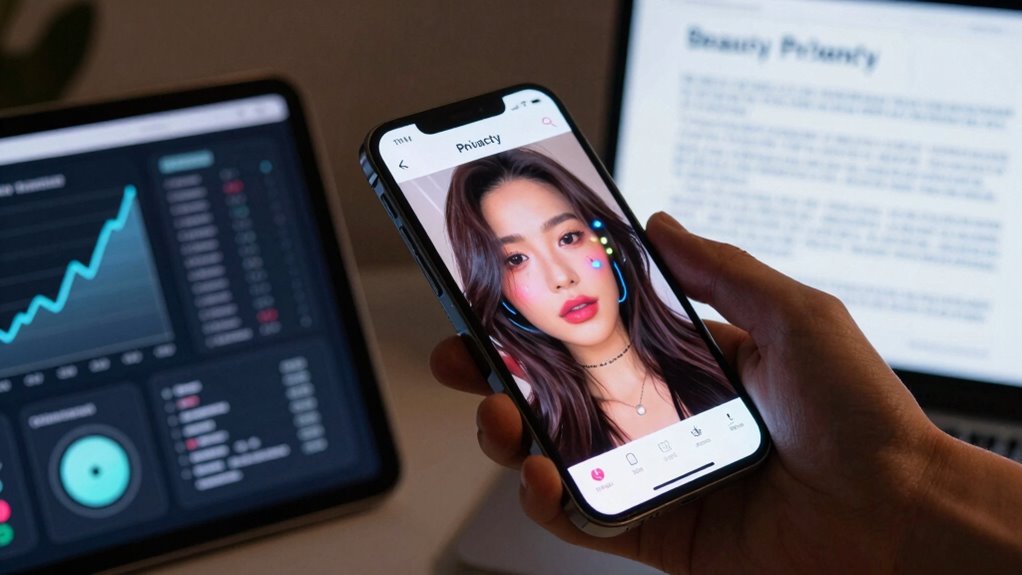
When using beauty apps, understanding the legal landscape that governs data collection helps you make informed choices about your privacy. Laws like the General Data Protection Regulation (GDPR) in Europe and the California Consumer Privacy Act (CCPA) set standards for data privacy and guarantee companies follow strict rules. These regulations require apps to be transparent about what data they collect, how it’s used, and how you can control your information. Regulatory compliance is essential for app developers to avoid penalties and protect your rights. Being aware of these laws helps you recognize when your data is protected and when it might be at risk. Keep an eye out for:
- Transparency notices
- User consent requirements
- Data access rights
- Data minimization rules
- Breach notification obligations
How Do Privacy Concerns Influence Trust and Usage of Beauty Apps?
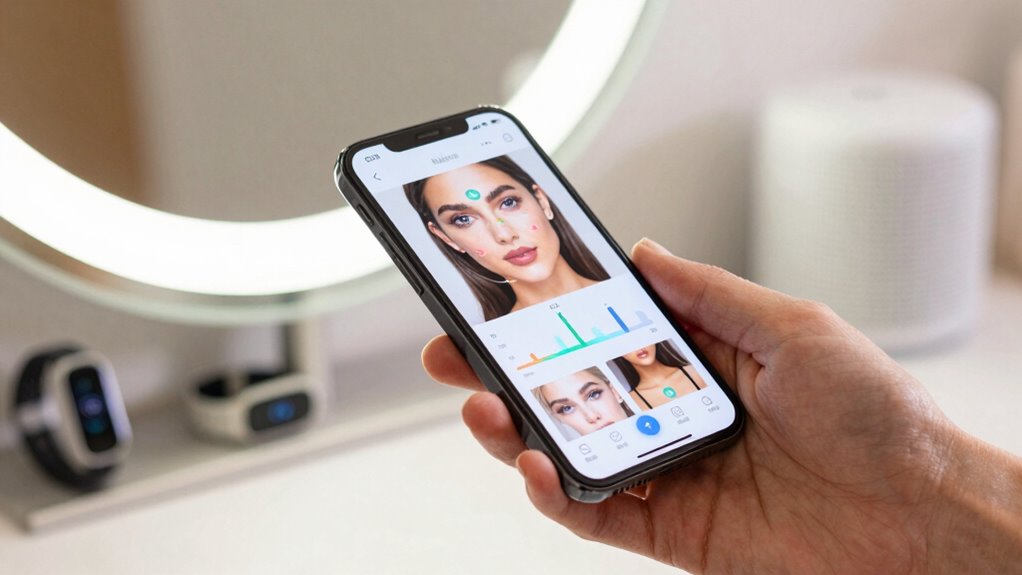
Privacy concerns substantially shape how much you trust and choose to use beauty apps. When apps lack transparency about how they collect, store, and use your data, your trust diminishes. You may hesitate to share sensitive information or rely on features that personalize your experience. Conversely, apps that prioritize transparency build user trust by clearly explaining their data practices and offering control over your information. If you feel confident that your privacy is protected, you’re more likely to continue using the app and engaging with its features. On the other hand, concerns about data misuse or breaches can lead to reduced usage or abandonment. Ultimately, app transparency directly influences your willingness to trust and depend on beauty apps for your needs.
Frequently Asked Questions
Are There Any Age Restrictions for Using Beauty Apps?
Yes, there are age restrictions for using beauty apps. These apps often require age verification to make sure users meet minimum age requirements, typically 13 or older. Parental controls are available to help parents manage and monitor their children’s app usage. You should always check the app’s specific age guidelines and use parental controls if you want to restrict access for younger users, guaranteeing a safe and appropriate experience.
How Long Do Beauty Apps Retain Your Personal Data?
Did you know that 60% of beauty apps retain your data for over a year? You might wonder how long they keep your personal data; it varies by app. Usually, they follow data retention policies that specify retention periods, and you can request user data deletion anytime. Always check the app’s privacy settings to control how long your data stays stored and manage your privacy effectively.
Can I Delete My Data From Beauty Apps Permanently?
Yes, you can delete your data from beauty apps permanently. To do so, look for the app’s data deletion or privacy settings, which often allow you to remove your information completely. If not available, contact customer support directly. Addressing your privacy concerns, deleting your data helps protect your personal information and reduces the risk of misuse. Always review app privacy policies to understand how your data is managed before deleting.
Do Beauty Apps Notify Users About Data Breaches?
Most beauty apps don’t automatically notify you about data breaches. However, they’re required to follow privacy policies that often include breach notification procedures. You should regularly check app updates and privacy policies for any alerts or changes. If you suspect a breach, contact the app’s support team. Staying informed through these policies helps you understand how your data is protected and what steps are taken during a breach.
Are There Any Government Regulations Specific to Beauty App Data Use?
No, there aren’t specific government regulations solely for beauty app data use, but industry standards and privacy policies guide their practices. You should review each app’s privacy policy to understand how your data is handled and protected. Regulations like GDPR and CCPA influence overall data privacy, encouraging transparency and user rights. Always stay informed about app updates and rights related to your personal data within these frameworks.
Conclusion
Remember, over 80% of beauty apps collect your location data to personalize your experience. While these apps can enhance your beauty routine, they also pose privacy risks if you’re not careful. Protect your personal information by managing settings and understanding what data is shared. Staying informed helps you enjoy the benefits without compromising your privacy. Ultimately, being cautious guarantees you can confidently explore beauty innovations while safeguarding your sensitive details.