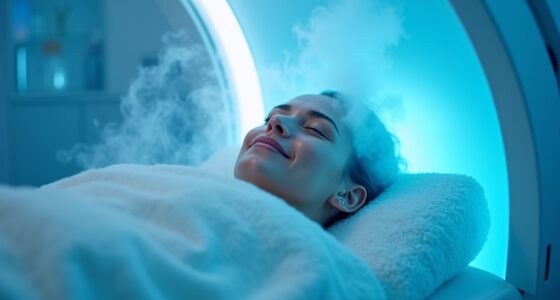
Cold therapy can provide quick relief for rosacea by constricting blood vessels and calming irritated skin. Applying a cold compress wrapped in a cloth for 5-10 minutes may reduce redness, burning, and swelling during flare-ups. Just be careful not to apply ice directly to your skin or overuse it, as these can cause damage. For effective, safe use and additional tips, keep exploring how cold therapy fits into your rosacea management.

Get wellness gear delivered free with Prime
- Fast, free delivery on millions of items
- Prime Video, Amazon Music and more included
- Member-only deals all year
Key Takeaways
- Cold therapy constricts blood vessels, potentially reducing redness and swelling during rosacea flare-ups.
- Applying a wrapped ice pack for 5-10 minutes can provide quick, soothing relief.
- Proper technique involves avoiding direct ice contact and monitoring skin reaction to prevent damage.
- Cold therapy offers temporary relief but should be combined with other rosacea treatments for best results.
- Not suitable for everyone; consult a dermatologist to ensure safe and effective use for your skin.

Have you ever wondered if cold therapy could help soothe your rosacea symptoms? Many people with rosacea find that managing flare-ups can be challenging, and they’re always searching for relief options. One method gaining attention is using an ice pack or other forms of skin cooling to reduce redness and inflammation. The idea is simple: applying cold to affected areas might help constrict blood vessels, lessen swelling, and provide a calming effect. But does it truly work, and how should you approach it safely?
Using an ice pack is one of the easiest ways to incorporate skin cooling into your rosacea management routine. You don’t need fancy equipment—just a clean cloth or towel wrapped around the ice pack to prevent direct contact with your skin. Applying this cold compress for short intervals, typically 5 to 10 minutes, can help calm irritated skin without risking frostbite or further irritation. The cold constricts blood vessels, which can temporarily diminish redness and reduce the sensation of burning or stinging. Many users report feeling a soothing relief after applying an ice pack, making it a quick and accessible option during flare-ups.
Using a cold pack with a cloth cover for 5-10 minutes can soothe rosacea flare-ups safely.
However, it’s essential to be cautious. Cold therapy isn’t a cure for rosacea, and overdoing it can cause more harm than good. Skin cooling should be used carefully, especially if you have sensitive or damaged skin. Always avoid prolonged contact, and never apply ice directly to your skin. Instead, wrap it in a soft cloth or towel to create a barrier. If your skin feels numb or turns white or blue, remove the ice immediately. Remember, the goal is to reduce discomfort, not to cause additional irritation.
Incorporating cold therapy into your routine can be as simple as using an ice pack during flare-ups or incorporating gentle skin cooling techniques after cleansing your face. Some people find that a chilled, damp cloth can also provide similar relief without the intensity of an ice pack. The key is to listen to your skin—if cold treatments worsen your symptoms or cause discomfort, it’s best to stop and consult your dermatologist. Additionally, understanding how automation technologies are used in skincare routines can help you make informed choices about integrating new therapies safely.
While cold therapy offers promising relief for some, it’s not a universal solution. It’s most effective when combined with other rosacea treatments and lifestyle changes. Always patch-test new methods and seek professional advice to develop a safe and effective plan. With patience and proper technique, skin cooling might become a helpful tool in managing those frustrating rosacea flare-ups.
As an affiliate, we earn on qualifying purchases.
Frequently Asked Questions
Can Cold Therapy Worsen Rosacea Symptoms Over Time?
Cold therapy might worsen your rosacea symptoms if your skin is highly sensitive, as extreme cold can trigger inflammation and redness. While it often helps reduce inflammation temporarily, overuse or improper application could lead to increased skin sensitivity and flare-ups. To avoid this, always test a small area first, use gentle cold treatments, and consult your dermatologist. Properly managed, cold therapy can aid in inflammation reduction without worsening your condition.
How Long Should I Apply Cold Therapy During Each Session?
You should apply cold therapy for about 10 to 15 minutes per session, following duration guidelines to guarantee skin damage. Keep your application frequency consistent, ideally once or twice daily, to help soothe redness and reduce inflammation. Always listen to your skin, and if you notice increased irritation or discomfort, reduce the duration or frequency. Remember, moderation ensures effective relief without risking further irritation.
Are There Specific Cold Therapy Devices Recommended for Rosacea?
You should look for device recommendations specifically designed for facial use, like chilled gel packs or cold compress devices with adjustable settings. When applying cold therapy, follow proper application techniques by wrapping the device in a soft cloth and limiting contact to a few minutes to avoid skin damage. Always prioritize gentle application and consult a dermatologist for personalized advice, ensuring you use the right device safely.
Is Cold Therapy Safe for All Rosacea Skin Types?
Ever wonder if cold therapy’s safe for your rosacea skin? While it can soothe some symptoms, safety considerations are vital, especially if you have high skin sensitivity. Cold therapy isn’t suitable for everyone; it may trigger irritation or worsen redness in sensitive skin types. Always test on a small area first and consult your dermatologist to verify it’s safe for your specific skin condition.
Can Cold Therapy Be Combined With Other Rosacea Treatments?
You can combine cold therapy with other rosacea treatments, but you should do so carefully. Combining therapies as complementary treatments may enhance relief and reduce flare-ups, but it’s best to consult your dermatologist first. They can guide you on safe ways to incorporate cold therapy alongside topical medications or laser treatments, ensuring you avoid irritation. Always follow professional advice to maximize benefits and minimize risks when using multiple rosacea therapies together.
As an affiliate, we earn on qualifying purchases.
Conclusion
While cold therapy might bring some relief to your rosacea, it’s not a miracle cure. Like a trusty steed in a medieval tale, it can soothe and calm your skin temporarily, but don’t expect it to banish flare-ups forever. Remember, patience and proper skincare are your best allies. If you’re seeking comfort, giving cold therapy a try could be worth the gamble, just as a brave knight might trust their armor in uncertain battles.
As an affiliate, we earn on qualifying purchases.
As an affiliate, we earn on qualifying purchases.
Cold & flu season Picks
humidifiers
As an affiliate, we earn on qualifying purchases.