Microcurrent therapy delivers low-level electrical currents that stimulate blood flow and energize dormant hair follicles, promoting thicker growth. LED therapy uses specific light wavelengths to boost cellular activity, reduce inflammation, and improve scalp health gradually. Both options are non-invasive and easy to use, but microcurrent offers a more targeted energizing effect, while LED supports cellular regeneration over time. To find out which suits your needs best, explore how each treatment works and their benefits further.
Key Takeaways
- Microcurrent therapy stimulates blood flow and energizes hair follicles directly with electrical currents.
- LED light therapy promotes cellular regeneration and reduces scalp inflammation passively using specific wavelengths.
- Microcurrent offers targeted stimulation, while LED provides a gentle, low-maintenance, passive treatment.
- Both treatments support hair growth but differ in mechanism: electrical stimulation versus cellular activation.
- Choice depends on personal preference, scalp sensitivity, and specific hair regeneration goals.
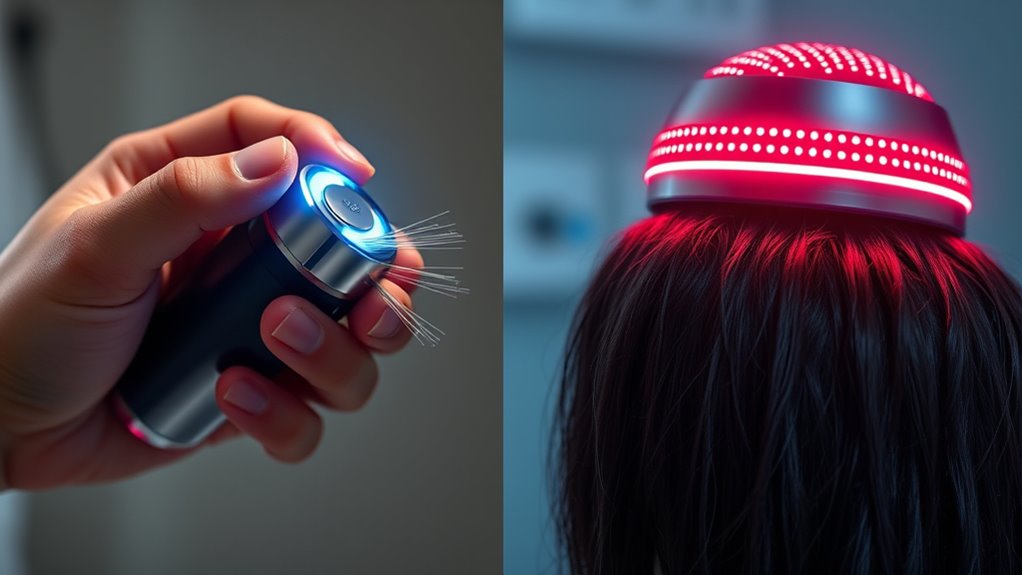
When it comes to hair regeneration, many people turn to non-invasive treatments like microcurrent therapy and LED light therapy. These options are appealing because they offer a way to boost hair growth without surgery or medication. Both treatments focus on stimulating the scalp, but they do so in different ways. Understanding how each method works can help you decide which might be best for your needs.
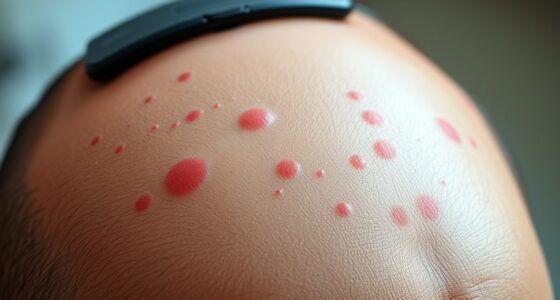
Microcurrent therapy involves delivering low-level electrical currents to the scalp. This process is often called scalp stimulation because it encourages increased blood flow and cellular activity in the hair follicles. By stimulating the scalp directly, microcurrents can enhance the delivery of nutrients and oxygen to hair follicles, supporting hair follicle therapy. This targeted approach helps to energize dormant hair follicles, potentially reversing miniaturization and promoting new hair growth. Many users report that microcurrent sessions leave their scalp feeling tingly or refreshed, and over time, they notice finer, thicker hair.
Microcurrent therapy stimulates scalp blood flow, energizing hair follicles and promoting thicker, healthier hair growth.
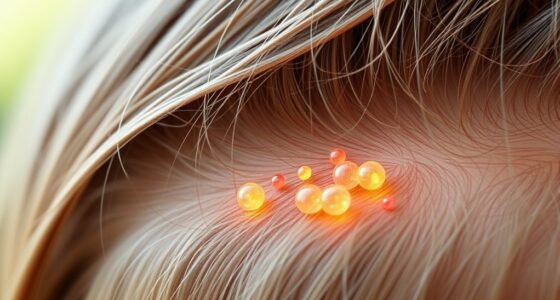
LED light therapy, on the other hand, uses specific wavelengths of light—usually red or near-infrared—to penetrate the scalp and stimulate cellular activity. This method promotes hair follicle therapy by encouraging the production of ATP, which is essential for cellular energy and regeneration. When you use LED therapy, the light stimulates the hair follicles at a cellular level, helping to reduce inflammation, improve circulation, and strengthen existing hair. It’s a gentle, pain-free method that can be easily incorporated into your routine, often with devices you can use at home. Many people find LED therapy to be relaxing, and consistent use can lead to noticeable improvements in hair density.
While both treatments aim to activate hair follicles and improve scalp health, they do so through different mechanisms. Microcurrent therapy provides an electrical boost that can invigorate the scalp tissue directly, making it ideal if you’re looking for a more stimulating approach. LED light therapy offers a more passive but equally effective stimulation at the cellular level, suitable for those seeking a low-maintenance solution. Ultimately, your choice may depend on your personal preference, scalp sensitivity, and the specific condition of your hair loss. Consulting with a specialist can help determine the most suitable treatment plan for your hair regeneration goals. Both options are promising, non-invasive, and backed by research, giving you viable pathways to restore hair health.
Frequently Asked Questions
How Long Does It Typically Take to See Results With Each Treatment?
You typically see visible results within 8 to 16 weeks of consistent treatment. With microcurrent therapy, it may take around 10-12 weeks to notice thicker, healthier hair, while LED treatments often show improvements sooner, around 8-10 weeks. The key is sticking to your treatment duration and maintaining regular sessions, as consistent use maximizes your chances of achieving noticeable hair regeneration results.
Are There Any Side Effects Associated With Microcurrent or LED Therapy?
You might experience potential skin irritation or electrical sensitivity with microcurrent or LED therapy, though serious side effects are rare. Studies show that less than 5% of users report discomfort, which usually subsides quickly. Microcurrent can cause mild tingling, while LED therapy is generally well-tolerated. Always follow instructions and consult a professional if you have sensitive skin or underlying conditions to minimize any adverse effects.
Can These Treatments Be Combined for Better Hair Regeneration?
Yes, you can combine microcurrent and LED therapy for better hair regeneration. The combination benefits include enhanced treatment synergy, which may accelerate hair growth and improve scalp health. Using both therapies together targets different aspects of hair loss, providing a more extensive approach. Just make certain you consult a professional to develop a safe and effective treatment plan tailored to your needs, maximizing the benefits of both methods.
What Is the Recommended Frequency for Each Type of Therapy?
You should follow the recommended frequency for each therapy to see the best results. For microcurrent, aim for treatments 2-3 times a week, with sessions lasting about 20-30 minutes, and then switch to a maintenance schedule of once a week. LED therapy typically needs 3-5 sessions weekly for 15-20 minutes initially, then move to a less frequent routine. Think of it as tending a garden—consistent care yields the best bloom.
Are There Specific Hair Conditions That Respond Better to One Method?
You’ll find that microcurrent therapy works best for improving scalp elasticity and stimulating hair follicle health, especially in early-stage hair thinning. LED therapy, on the other hand, tends to be more effective for conditions involving inflammation and poor circulation. If your scalp shows signs of decreased elasticity and weak follicles, microcurrent might be your best choice. For overall scalp health and boosting circulation, LED treatments can complement your regimen effectively.
Conclusion
Imagine your scalp as a fertile garden, waiting to bloom. Microcurrent acts like a gentle rain, encouraging roots to grow deep, while LED lights are like sunlight, energizing each sprout. Both nurture your hair’s revival, but choosing the right one depends on your unique landscape. With patience and care, you’ll see your hair flourish like a vibrant forest, full of life and promise. Your journey to regeneration is a dance between these radiant forces—embrace the magic.