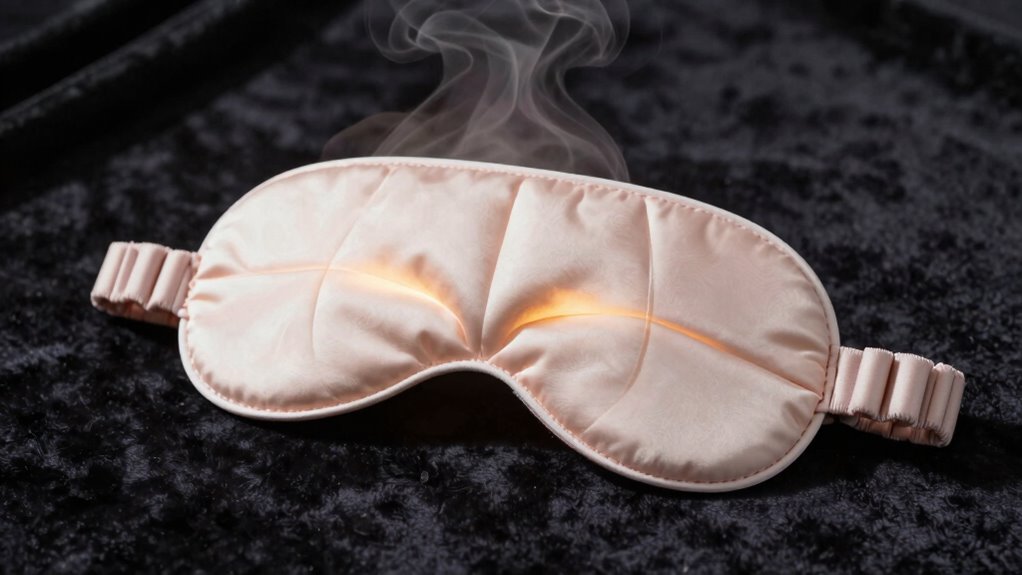

For the best comfort and safety, keep your heated eye mask within the temperature range of 104°F to 113°F (40°C to 45°C). This range provides soothing heat without risking burns or irritation, helping to relax eye muscles and improve blood flow. Make sure to monitor the temperature regularly and use devices with safety features like auto shut-off. To discover how to maintain this ideal temperature and maximize your relaxation, check the detailed tips below.
Key Takeaways
- The ideal temperature range for heated eye masks is between 104°F and 113°F (40°C to 45°C).
- Staying within this range ensures soothing heat without risking burns or skin irritation.
- Consistent temperature control enhances comfort, safety, and the mask’s durability over time.
- Use adjustable settings to personalize heat levels, maintaining within the recommended temperature for optimal relaxation.
- Regularly monitor the device to prevent overheating or cooling below the safe comfort zone.
Why Correct Temperature Settings Matter for Heated Eye Masks
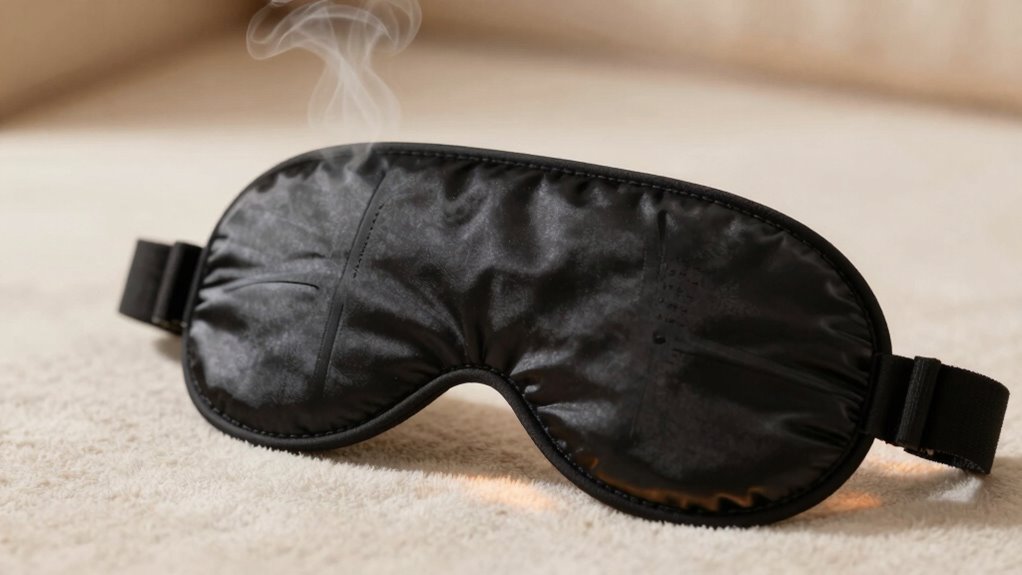
Getting the temperature right is essential when using heated eye masks because too high a setting can cause discomfort or even burns, while too low may not provide the soothing relief you’re seeking. That’s why many masks feature cooling options and temperature sensors. Cooling options help prevent overheating by automatically reducing heat if the mask gets too hot, protecting your skin. Temperature sensors continuously monitor the device’s heat level, ensuring it stays within a safe, effective range. This real-time regulation maintains comfort and safety during use. Moreover, user safety is prioritized through these advanced features, providing peace of mind during relaxation. Additionally, safety certifications from reputable organizations ensure these features meet strict safety standards. Without these features, you risk exposure to excessive heat or insufficient warmth. Proper temperature control not only enhances your experience but also safeguards your skin, making your relaxation time both comfortable and safe. Trusted safety features are crucial for ensuring consistent and reliable temperature regulation in heated eye masks. Implementing temperature management systems further enhances device reliability and user confidence.
What Is the Safe and Comfortable Temperature Range?
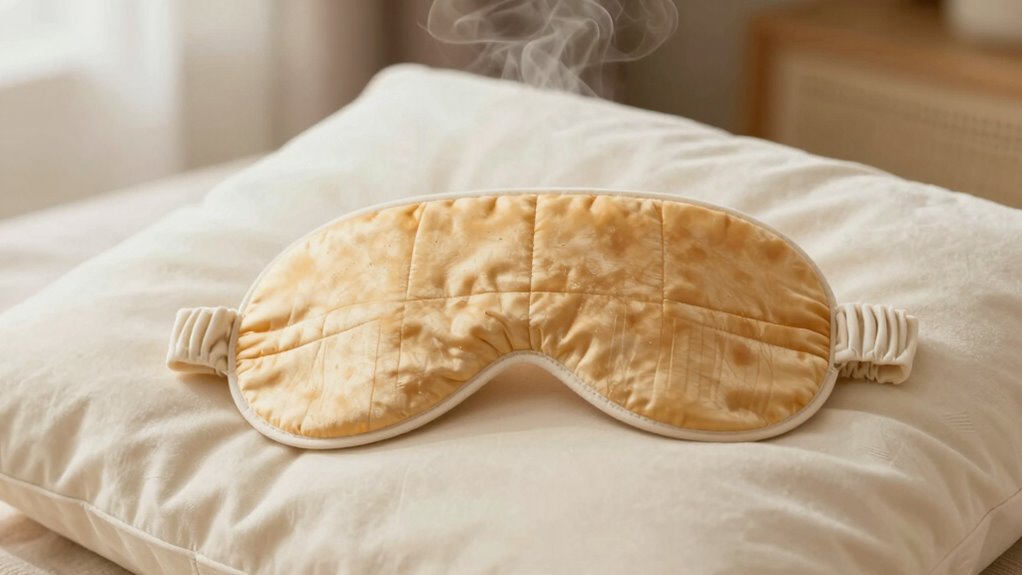
Maintaining the right temperature during use guarantees your comfort and safety. The ideal temperature range for heated eye masks typically falls between 104°F to 113°F (40°C to 45°C). Proper temperature regulation ensures that you experience soothing heat without risking burns or discomfort. Staying within this range promotes user comfort by providing enough warmth to relax muscles and improve blood flow, yet remains safe for prolonged use. Always check your mask’s recommended settings and avoid exceeding the maximum temperature to prevent skin irritation. Keep in mind that individual preferences might vary slightly, but sticking to this safe temperature range helps you enjoy the benefits of warmth while ensuring your safety during use.
How Does Temperature Affect the Relaxing Benefits of Your Eye Mask?
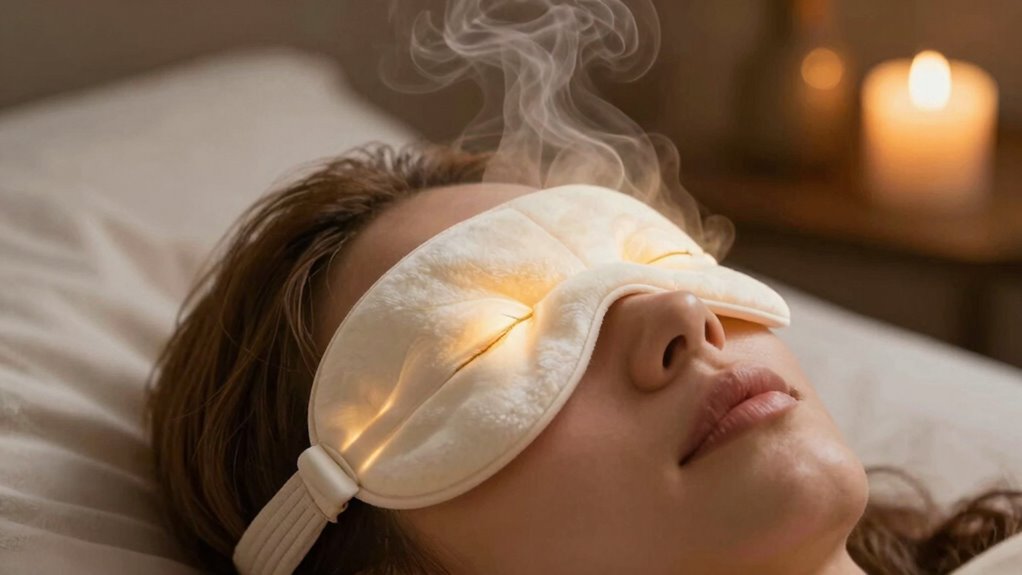
The temperature of your heated eye mask directly influences its relaxing benefits. When the temperature aligns with your perception of comfort, you’ll experience maximum relaxation. If the mask feels too hot, it can cause discomfort or even irritation, reducing eye comfort and making it harder to unwind. Conversely, if it’s too cool, you might not get the soothing heat needed to relax tense muscles around your eyes. Temperature perception varies from person to person, so finding the right balance is key. When your eye mask maintains an ideal temperature within the safe temperature range, it promotes better blood flow, eases tension, and enhances relaxation. Proper temperature regulation is crucial for avoiding discomfort and maximizing the soothing effects of your eye mask. Maintaining the correct temperature also helps prevent potential skin irritation or burns, making your experience both enjoyable and secure. Consistent heat distribution ensures that the entire area remains comfortable throughout your session, preventing hot spots or uneven warmth. Ensuring the consistent heat throughout use can improve the overall effectiveness of your relaxation routine. Ultimately, the right temperature enhances your overall experience, making your eye mask a more effective tool for stress relief and eye comfort.
How Can You Tell If Your Heated Eye Mask Is Too Hot or Too Cool?
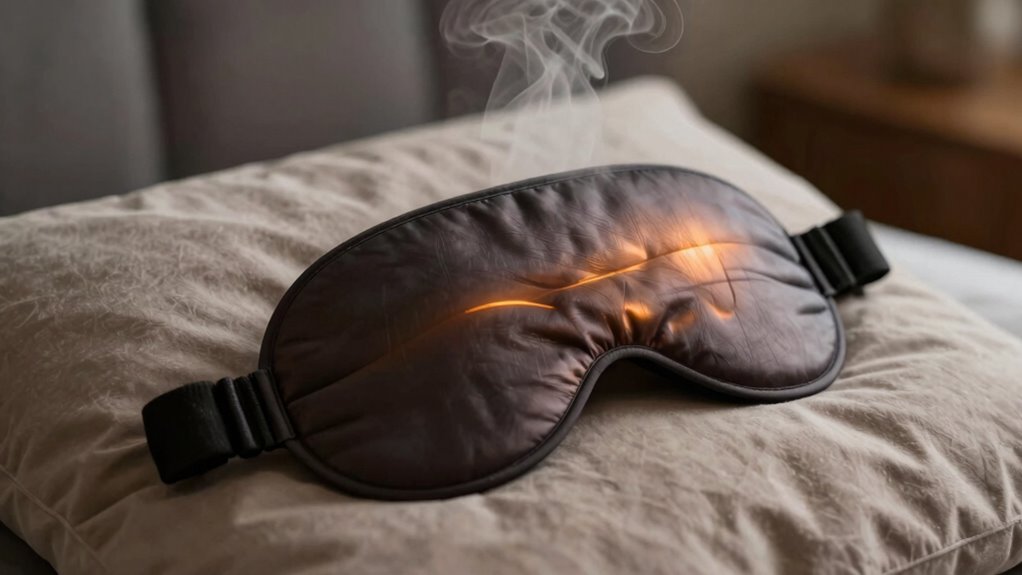
To guarantee your heated eye mask provides the intended comfort and relaxation, it’s important to recognize the signs of it being too hot or too cool. If your mask feels uncomfortably hot or causes a burning sensation, it’s likely too hot, which can also affect eye skin sensitivity over time. Conversely, if it feels lukewarm or doesn’t provide enough warmth, it’s probably too cool, reducing its soothing effects. Pay attention to the mask’s heating technology—if it’s inconsistent or fluctuates, that indicates a problem. Also, consider eye mask durability; a well-made mask maintains steady temperature without rapid changes. Regularly monitoring how the mask feels helps ensure you enjoy safe, effective relief without risking discomfort or harm. Additionally, understanding Free Floating concepts can help you better assess the safety and effectiveness of your heated eye mask. Being aware of temperature regulation features can assist in maintaining optimal comfort levels and prevent potential hazards. Proper protocols for use and maintenance also contribute to consistent performance and longevity of the mask. Familiarizing yourself with water chemistry and how it affects heating elements can further enhance your ability to troubleshoot and maintain the device effectively. Furthermore, paying attention to device specifications can help you select the most suitable heated eye mask for your needs.
Tips for Setting and Maintaining the Perfect Temperature
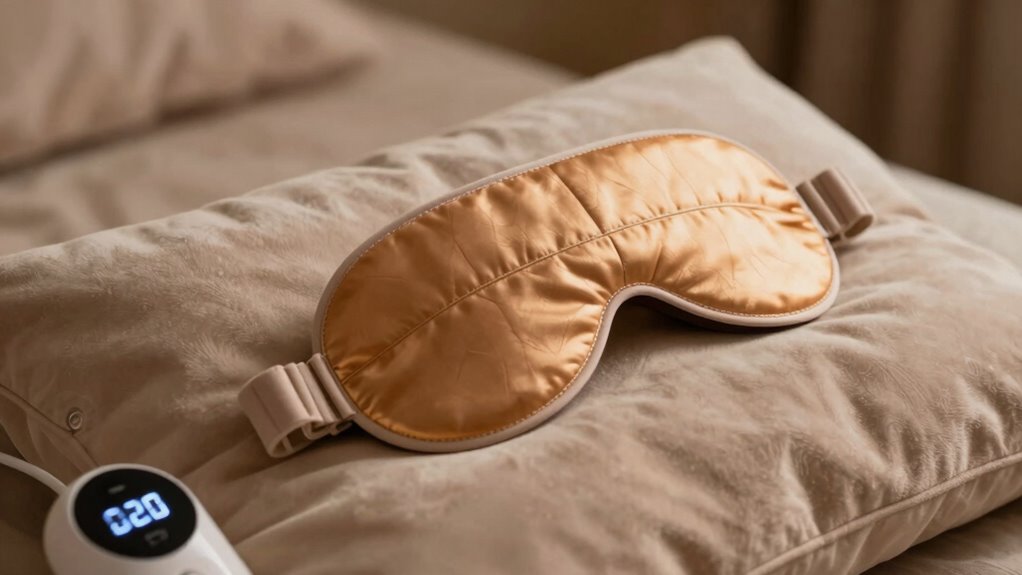
Achieving the perfect temperature on your heated eye mask requires attention and adjustments to suit your comfort. Start by setting it to a low or medium level, especially if you’re using it to relieve eye strain or as a sleep aid. Pay close attention to how your eyes feel—if you experience warmth that’s soothing rather than overwhelming, you’re on the right track. Adjust the temperature gradually, giving your eyes time to adapt. Consistency is key; maintain the same setting during each use to build a comfortable routine. Remember, the goal is to find a balance that relaxes your eye muscles without causing discomfort or dryness. Regularly check the temperature to prevent it from drifting too hot or cool, ensuring ideal relaxation and relief. Monitoring the water temperature can help you maintain a safe and effective level for comfort. Additionally, understanding the ideal temperature range for heated eye masks can prevent overheating and enhance your relaxation experience. Being aware of the temperature stability can also help ensure consistent comfort throughout each session. Incorporating proper usage techniques can further optimize your comfort and safety during use.
How to Safely Adjust and Use Your Heated Eye Mask
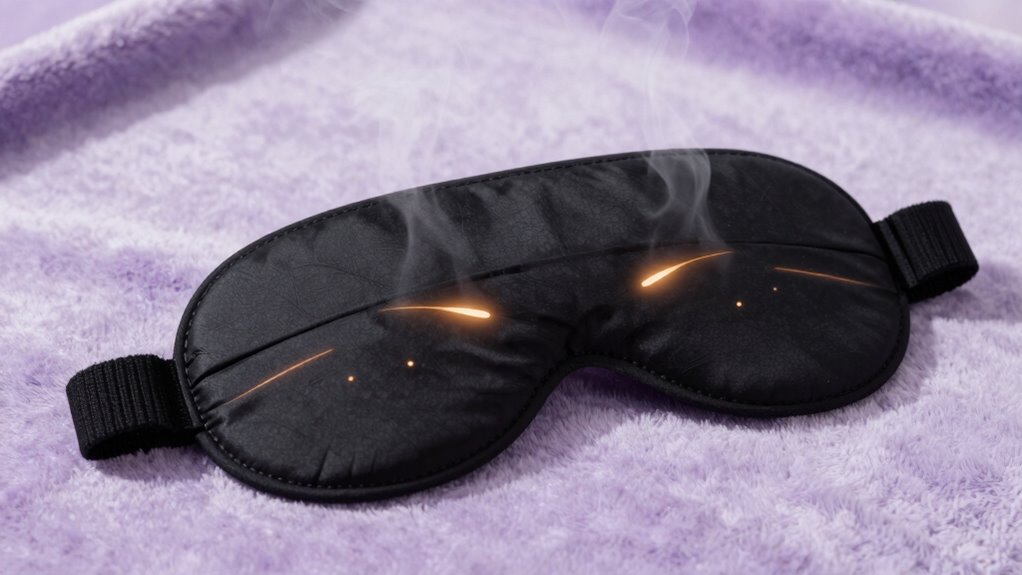
Before you start adjusting your heated eye mask, make sure it’s clean and fully charged or plugged in according to the manufacturer’s instructions. Proper eye care begins with ensuring your mask is hygienic, reducing the risk of irritation. When turning on the device, start with a lower temperature setting, especially if you have sensitive skin. Always test the warmth on your hand first to gauge comfort and skin safety. Avoid setting the heat too high, as excessive heat can cause skin irritation or damage. Keep the mask away from water or moisture, and never leave it unattended while in use. Follow the recommended duration for use to prevent overheating. Additionally, be aware of medical alert wearables that can monitor your health while using such devices, especially if you have underlying conditions. Using proper device maintenance helps ensure consistent temperature control and prolongs the lifespan of your heated eye mask. Regularly checking the temperature settings and understanding skin biology can help prevent discomfort or injury. Maintaining awareness of safety guidelines provided by the manufacturer reduces the risk of accidents. Being familiar with temperature regulation features can also enhance your safety and comfort. By handling your heated eye mask carefully, you protect your skin and maximize the benefits of relaxing eye care.
How to Choose a Heated Eye Mask Based on Temperature Features

When selecting a heated eye mask, consider how adjustable temperature settings can help you find the perfect level of comfort. Pay attention to the materials used, ensuring they’re safe and gentle on your skin. Safety features like auto shut-off add peace of mind while you enjoy soothing warmth.
Adjustable Temperature Settings
Are you unsure how to pick a heated eye mask with the right temperature settings? Adjustable temperature controls let you personalize your comfort, which is key for improving sleep hygiene and supporting eye health. When selecting a mask, consider these factors:
- Look for multiple heat levels to find your ideal setting, especially if you’re sensitive to temperature changes.
- Choose masks with easy-to-use controls so you can make quick adjustments without disrupting your relaxation.
- Ensure the temperature range isn’t too high to prevent skin irritation or discomfort, promoting better sleep quality and eye health.
Having control over the heat helps you enjoy a soothing experience, reduces eye strain, and creates a restful environment. This customization makes your heated eye mask more effective and comfortable.
Material and Safety Features
Choosing a heated eye mask with the right material and safety features is essential for both comfort and peace of mind. The fabric options determine how gentle the mask feels against your skin and influence breathability. Look for soft, hypoallergenic materials like silk or cotton for sensitive skin. Safety features, such as auto shut-off and temperature regulation, prevent overheating and ensure safe use.
| Fabric Options | Safety Features |
|---|---|
| Silk, Cotton | Auto shut-off, Overheat protection |
| Microfiber, Bamboo | Temperature control, Cord safety |
Prioritize masks with these features to enjoy soothing warmth without worry. Ensuring proper safety features and comfortable fabrics makes your experience both safe and relaxing.
FAQs About the Best Temperatures for Heated Eye Masks
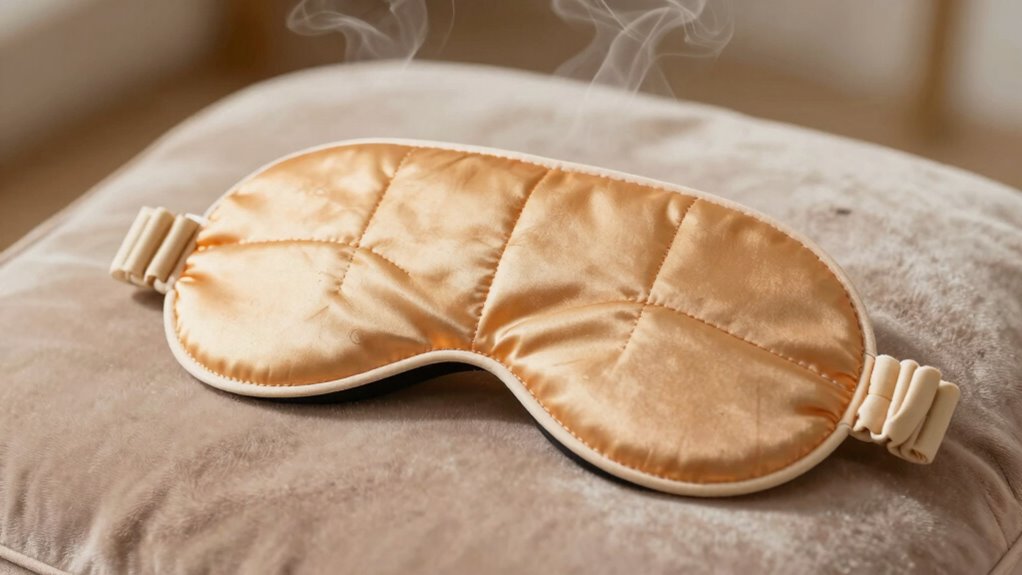
Understanding the ideal temperature range can help you get the most comfort and relief from your heated eye mask. You should also consider safety precautions to prevent burns or discomfort. Balancing comfort with enough heat is key to choosing the right setting for your needs.
Ideal Temperature Range
What’s the ideal temperature range for heated eye masks to provide comfort and safety? Typically, maintaining a temperature between 104°F and 113°F (40°C to 45°C) ensures effective relaxation without risking burns. This range allows you to enjoy soothing warmth while preserving eye mask hygiene, preventing bacterial growth. It’s essential that your mask’s temperature durability can sustain this range over time, avoiding overheating or cooling off too quickly.
Consider these tips:
- Stick to the recommended temperature for consistent comfort.
- Check your eye mask’s specifications for safe temperature limits.
- Ensure the heating element maintains a stable temperature to support eye mask hygiene and longevity.
Safety Precautions Needed
While heated eye masks can offer soothing relief, you need to take safety precautions to prevent burns or discomfort. Always check for proper electrical safety features, such as auto shut-off and insulated wiring, to reduce the risk of electrical hazards. Never use a damaged or frayed mask, and follow manufacturer instructions carefully. If you have allergies or sensitive skin, consider hypoallergenic materials to avoid irritation. Be cautious about the heat level—avoid setting the temperature too high, especially if you’re prone to skin reactions. It’s best to test the mask on your wrist first to ensure it’s comfortable and safe before placing it over your eyes. Taking these precautions helps you enjoy the benefits safely without risking injury or allergic reactions.
Comfort Versus Heat
Finding the right temperature for your heated eye mask is key to balancing comfort and effectiveness. Too hot, and you risk discomfort or skin irritation, especially if you have sensitive skin. Too cool, and you may not get the soothing benefits you’re after. To optimize your experience, consider these points:
- Adjust the heat gradually to find a comfortable level that doesn’t cause skin sensitivity or discomfort.
- Explore cooling options like gel packs or masks with cooling features for those who prefer a less heated experience.
- Pay attention to your skin’s response and choose a temperature that feels soothing without causing redness or irritation.
Frequently Asked Questions
Can Heated Eye Masks Be Used While Sleeping Safely?
Yes, you can use heated eye masks while sleeping safely if you follow sleep safety guidelines and guarantee the mask has automatic shut-off features. Always check the mask’s durability and manufacturer instructions to avoid risks like overheating or burns. It’s best to use a mask with adjustable temperature settings and proper materials, which help maintain safety and comfort throughout the night, giving you restful sleep without worry.
How Long Should I Wear My Heated Eye Mask for Optimal Benefit?
Think of your heated eye mask as a gentle sunrise over your tired eyes. For ideal usage, stick to the duration guidelines provided—usually 10 to 15 minutes—so you don’t overdo it. This time frame allows the warmth to soothe and relax without causing discomfort. Keep it within this window, and you’ll enjoy the full benefits of relief while safeguarding your eyes’ health.
Are There Any Health Conditions That Prevent Using Heated Eye Masks?
You should avoid heated eye masks if you have eye allergies or skin sensitivities, as the heat can worsen irritation or cause allergic reactions. People with certain eye conditions like infections or inflammation should also consult a healthcare professional before use. If you experience discomfort, redness, or swelling, discontinue use immediately. Always read the manufacturer’s guidelines and speak with your doctor if you’re unsure about how your health conditions might affect safe use.
Do Heated Eye Masks Require Batteries or Charging?
Heated eye masks typically require batteries or charging to operate. Most models use rechargeable batteries, so you’ll need to connect them via USB or a charging cable. Some masks come with built-in batteries that need regular recharging, while others use disposable batteries. Check the product details for specific battery requirements and charging methods, so you can guarantee your mask stays powered and ready whenever you need soothing warmth.
How Often Should I Replace or Clean My Heated Eye Mask?
Think of your heated eye mask as a trusted companion that needs regular care. You should clean it after every few uses with a gentle cloth and mild detergent, and replace it when the heating element or fabric shows signs of wear. Maintenance frequency varies, but following the manufacturer’s replacement tips guarantees safety and comfort. Regular upkeep prolongs the mask’s lifespan and keeps your eyes soothing and safe.
Conclusion
Now that you know the ideal temperature range, are you ready to find the perfect heated eye mask for ultimate relaxation? Remember, the right setting can make all the difference in your comfort and benefits. But what if the best temperature is just a tweak away? Don’t settle for less—discover how small adjustments could uncover a whole new level of soothing relief. The secret to perfect comfort might be closer than you think…