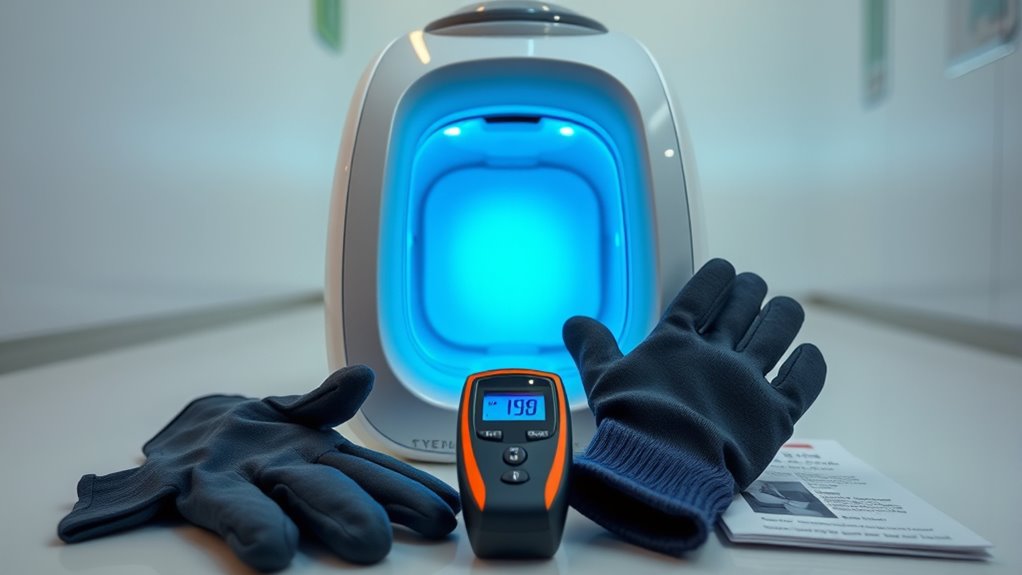

When using at-home cryotherapy tools, always protect your skin with a cloth or towel and avoid direct contact with cold packs for over 15-20 minutes. Start with the lowest temperature and gradually increase if needed, never exceeding safe limits. Use timers to prevent prolonged exposure and check your skin regularly for numbness or discoloration. If you want to learn more safety tips, keep exploring ways to use cryotherapy safely and effectively.
Key Takeaways
- Always use a protective barrier like cloth or towel between the device and skin to prevent frostbite or burns.
- Start with the lowest temperature setting and increase gradually, avoiding prolonged direct contact.
- Limit application time to recommended periods and avoid falling asleep with the device on.
- Monitor skin frequently for numbness, discoloration, or pain, and stop use immediately if symptoms appear.
- Consult a healthcare professional before use if you have circulation issues, diabetes, or nerve problems.
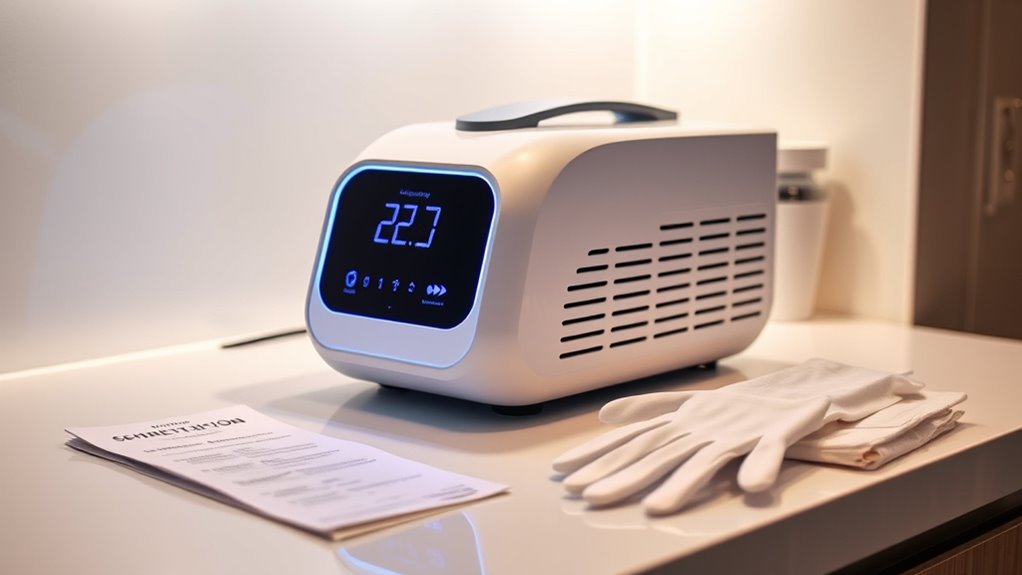
At-home cryotherapy tools can offer convenient relief from pain and inflammation, but they also pose potential risks if not used properly. When considering cold therapy, it’s essential to prioritize skin protection to prevent damage. Applying cold directly to your skin for extended periods can cause frostbite, burns, or nerve damage. To avoid these issues, always use a barrier, such as a thin cloth or towel, between the device and your skin. Never place the cold pack or device directly on bare skin for more than 15-20 minutes at a time. Giving your skin regular breaks allows it to recover and minimizes the risk of cold-induced injuries.
Understanding how to regulate the temperature of your cryotherapy device is fundamental. Many devices have adjustable settings; start with the lowest temperature and increase gradually if needed. Avoid setting the device to the highest level unless explicitly advised by the product instructions. Extreme cold can cause skin irritation or cold burns, which might not be immediately noticeable. Keep a close eye on the treated area during use—if you notice numbness, tingling, or discoloration, stop immediately. These signs indicate that the cold has gone beyond safe limits, and further use could worsen skin damage.
Proper application technique also plays a key role in safe cold therapy. Position the device comfortably, ensuring it’s secure but not so tight that it constricts blood flow. Never fall asleep with the device on, as prolonged exposure increases the risk of skin injuries. It’s also wise to set timers to remind yourself to remove the device after the recommended period. If you’re using a gel pack or ice, wrapping it in a cloth is especially important to prevent direct contact with your skin, which could cause frostbite or cold burns. Being aware of your personal health conditions can alert you to increased risks, such as circulation issues, which require additional caution during cryotherapy.
It’s equally important to be aware of your personal health conditions. If you have circulation issues, diabetes, or nerve problems, consult a healthcare professional before attempting at-home cryotherapy. These conditions can make your skin more susceptible to cold injuries or mask symptoms of damage. Also, avoid using cryotherapy tools on broken, irritated, or inflamed skin to prevent worsening the condition or causing infection.

4 Pack Reusable Ice Packs for Injuries, Soft Gel Ice Packs for Sprains
- Dual Purpose Hot and Cold Packs: Use for injuries or lunch cooling
- Durable Construction: Leak-proof and puncture-resistant
- Safe and Non-Toxic: Flexible, reusable, quick relief
As an affiliate, we earn on qualifying purchases.
As an affiliate, we earn on qualifying purchases.
Frequently Asked Questions
Can At-Home Cryotherapy Cause Long-Term Skin Damage?
At-home cryotherapy can cause long-term skin damage if you don’t pay attention to skin sensitivity and cooling duration. Prolonged exposure or applying the cold too directly may lead to burns or nerve damage. Always follow manufacturer instructions, limit your sessions, and listen to your skin’s response. If you notice persistent redness, numbness, or pain, stop immediately and consult a healthcare professional to prevent lasting harm.
How Often Should I Use Cryotherapy Tools Safely?
You should limit your cryotherapy tool usage to 2-3 times a week, following safety guidelines to prevent skin damage. Pay close attention to your body’s reactions and avoid overuse, which can cause adverse effects. Always read the manufacturer’s instructions and consult a healthcare professional if you’re unsure. Maintaining proper usage frequency guarantees you enjoy the benefits without risking long-term skin or tissue damage.
Are There Age Restrictions for At-Home Cryotherapy Use?
Age restrictions for at-home cryotherapy use typically depend on device safety guidelines, but generally, children and teenagers under 18 should refrain from using these tools without medical supervision. You should always check the manufacturer’s instructions and consult with a healthcare professional to ensure safe use. Following age restrictions and device safety recommendations helps prevent potential injuries and ensures you’re using cryotherapy tools responsibly.
What Are the Signs of Frostbite From Cryotherapy?
Frostbite can sneak up on you like a thief in the night. Watch for skin discoloration—pale, grayish, or waxy skin signals trouble. You might also experience numbness, tingling, or burning sensations, which hint at nerve damage. If your skin feels painfully cold or looks abnormal, stop immediately and seek medical help. Recognizing these signs early can prevent serious damage and keep you safe during cryotherapy sessions.
Is At-Home Cryotherapy Safe for Pregnant Women?
Pregnancy safety is a top priority, so you should avoid at-home cryotherapy if you’re pregnant. Cryotherapy risks include potential harm to your developing baby due to extreme cold exposure, which could lead to complications. Always consult your healthcare provider before trying any cold therapy during pregnancy. While some treatments may seem safe, the risks outweigh the benefits, so it’s best to skip at-home cryotherapy until you’ve received medical clearance.

Inf-way Cryogenic Gloves Low Temperature LN2 Liquid Nitrogen Protective Gloves Cold Storage Safety Frozen Gloves (Blue Mid Arm Length/15)
- Layer Composition: 3-layer construction with nylon, PTFE, cotton
- Universal Fit: Fits most hand sizes and lengths
- Temperature Range: -268°C to +148°C
As an affiliate, we earn on qualifying purchases.
As an affiliate, we earn on qualifying purchases.
Conclusion
Remember, safety always comes first when using at-home cryotherapy tools. Always follow the manufacturer’s instructions, limit your sessions, and listen to your body. Did you know that improper use can cause frostbite or nerve damage? In fact, studies show that over 20% of users experience minor skin irritation from misuse. Stay informed, prioritize safety, and enjoy the benefits of cryotherapy without risking injury. Your health and well-being are worth the extra caution.

PhysioNatural Cold Therapy Ice Machine for Knee Surgery Recovery – Programmable Continuous Cryotherapy System with Adjustable Knee Pad for Post-Op Swelling, Sprains & Injuries
- Natural, Drug-Free Pain Relief: Avoid harmful chemicals with cold therapy
- Reduces Swelling and Inflammation: Controls pain and promotes healing
- Immediate Post-Op Pain Relief: Eases pain from surgeries and injuries
As an affiliate, we earn on qualifying purchases.
As an affiliate, we earn on qualifying purchases.

ONLYCARE Ice Machine for Knee After Surgery, Portable Cold Therapy Machine
- Instant pain relief: Quickly alleviates pain and swelling
- Versatile application: Suitable for knees, ankles, arms, legs
- Large cold compress pad: Includes Velcro for secure fit
As an affiliate, we earn on qualifying purchases.
As an affiliate, we earn on qualifying purchases.