TL;DR
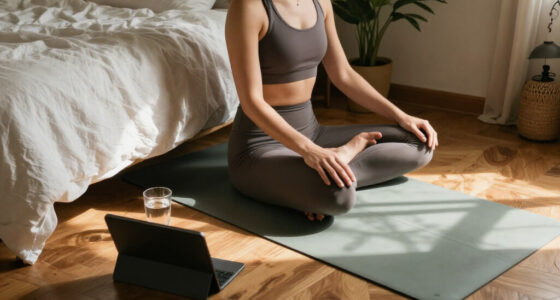
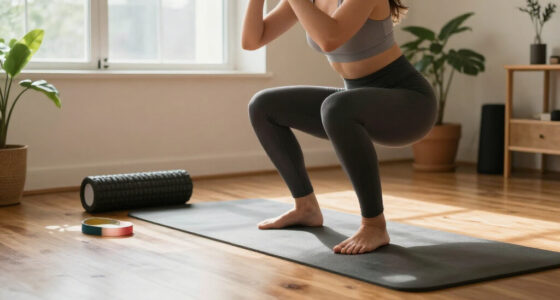
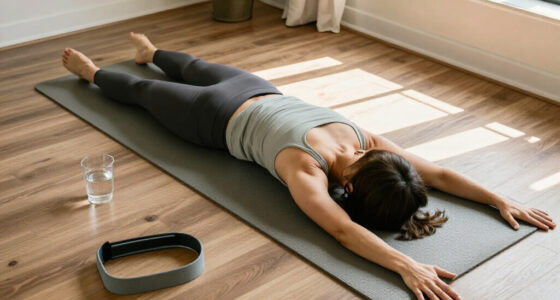
Fit&Well has published a 10-minute beginner Pilates routine by instructor Hannah Lawrence of Sundrop Pilates designed to ease back and hip stiffness. The session consists of seven moves, including the pelvic curl, cat-cow and mermaid side bend. Lawrence advises slow, pain-free movement.
Fit&Well has published a 10-minute beginner Pilates flow designed to ease stiffness in the back and hips, consisting of seven movements that require no equipment beyond an exercise mat. The routine was created by Hannah Lawrence, an instructor with Sundrop Pilates, and is pitched at people new to the practice who want to improve everyday mobility rather than fitness performance.

Get wellness gear delivered free with Prime
- Fast, free delivery on millions of items
- Prime Video, Amazon Music and more included
- Member-only deals all year
The session is built around seven exercises performed in sequence: the pelvic curl or bridge (6–8 repetitions), cat-cow (10 repetitions), mermaid side bend (one minute each side), single-leg forward fold (30–60 seconds each side), single-leg hamstring stretch (one minute each side), Pilates roll down (3–4 repetitions) and supine knee rocks (5 repetitions each side). Most can be done on a mat at home, and several include modifications — for example, bending the knees more during the roll down if the hamstrings feel tight.
According to the Fit&Well report, the routine is intended not just to maintain mobility but to improve the ability to move into and hold certain positions, such as sitting cross-legged and reaching toward the toes. Lawrence describes a practical benchmark for progress: “The idea is that sitting cross-legged and reaching toward your toes will start to feel more comfortable and natural.”
Lawrence advises moving slowly through each exercise and making sure every movement feels like a stretch but does not cause pain. Several of the moves emphasize spinal articulation — peeling the spine off the mat one vertebra at a time in the pelvic curl, and feeling each segment of the back move during cat-cow — rather than speed or repetition volume.
Everyday Mobility, Not Just Exercise
Back and hip stiffness is commonly linked to prolonged sitting and sedentary routines, and short, low-barrier routines like this one lower the entry point for people who cannot commit to longer workouts. A 10-minute session requiring no equipment can fit into a workday break, which may make consistent practice — the factor most often associated with mobility benefits — more realistic.
The routine also matters because it frames joint care as a long-term investment. The Fit&Well report argues that keeping joints strong and mobile now supports easier movement in later years. That claim reflects general guidance found in physiotherapy and exercise science, though the article itself does not cite clinical studies measuring outcomes from this specific sequence.
Products Worth Considering

Oral-B iO5 Rechargeable Electric Toothbrush with 3 Brush Heads and Travel Case

Levoit Eleva 300X Air Purifier with Fully Sealed HEPA Filtration and Smart Control

Oura Ring 4 Smart Ring, Silver, Size 10
As an affiliate, we earn on qualifying purchases.
Pilates and the Desk-Stiffness Problem
: “Pilates is a low-impact exercise method developed in the early 20th century by Joseph Pilates, focused on controlled movement, spinal mobility and core strength. Mat-based flows like the one published by Fit&Well are the most accessible entry point, since they require no reformer or studio equipment.
Several moves in this routine — cat-cow, pelvic curls and knee rocks — are staples also used in physical therapy and yoga for spinal mobility, which is why the sequence overlaps with common rehabilitation-style programming for the back and hips. The routine is published as part of Fit&Well’s regular coverage of home workout ideas, accompanied by instructional videos for each exercise.
Claims Not Backed by Studies
While the exercises themselves are well-documented mobility movements, the article’s claims about long-term joint health and improved positional comfort are presented as instructor guidance rather than research findings. No clinical data, sample sizes or outcome studies accompany the routine.
The routine is also not tailored to individual conditions. People with existing back pain, hip injuries, disc problems or recent surgery should consult a qualified health professional — such as a physiotherapist or doctor — before starting, and any movement that causes sharp or lasting pain should be stopped. It remains unclear how quickly users might notice improvements, as the article gives no timeframe.
How to Try the Flow Safely
Readers can follow the published sequence at home using the accompanying video demonstrations, starting with the pelvic curl and finishing with supine knee rocks. A sensible approach is to run the flow once daily or several times per week, moving slowly and staying within a comfortable range of motion, in line with Lawrence’s instruction that each position should feel like a stretch without pain.
Progress can be tracked informally using the benchmark Lawrence suggests — whether cross-legged sitting and toe reaches feel easier over time. Anyone with persistent back or hip stiffness that does not ease with gentle movement, or that worsens, should seek professional assessment rather than continuing the routine.
Key Questions
Do I need any equipment for this Pilates flow?
No. All seven movements are mat-based and require only floor space and an exercise mat for comfort.
Is this routine suitable for complete beginners?
Yes. According to Fit&Well, the flow is designed for beginners, with modifications such as bending the knees more during the roll down if the hamstrings are tight.
How often should I do the 10-minute routine?
The article does not specify a frequency. Consistent practice is the general aim, but anyone unsure — particularly those with existing back or hip conditions — should seek guidance from a health professional first.
Can this routine cure back or hip pain?
No such claim should be assumed. The routine is presented as a way to support mobility and ease stiffness. Persistent or sharp pain warrants assessment by a doctor or physiotherapist.
How long is each exercise held?
It varies: repetitions range from 3–4 (roll down) to 10 (cat-cow), while held stretches run from 30–60 seconds per side (forward fold) up to one minute per side (mermaid side bend and hamstring stretch).
Source: rss