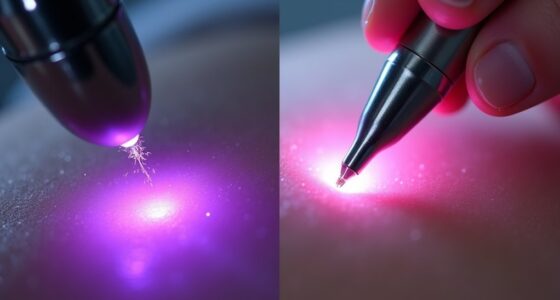
Yes, IPL can effectively treat pigmentation and sunspots by targeting excess melanin with broad-spectrum light. The light is absorbed by pigmented cells, breaking down the melanin and encouraging skin renewal. You may notice improvements after a few sessions, with darker spots fading and your skin becoming more even-toned. Because results vary and maintenance is important, exploring further will reveal how this treatment could work best for you.
Key Takeaways
- IPL targets pigmented areas by absorbing broad-spectrum light to break down excess melanin.
- It effectively fades sunspots and uneven skin tone over multiple sessions.
- IPL stimulates natural skin healing and rejuvenation, improving pigmentation issues.
- Results are gradual, with noticeable improvements after several treatments.
- Suitable for various skin types, with proper settings and sun protection for optimal results.

If you’re struggling with pigmentation and sunspots, IPL treatment offers a non-invasive way to improve your skin’s appearance. Intense Pulsed Light (IPL) therapy targets pigmented areas, breaking down excess melanin that causes dark spots, uneven skin tone, and discoloration. Unlike traditional laser therapy, which uses a single wavelength, IPL emits a broad spectrum of light, making it versatile for treating various skin concerns. When performed by a trained professional, IPL can effectively diminish sunspots and pigmentation, revealing a clearer, more even complexion. The treatment works by delivering controlled pulses of light into your skin, which are absorbed by pigmented cells. This process stimulates your body’s natural healing response, encouraging new skin cell growth and promoting skin rejuvenation. Over a series of sessions, you’ll notice your sunspots fading, and your overall skin tone becoming more uniform.
Laser therapy, including IPL, is a popular choice for skin rejuvenation because it is minimally invasive and requires little downtime. You might experience some mild redness or swelling immediately after treatment, but these effects typically subside within a few hours to a day. This quick recovery makes IPL suitable for those with busy schedules who want noticeable results without significant interruption to their daily lives. As you continue with treatments, your skin gradually becomes brighter and more refreshed, as pigmentation issues are reduced and your skin’s texture improves. Many people see significant improvements after just a few sessions, especially when combined with proper skincare routines.
While IPL is an effective tool for targeting pigmentation and sunspots, it’s important to understand that results vary depending on your skin type and the severity of your pigmentation. People with lighter skin tones tend to respond more rapidly, but darker skin types can also benefit with tailored treatment settings. To maximize your results, your skincare specialist might recommend sun protection measures and topical treatments to prevent future sun damage. Remember, IPL is not a permanent solution, but with maintenance sessions and good skincare habits, you can enjoy long-lasting improvements.
Frequently Asked Questions
How Many IPL Sessions Are Typically Needed for Pigmentation?
You usually need 3 to 6 IPL sessions spaced about 3 to 4 weeks apart for effective pigmentation reduction. The exact number varies depending on your skin type, pigmentation severity, and response to treatment. Sessions are designed to target pigmented areas gradually, so consistent session frequency guarantees ideal results. Be patient, as multiple treatments often provide the best chance for noticeable pigmentation improvement.
Are IPL Treatments Suitable for All Skin Types?
Imagine your skin as a unique garden; some plants thrive in sunlight, others need shade. Similarly, IPL treatments are suitable for many skin types, but skin compatibility varies. Your practitioner assesses your skin’s color and texture to guarantee treatment efficacy and safety. While IPL can work well for most, those with very dark or sensitive skin might need alternative options to achieve the best results without adverse effects.
What Are Potential Side Effects of IPL for Pigmentation?
You might experience some laser risks and skin irritation after IPL for pigmentation. These side effects are usually mild but can include redness, swelling, or temporary pigment changes. It’s important to follow your practitioner’s aftercare instructions to guarantee risks. If you notice persistent discomfort or unusual skin reactions, consult your specialist promptly to ensure proper management and avoid long-term issues.
Can IPL Prevent Future Sunspots and Pigmentation?
Ever imagined a treatment that not only fades existing sunspots but also keeps new ones at bay? IPL can help prevent future pigmentation by stimulating skin rejuvenation and reducing melanin production. However, sun protection is essential—wear broad-spectrum SPF daily to shield your skin. While IPL supports skin renewal, consistent sun safety habits are your best defense against future sunspots and pigmentation, keeping your skin clearer longer.
How Does IPL Compare to Other Pigmentation Treatments?
IPL stands out by using broad-spectrum light to target pigmentation, making it effective for skin rejuvenation and reducing sunspots. Compared to laser technology, IPL is less invasive and typically involves shorter recovery times. While lasers offer precise treatment for deeper pigmentation, IPL covers larger areas quickly and comfortably. Both options improve skin tone, but your choice depends on pigment depth and desired results.
Conclusion
In short, IPL can effectively diminish pigmentation and sunspots, providing a clearer complexion. While results vary, consistent care and consultation boost your chances of beautiful, blemish-free skin. Remember, patience and persistence pave the path to perfection. If you’re keen to eliminate embarrassing spots and embrace a brighter, more beautiful you, IPL could be your ally. Trust the treatment, take the time, and transform your skin’s story from stained to stunning.