
To safely combine home laser treatments with professional sessions, plan your schedule carefully, spacing treatments to allow skin recovery. Use home devices every 2-4 weeks and professional sessions every 6-8 weeks, avoiding overlap on the same concern. Always start with lower intensities, monitor your skin’s response, and follow device or professional guidelines. By understanding how to time and adjust your treatments, you’ll maximize safety and results—more tips are ahead to help you succeed.
Key Takeaways
- Schedule professional treatments every 6-8 weeks, with home laser sessions in between, respecting recommended intervals for skin recovery.
- Use vetted, approved home laser devices and follow manufacturer instructions carefully to ensure safety.
- Start with lower intensities on sensitive skin, gradually increasing as tolerated, and monitor skin reactions closely.
- Avoid overlapping treatments targeting the same skin concerns within a short time frame to prevent irritation.
- Keep detailed records of sessions and skin responses, adjusting the routine or consulting professionals as needed.
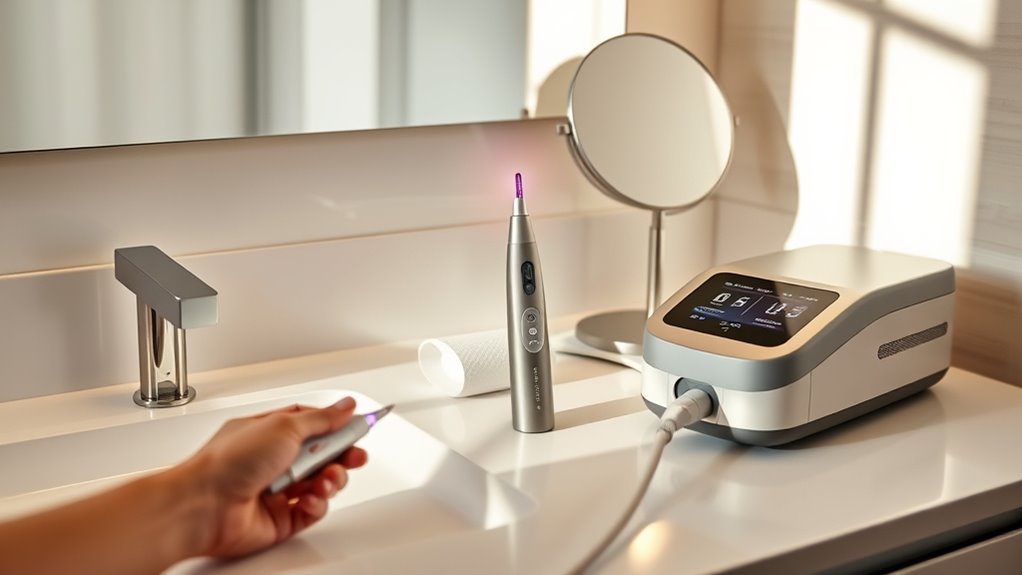
If you’re considering combining different home laser treatments, it’s important to understand how they work together to maximize results and minimize risks. One key factor to think about is your skin sensitivity. Laser treatments can cause varying levels of irritation depending on your skin type and the specific device used. If your skin tends to be more sensitive, you should start with lower treatment intensities and gradually increase as your skin adapts. Combining treatments without paying attention to skin sensitivity can lead to redness, irritation, or even burns. Always listen to your skin’s signals and give it enough time to recover between sessions.
When planning your treatment schedule, treatment frequency plays an essential role. Overdoing it can overwhelm your skin, especially if you’re using multiple devices or combining professional and home treatments. For home laser devices, most manufacturers recommend treating a specific area once every two to four weeks. Professional sessions, on the other hand, often have a longer interval, usually a month or more, depending on the procedure. If you’re combining both, make sure that your schedule respects these intervals to prevent excessive irritation. For example, you might do a professional session every six to eight weeks and use your home device in between, but never too frequently. This approach helps your skin recover and reduces the risk of adverse effects.
Another aspect to consider is how different treatments interact. Some home lasers target hair removal, while others focus on skin rejuvenation or pigmentation issues. Combining these treatments can be effective but requires careful planning. You should avoid doing multiple treatments that target the same skin concern too close together, as overlapping sessions might increase skin sensitivity and risk unwanted side effects. Instead, space out treatments to give your skin time to heal, and always follow the manufacturer’s or your professional’s recommendations.
Additionally, using certain home laser devices that are vetted and approved by professionals can further ensure safety and effectiveness.
Finally, consistency is key when combining treatments. Regular, well-spaced sessions yield better results and reduce the chances of complications. Keep track of your treatment schedule, skin responses, and any side effects. If you notice increased sensitivity or other issues, adjust your routine accordingly or consult a professional. Remember, patience and moderation are essential to safely and effectively combine home laser treatments with professional sessions. Your skin needs time to adapt and heal, so listen to it and prioritize its health above all.
Frequently Asked Questions
Can I Use Different Laser Devices From Different Brands Together?
You shouldn’t use different laser devices from various brands together, as brand compatibility and device safety are vital. Mixing devices can cause unpredictable results or skin damage because each device may have different settings and technology. Always follow the manufacturer’s guidelines and consult a professional before switching or combining devices. Prioritize safety to avoid adverse effects and guarantee effective hair removal or skin treatment.
How Do I Determine the Right Treatment Frequency for Home and Professional Sessions?
Think of treatment scheduling as tuning a fine instrument—you need the right rhythm. You should base your frequency on your skin’s response and the device’s guidelines. Always consult a professional to craft a personalized plan, ensuring safe and effective results. Regular professional consultation helps you adjust your treatment schedule, so you don’t overdo it or leave gaps, maintaining harmony between home and clinic sessions.
Are There Specific Skin Types That Should Avoid Combining Treatments?
You should avoid combining treatments if you have sensitive skin or known skin compatibility issues, as certain skin types may be prone to allergic reactions. People with darker skin tones or skin conditions like eczema should consult a dermatologist before mixing laser treatments. Combining treatments without proper guidance can increase the risk of allergic reactions or skin irritation, so always seek professional advice to guarantee safety tailored to your skin type.
What Should I Do if I Experience Adverse Reactions During Combined Treatments?
If you experience adverse skin reactions during combined treatments, don’t just brush it off—act quickly. Stop all treatments immediately and consult your dermatologist or skincare professional. Document your reactions and avoid further treatments until you get professional guidance. They may recommend treatment adjustments or suggest soothing remedies. Remember, better safe than sorry—listening to your skin helps prevent more serious issues and ensures you stay on the right track.
Can I Use Skincare Products Alongside Laser Treatments Without Reducing Effectiveness?
You can generally use skincare products alongside laser treatments if you prioritize skincare compatibility and product safety. Always choose gentle, non-irritating products and avoid harsh ingredients like retinoids or acids before and after sessions. It’s best to consult your dermatologist to ensure your products won’t interfere with laser effectiveness. Properly selected skincare enhances your results without compromising safety, so always follow professional advice for ideal, safe outcomes.
Conclusion
By blending brave home laser battles with professional prowess, you boost your beauty routine’s brilliance. Consistency creates confidence, and clever combinations cultivate clearer, calmer skin. Keep your commitment consistent, coordinate your treatments carefully, and celebrate your stunning success. Remember, your skincare journey’s joy lies in the joyful juggling of gentle gels and professional procedures—making your radiant results truly remarkable. So, stay savvy, stay steadfast, and savor the stunning skin you’re shaping!