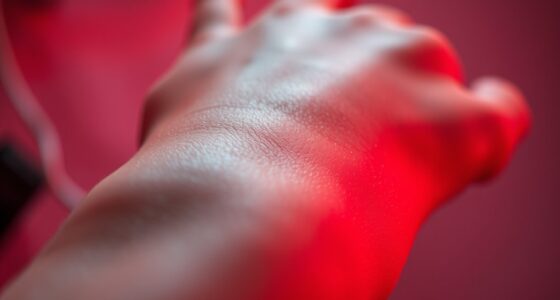
Combining red and near-infrared light boosts your healing and cellular regeneration more effectively than using either alone. Red light targets surface tissues, while near-infrared penetrates deeper into muscles and bones. Together, they stimulate cellular activity, reduce inflammation, and promote tissue repair across various layers. This synergy provides an all-encompassing treatment that speeds recovery and enhances overall vitality. To discover how this powerful combination can benefit you even more, keep exploring the possibilities.
Key Takeaways
- Combining red and near-infrared light enhances tissue penetration, reaching both surface and deep tissues for comprehensive healing.
- Wavelength integration stimulates mitochondrial activity, increasing cellular energy and promoting faster recovery.
- The synergy reduces inflammation and accelerates tissue repair more effectively than single wavelengths.
- Dual wavelengths activate multiple cellular pathways, supporting skin rejuvenation, pain relief, and overall vitality.
- Devices using combined red and near-infrared light deliver more efficient, holistic therapeutic results for various health conditions.

Have you ever wondered how combining red and near-infrared light can enhance health and wellness? The answer lies in the concept of photoenergy synergy, where the combined effects of different wavelengths create a more powerful therapeutic response than either one alone. When you use both red and near-infrared light together, you’re leveraging wavelength integration to maximize cellular benefits. This synergy allows the light to penetrate tissues more effectively, stimulating cellular activity in ways that boost healing, reduce inflammation, and improve overall vitality.
Red light, typically around 630-670 nanometers, is excellent for superficial treatments. It’s absorbed by skin cells, promoting collagen production, reducing wrinkles, and improving skin tone. Near-infrared light, in the 810-850 nanometers range, penetrates deeper into tissues, reaching muscles, joints, and even bones. When these wavelengths are combined, they work in harmony—red light activates surface cells, while near-infrared reaches deeper tissues, fostering holistic cellular regeneration. This integration of wavelengths isn’t just about hitting different depths; it’s about creating a complete healing environment where each type of light enhances the other’s effects.
The real magic happens through wavelength integration. By carefully selecting and combining specific wavelengths, you optimize the delivery of energy to targeted tissues. This means your cells receive a broader spectrum of light energy, which can accelerate recovery and improve outcomes. When red and near-infrared lights are used together, they stimulate mitochondrial activity more effectively, boosting ATP production—the energy source for cell function. This increased energy production energizes your cells, leading to faster repair, reduced inflammation, and a more balanced immune response.
Furthermore, photoenergy synergy encourages cellular communication and regeneration. The combined wavelengths activate different cellular pathways, promoting tissue repair and reducing oxidative stress more efficiently than single-wavelength treatments. This integrated approach can shorten healing times for injuries, ease chronic pain, and support skin rejuvenation. It’s like giving your cells a full-spectrum boost rather than just a partial one.
In practical use, devices that incorporate both red and near-infrared LEDs are designed to maximize this wavelength integration. They deliver a carefully calibrated light spectrum that works synergistically across different tissue layers. The result is a more complete treatment that leverages the strengths of both wavelengths. For you, this means more effective, faster results from your photobiomodulation routine, whether for skin health, pain relief, or overall wellness.
Additionally, understanding the role of AI security in protecting sensitive health data ensures that these advanced treatments remain safe and compliant with regulations.
Frequently Asked Questions
What Are the Potential Side Effects of Combining Red and Near-Infrared Light?
When combining red and near-infrared light, you might experience increased skin sensitivity or mild irritation, especially if you have sensitive skin. Eye safety is also a concern; staring directly at the light source could cause discomfort or damage. To minimize side effects, follow safety guidelines, avoid direct eye exposure, and start with shorter sessions. If you notice persistent irritation or discomfort, consult a healthcare professional.
How Long Does It Typically Take to See Results With Combined Light Therapy?
You can typically expect to see results within 4 to 6 weeks of consistent combined light therapy. The treatment duration varies depending on your specific condition and how your body responds. Most people notice improvements gradually, with some experiencing visible changes sooner. To achieve the best results, follow the recommended schedule and stay patient, as the expected timeline for visible benefits can differ from person to person.
Can This Therapy Be Effective for Autoimmune or Chronic Conditions?
Yes, this therapy can be effective for autoimmune conditions and chronic inflammation. It promotes autoimmune modulation by targeting affected tissues, helping reduce inflammation and support tissue repair. You might notice improvements in pain, swelling, and energy levels over time. Consistent sessions are key, and results vary depending on your condition. Talk to your healthcare provider to determine if this treatment suits your specific needs for managing chronic or autoimmune issues.
Is There an Optimal Frequency or Schedule for Using Combined Light Therapy?
They say “timing is everything,” and that’s true for light therapy. To find the most effective timing, you should follow a consistent frequency schedule, typically 3-5 sessions per week. Listen to your body and adjust as needed, but don’t overdo it. Regular sessions, spaced evenly, maximize benefits. Consult your healthcare provider for personalized guidance, ensuring you get the best results from your combined red and near-infrared light therapy.
Are There Any Contraindications or Populations Who Should Avoid This Treatment?
You should avoid combining red and near-infrared light therapy if you’re pregnant or photosensitive, as it might pose risks. If you have a history of skin sensitivity, epilepsy, or are taking medications that increase photosensitivity, consult your healthcare provider first. People with these conditions should exercise caution or refrain from this treatment to prevent adverse effects. Always seek professional advice before starting new therapies.
Conclusion
By combining red and near-infrared light, you’re giving your body a powerful boost for healing and regeneration. This approach taps into the best of both worlds, maximizing benefits and helping you see real results. Think of it as hitting two birds with one stone—more effective and efficient. If you’re serious about improving your well-being, this innovative combo could be just what you need to stay ahead of the game and feel your best.