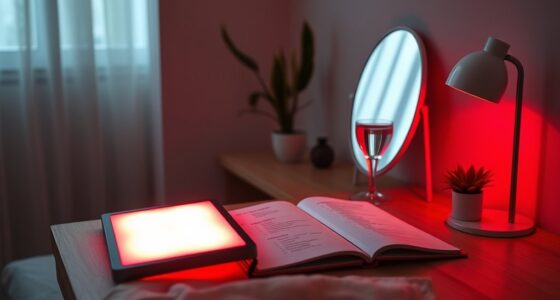
LED therapy offers a safe, non-invasive way to improve the appearance of stretch marks and scars. By using specific wavelengths of light, it promotes skin repair and collagen production, helping reduce redness and texture issues. While results vary and multiple sessions are usually needed, it’s gentle and suitable for most skin types. Keep exploring to discover how this innovative treatment could help your skin recover and look smoother over time.

Get wellness gear delivered free with Prime
- Fast, free delivery on millions of items
- Prime Video, Amazon Music and more included
- Member-only deals all year
Key Takeaways
- LED therapy can promote collagen production, helping improve the appearance of stretch marks and scars over multiple sessions.
- It is a non-invasive, painless treatment suitable for mild to moderate skin imperfections.
- Results vary; deeper scars and extensive stretch marks may require additional or alternative therapies.
- Consistent treatments, usually weekly, are necessary for noticeable improvements.
- Combining LED therapy with other treatments like topical creams or microneedling can enhance outcomes.

LED therapy has become a popular non-invasive treatment for improving skin health and reducing inflammation, and now it’s also gaining traction for use on the body. If you’re exploring options to diminish stretch marks or scars, LED therapy might catch your interest. This treatment leverages specific wavelengths of light to promote cellular activity, which can enhance skin repair and boost collagen production. The LED therapy benefits include a natural-looking improvement in skin texture, reduced redness, and a potential decrease in the appearance of scars and stretch marks. Since it’s non-invasive, you won’t need surgery or lengthy recovery times, making it an attractive option for many.
LED therapy offers a non-invasive way to improve skin texture and reduce scars and stretch marks.
However, it’s important to understand the LED treatment limitations. While many people experience positive outcomes, results can vary based on the severity of your skin issues, the type of scars or stretch marks, and your individual skin response. LED therapy isn’t a quick fix; it often requires multiple sessions over several weeks to see noticeable improvements. Additionally, LED light doesn’t penetrate deeply enough to fully remove deep scars or extensive stretch marks, so it’s more effective for mild to moderate skin imperfections. If you’re expecting immediate results or have deeply ingrained scars, this might not be the most effective or sufficient approach.
You also need to contemplate that LED therapy isn’t a cure-all. It works best when combined with other skin care routines or treatments, such as topical creams or microneedling. Also, because LED light is gentle, it’s generally safe for most skin types, but some individuals may experience mild redness or irritation post-treatment. Always consult with a qualified professional to determine if you’re a good candidate and to set realistic expectations.
Furthermore, understanding the limitations of LED therapy can help manage your expectations and guide you towards complementary treatments for better results. During your sessions, the practitioner will typically position a device close to your skin, emitting specific wavelengths designed to stimulate your skin’s healing processes. The treatment is painless and usually lasts around 20-30 minutes. You might need a series of treatments spaced a week apart to achieve optimal results, and consistency is key. While LED therapy can help improve the appearance of stretch marks and scars, keep in mind that individual results vary, and it’s not a guaranteed fix.
Products Worth Considering

Withings Body Scan Smart Scale with Segmental Body Composition and ECG, Black

Garmin Forerunner 265S 42 mm GPS Running Watch, Light Pink and Powder Gray

Therabody TheraFace Mask Glo Cordless LED Skincare Mask
As an affiliate, we earn on qualifying purchases.
Frequently Asked Questions
Are LED Therapy Sessions Safe for All Skin Types?
LED therapy sessions are generally safe for all skin types, but you should consider your skin pigmentation. People with darker skin tones may need to be cautious, as uneven pigmentation can sometimes occur. To guarantee treatment safety, consult with a professional who can tailor the procedure to your skin type and monitor your response. Always follow their advice to minimize risks and maximize benefits.
How Long Does It Take to See Visible Results?
You can expect to see visible improvement in your stretch marks and scars after about 4 to 6 treatment sessions, but it varies based on your skin and the severity of your condition. Most people notice changes within 2 to 4 weeks, with continued improvements over the treatment duration. Consistency is key, and multiple sessions help achieve the best results for smoother, healthier-looking skin.
Can LED Therapy Be Combined With Other Treatments?
Sure, you can combine LED therapy with other treatments—because why settle for just one miracle? Combining therapies creates treatment synergy, boosting overall results. Whether pairing it with microneedling, laser treatments, or topical creams, this approach maximizes benefits and speeds up recovery. Just make certain your provider coordinates these options properly, so you get the best possible outcome without overwhelming your skin. After all, who doesn’t want a more effective, multi-pronged approach?
Is There Any Downtime or Recovery Period After Treatment?
After LED therapy, you typically experience minimal treatment downtime, allowing you to resume daily activities quickly. Some redness or mild swelling might occur, but these effects usually subside within a few hours. To support your recovery, follow recovery tips like staying hydrated, avoiding sun exposure, and moisturizing the treated area. If you notice prolonged discomfort, consult your provider for personalized advice. Overall, LED therapy offers a convenient, low-downtime option.
How Often Should Treatments Be Repeated for Optimal Results?
Treatments are like watering a garden—you’ll see the best results with consistent care. For ideal results, you should repeat LED therapy sessions about once a week initially, then follow a maintenance schedule of every 4-6 weeks. This keeps your skin responding positively and helps fade stretch marks and scars over time. Regular treatments maximize your investment, ensuring your skin stays healthier and more radiant.
Conclusion
Using LED therapy on your body can be a game-changer, helping reduce the appearance of stretch marks and scars. Think of it as a gentle, nurturing hug for your skin, encouraging renewal and healing. With consistent use, you’ll notice your skin become smoother and more radiant, like a sunrise after a long night. Don’t wait to give your skin the care it deserves; LED therapy can be your path to renewed confidence and a healthier you.