To use your foot spa device safely without over-drying your skin, set the water temperature between 98°F and 104°F using the device’s controls, and regularly check the water with a thermometer or your wrist. Limit soak times to 15-20 minutes and avoid exceeding 110°F to prevent dehydration. After soaking, instantly apply moisturizer to lock in hydration. Want to keep your feet healthy and comfortable? Continue to learn simple tips to improve your routine.
Key Takeaways
- Set water temperature between 98°F and 104°F and regularly monitor with a thermometer to prevent overheating and skin dehydration.
- Limit foot soak duration to 15-20 minutes and watch for signs of over-drying like flakiness or redness.
- Use adjustable foot spa devices with safety features such as auto shut-off and precise temperature control.
- Apply hydrating products before and after soaking to lock in moisture and minimize dryness.
- Test water temperature with your wrist or finger before soaking and adjust hot water accordingly for safe, comfortable warmth.
How Heat Can Dry Out Your Skin During Foot Soaks
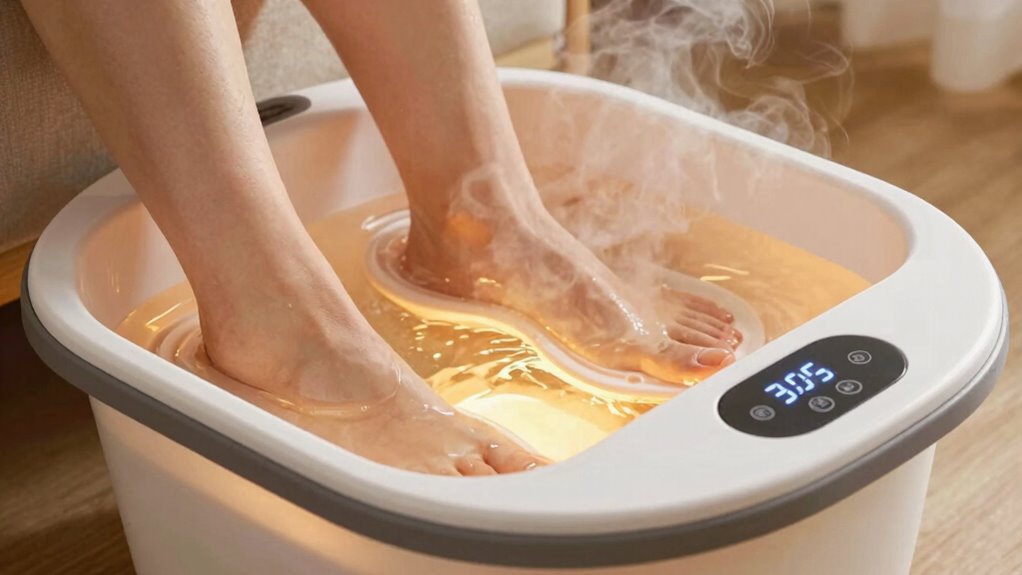
While a warm foot soak can feel relaxing, exposing your skin to excessive heat can lead to dryness. Overheating during a foot spa session compromises your skin’s moisture barrier, causing it to become dry and flaky. To guarantee foot spa safety, avoid setting the water temperature too high and limit soaking time. Incorporate moisturizing techniques, like applying a rich moisturizer immediately after your soak, to lock in hydration. You can also gently pat your feet dry instead of rubbing, which helps retain natural oils. Remember, maintaining the right temperature is key to preventing moisture loss. By managing heat levels and following proper moisturizing techniques, you can enjoy the benefits of a foot soak without risking dry, irritated skin.
Choosing a Foot Spa Device With Temperature Control Features
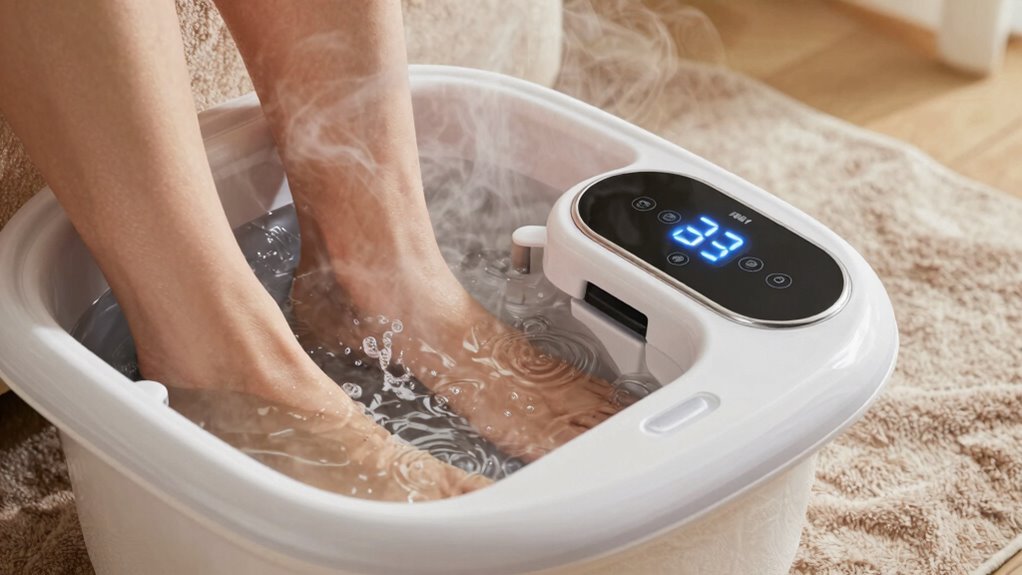
Choosing a foot spa device with temperature control features allows you to enjoy a relaxing soak without risking overheating your skin. Modern foot spa technology offers precise temperature regulation, giving you control over water warmth. When selecting a device, consider:
- Adjustable temperature settings to customize your experience
- Digital controls for accurate and easy adjustments
- Safety features like auto shut-off to prevent overheating
- Proper temperature management helps prevent your skin from becoming over-dried or damaged due to excessive heat. Proper temperature regulation is essential for maintaining skin hydration and preventing discomfort. Incorporating thermal safety features can further safeguard your skin from potential heat-related issues. These features ensure you can maintain a comfortable, consistent temperature, reducing the risk of dry skin caused by excessive heat. Paying attention to heat exposure levels can help you avoid skin irritation and preserve moisture. Additionally, understanding skin health principles can guide you in selecting the most suitable device for your needs. By prioritizing temperature regulation, you create a soothing environment that promotes relaxation without compromising your skin’s health. A device with these qualities helps you enjoy the benefits of heat therapy while protecting your skin from dryness.
Setting the Right Water Temperature to Prevent Dryness
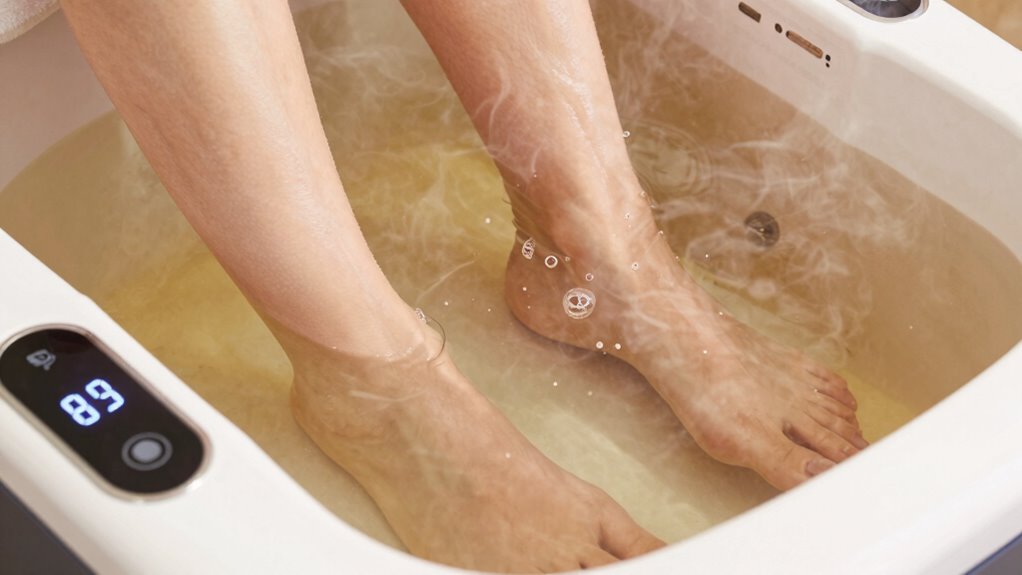
You should aim for a water temperature between 98°F and 104°F to avoid drying out your skin. Always test the water before placing your feet in to guarantee it’s comfortable and safe. Keeping the temperature within this range helps keep your skin hydrated and healthy. Additionally, maintaining the correct temperature can also enhance your overall relaxation and prevent potential burns or discomfort. Using a smart thermostat can help you monitor and maintain the ideal water temperature more accurately. Being aware of skin hydration levels can further assist in preventing dryness during your foot spa. Monitoring water temperature consistency ensures that your experience remains safe and enjoyable throughout. Maintaining consistent temperature control can significantly improve your overall foot spa experience and skin health.
Ideal Temperature Range
Setting the right water temperature is essential for a comfortable and safe foot spa experience. The ideal temperature range helps maintain skin hydration without causing dryness or burns. Generally, aim for:
- 100°F to 104°F (37°C to 40°C) — this range provides warmth that relaxes muscles and promotes circulation.
- Keep water below 110°F (43°C) to prevent excessive skin dehydration and irritation.
- Avoid exceeding 113°F (45°C), as higher temperatures can dry out your skin and cause discomfort.
- Using a thermometer or a temperature control device can help maintain consistent warmth throughout your session.
- Regularly checking the water temperature during your foot spa can help prevent accidental overheating and ensure ongoing comfort.
- Being aware of skin sensitivity can assist in adjusting the temperature to suit your individual needs, preventing irritation or dryness.
- Monitoring water temperature with proper tools can further enhance safety during your foot spa.
Sticking within this temperature range ensures your skin stays hydrated and healthy during your foot spa. Remember, water that’s too hot can strip moisture from skin, so always monitor the temperature for a safe, soothing experience.
Test Water Before Use
How can you verify the water is at a safe and comfortable temperature before immersing your feet? Always test the water temperature first by dipping your finger or wrist into the foot spa before stepping in. This simple step helps you avoid water that’s too hot, which can cause skin dryness or burns. Aim for a water temperature that feels warm but not scalding, usually between 98°F and 104°F. Keep in mind that water that’s too hot can strip moisture from your skin, leading to dryness and irritation. Adjust the temperature as needed and test again if you add hot water. Regularly checking the water temperature and maintaining proper scent balance can enhance your relaxation and prevent skin dryness or discomfort. Additionally, be mindful of the skin’s sensitivity to ensure the heat level remains comfortable throughout your foot soak. Incorporating a temperature monitor can help you keep the water at an ideal level and avoid overheating. Being aware of proper hydration can also help maintain healthy skin after your foot spa session.
Limiting Your Foot Soak Duration for Moisturized Skin
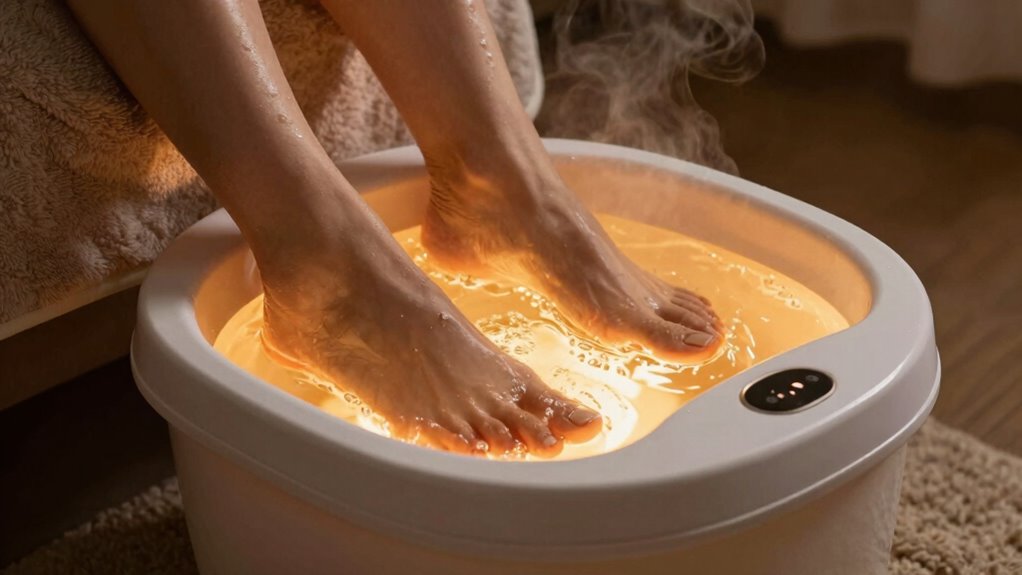
To keep your skin moisturized, it’s important to stick to an ideal soak time. Pay attention to your skin’s signals—if it feels tight or starts to peel, it’s time to end the soak. Limiting your session helps maintain healthy, hydrated skin after every foot spa. Incorporating moisture retention into your foot spa routine can also enhance your overall wellness experience. To ensure safety, avoid exposing your skin to excessive heat, which can lead to skin irritation or burns. Understanding individual skin sensitivity can help you customize your soak duration for optimal results.
Optimal Soak Time
Limiting your foot soak time is essential to maintaining moisturized and healthy skin. To achieve this, pay attention to the ideal foot soak duration, typically around 15-20 minutes. Proper temperature regulation is equally important; keep the water warm but not hot to prevent drying out your skin. Here are some tips to maximize your soak:
- Stick to a 15-20 minute duration to avoid overexposure.
- Maintain water temperature between 100°F and 110°F for comfort and skin safety.
- Use a timer to ensure you don’t exceed the recommended soak time, preserving moisture and preventing dryness.
Recognize Skin Signals
Have you noticed your skin feeling tight, dry, or itchy after soaking your feet? These signals mean it’s time to stop and prevent over-drying your skin. Pay attention to how your skin responds during the foot soak—if it starts feeling uncomfortable, reduce the duration or temperature. Recognize signs that your skin is losing moisture, like flaking or redness, and adjust your routine accordingly. When you incorporate a foot massage afterward, it helps improve circulation and keeps your skin hydrated. Proper nail care is also essential; avoid soaking too long to prevent softening nails or skin around the nails, which can lead to issues. Listening to these signals ensures your foot spa experience remains relaxing and leaves your skin moisturized rather than damaged.
Using Hydrating Products Before and After Your Foot Spa
Using hydrating products before and after your foot spa can make a significant difference in the overall experience and results. Applying hydrating serums beforehand helps lock in moisture, ensuring your skin stays soft and supple. After your spa session, a nourishing foot mask boosts hydration and promotes healing. To maximize benefits, consider these steps:
- Use a lightweight hydrating serum before soaking to prepare your skin.
- Limit foot mask frequency to 2-3 times per week to prevent over-hydration.
- Follow up with a rich moisturizer to seal in moisture and maintain softness.
Incorporating these practices enhances skin health, prevents dryness, and keeps your feet feeling smooth. Hydrating products are essential for balancing heat use and preventing over-drying during your foot spa routine.
Why Warm Water Is Better Than Hot for Relaxing Your Feet
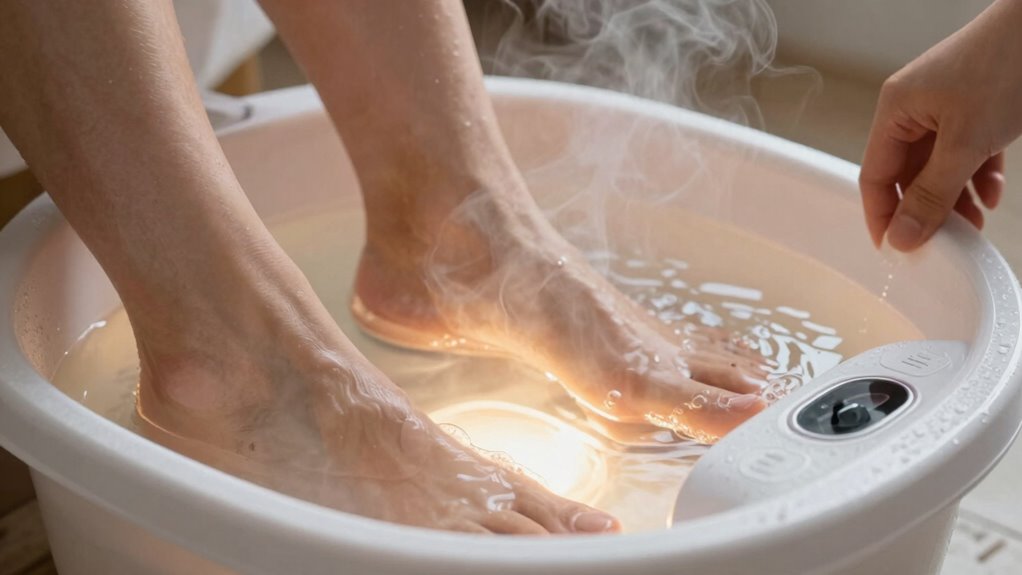
Warm water is ideal for relaxing your feet because it effectively soothes muscles and promotes blood circulation without causing discomfort. Hot water can strip moisture from your skin, leading to dryness and irritation, especially after footwear choices that trap sweat. Using warm water helps loosen tight muscles and enhances foot massage techniques, making your routine more effective. It’s gentle enough to prevent over-drying while still providing relief. Consider this table for a quick comparison:
| Aspect | Warm Water | Hot Water |
|---|---|---|
| Comfort Level | More relaxing, less harsh | May cause discomfort |
| Skin Moisture | Preserves hydration | Can dry out skin |
| Circulation Boost | Promotes healthy blood flow | Excessive heat may impair flow |
| Footwear Impact | Less likely to irritate skin | May worsen dryness or irritation |
Signs Your Feet Are Over-Dried and How to Adjust Your Soaking Routine
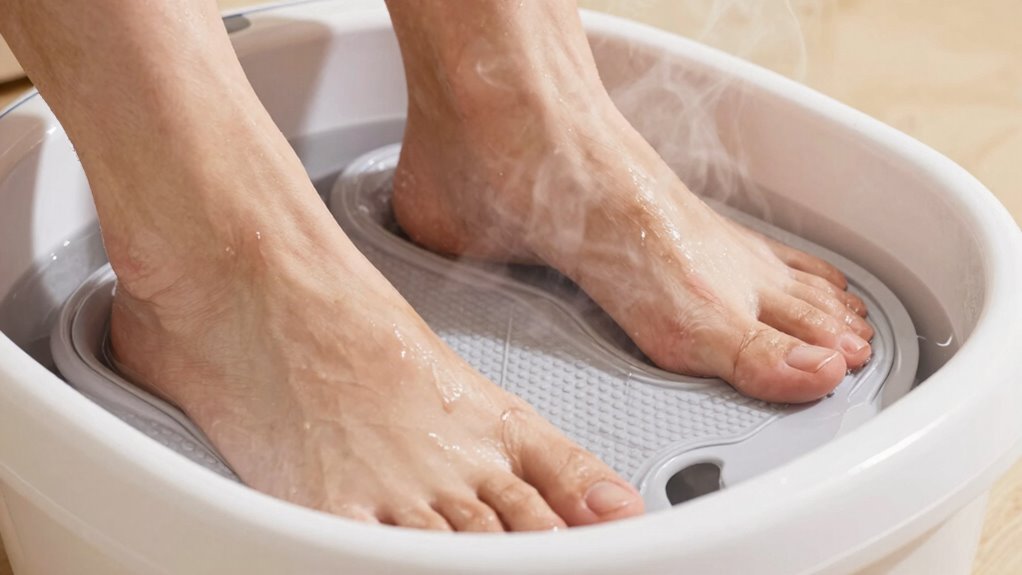
When your feet start feeling dry, itchy, or cracked after soaking, it’s a clear sign they’ve been over-dried. You might also notice increased foot odor or peeling skin. To prevent this, watch for these signs:
- Excessive flakiness or peeling, indicating over-drying and potential need for moisturizing.
- Persistent foot odor, which can worsen if skin becomes too dry and cracks form.
- Cracks or fissures that cause discomfort and invite bacteria.
Adjust your routine by shortening soak times, lowering the water temperature, and avoiding harsh soaps. Incorporate gentle foot peels sparingly, and always follow up with a moisturizer. This helps keep your skin balanced, preventing over-drying while still enjoying the benefits of your foot spa.
Tips for Keeping Your Feet Hydrated After a Foot Spa

After soaking your feet, it’s common for the skin to feel dry or tight, especially if you’ve been soaking for too long or at high temperatures. To keep your feet hydrated, start by applying a quality foot moisturizer immediately after drying off. This helps lock in moisture and prevents dryness. Incorporate a gentle foot massage while applying the moisturizer to boost blood circulation and enhance absorption. Focus on areas prone to dryness, such as heels and soles. Avoid harsh soaps or hot water during the process, as they can strip natural oils. Regular moisturizing and a relaxing foot massage will maintain hydration, leaving your feet soft, smooth, and refreshed after your foot spa session.
Troubleshooting Skin Dryness Caused by Foot Spa Heat

Exposing your feet to excessively hot water during a foot spa can quickly lead to skin dryness and irritation. To troubleshoot, consider these steps:
- Reduce the water temperature to prevent over-drying, while still enjoying the benefits of reflexology techniques.
- Use a nourishing foot mask with hydrating ingredients to restore moisture and maximize foot mask benefits.
- Limit spa sessions, especially if your skin shows signs of dryness, and incorporate gentle exfoliation to remove dead skin without stripping natural oils.
If skin dryness persists, keep your feet moisturized daily and avoid harsh soaps. Proper heat management guarantees you enjoy the relaxing benefits of foot spa devices without sacrificing skin health. Remember, balancing heat and hydration is key to healthy, soft feet.
Frequently Asked Questions
Can I Use Essential Oils in My Foot Spa Without Risking Dryness?
Yes, you can use essential oils in your foot spa without risking dryness if you follow essential oil safety guidelines. Always dilute the oils properly and stick to recommended amounts. To maintain skin hydration, add a moisturizing agent like a carrier oil or a few drops of aloe vera. Remember, balancing heat and moisture is key, so don’t overheat the water and keep skin hydration techniques in mind during your relaxing foot soak.
Are There Specific Ingredients to Look for in Hydrating Foot Creams?
You should look for foot creams with hydrating ingredients like shea butter, glycerin, or hyaluronic acid. Avoid ingredients to avoid that can dry out your skin, such as alcohol or artificial fragrances. Opt for fragrance-free options to minimize irritation and dryness. These ingredients help lock in moisture and keep your skin soft, especially after using heat in your foot spa, ensuring your skin stays healthy and hydrated.
How Often Should I Give My Feet a Moisturizing Treatment After Spa Use?
You should moisturize your feet daily after spa use, especially if your skin feels dry or cracked. Incorporate a consistent moisturizing frequency into your foot care routine to keep skin soft and healthy. After each spa session, apply a hydrating foot cream to lock in hydration and prevent over-drying. This simple step helps maintain your foot health and ensures your skin stays smooth and nourished over time.
Is It Safe to Add Bath Salts to My Foot Soak for Hydration?
Think of your foot soak as a delicate dance. Adding foot soak salts can enhance your experience, but only if you choose the right move. When considering bath additive safety, verify the salts are specifically designed for foot soaks. Not all bath salts are safe or effective, so check labels carefully. If you’re cautious, you’ll enjoy a hydrating soak without risking dryness or irritation, making your foot spa truly rewarding.
Can Wearing Socks After a Foot Spa Help Prevent Skin Dryness?
Wearing socks after a foot spa definitely helps prevent skin dryness by trapping heat and moisture. The sock insulation keeps your skin warm, which promotes better moisture retention and prevents it from drying out too quickly. Make sure to choose soft, breathable socks, and apply a moisturizer before putting them on. This simple step seals in hydration, ensuring your skin stays soft, smooth, and well-hydrated after your relaxing foot soak.
Conclusion
To keep your feet soft and healthy, think of heat as a gentle breeze rather than a blazing fire. By choosing the right temperature, limiting soak time, and using hydrating products, you can enjoy the soothing benefits without drying out your skin. Remember, moderation is the key to a spa experience that leaves your feet feeling pampered, not parched. Treat your feet with care, and they’ll reward you with lasting comfort and hydration.