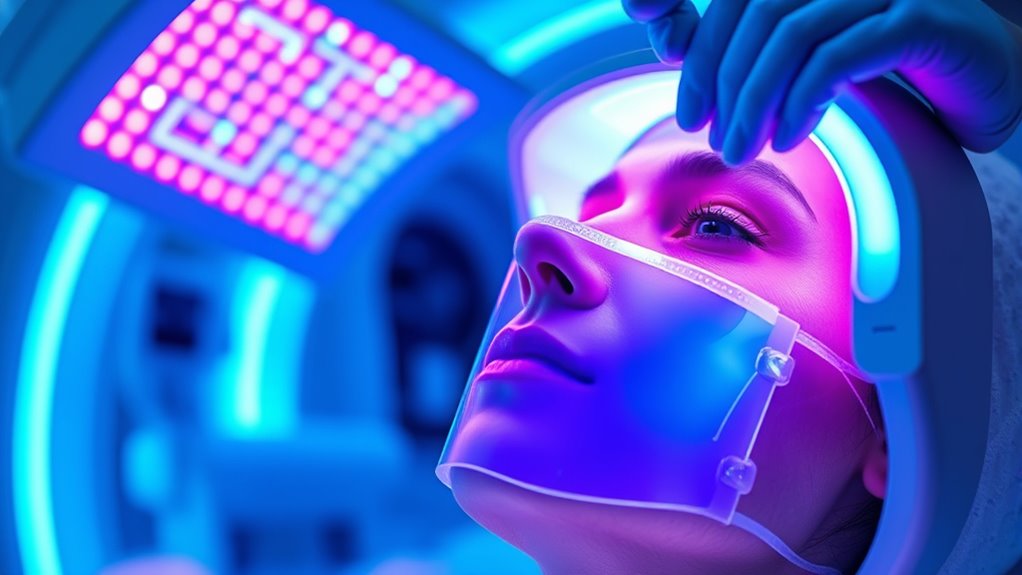

Photodynamic therapy (PDT) uses a special photosensitizing agent activated by specific light wavelengths to target deep skin concerns like acne and precancerous lesions, often causing temporary redness and discomfort. LED therapy, on the other hand, employs light-emitting diodes to gently promote healing, reduce inflammation, and improve skin tone with minimal side effects and no downtime. Understanding how each works helps you choose the best option for your skin goals—learn more to find out which suits you best.
Key Takeaways
- PDT uses a photosensitizing agent activated by specific light wavelengths to target deep skin issues, offering more aggressive treatment.
- LED therapy employs light-emitting diodes to stimulate skin healing and reduce inflammation gently, with minimal side effects.
- PDT provides faster, more dramatic results for conditions like acne and precancerous lesions, while LED offers gradual, subtle improvements.
- PDT may cause redness and downtime due to its intensity; LED therapy is safe during and after treatments with no recovery needed.
- Choosing between PDT and LED depends on skin concern severity, sensitivity, and desired outcomes, best determined through professional consultation.

When it comes to skincare treatments that target skin concerns like acne, aging, or inflammation, you might wonder how photodynamic therapy (PDT) compares to LED therapy. Both treatments are popular non-invasive options, but they operate through differing mechanisms, which influences their treatment efficacy and suitability for various skin issues. Understanding how each works can help you make an informed decision about which treatment aligns best with your skincare goals.
Photodynamic therapy involves applying a photosensitizing agent to your skin, which is then activated by specific wavelengths of light. This activation produces reactive oxygen species that target damaged cells, bacteria, or abnormal tissue. Because of this process, PDT is often more aggressive and precise, making it effective for conditions like acne, precancerous lesions, or deep-seated skin concerns. Its mechanism allows it to considerably reduce bacteria, promote cell turnover, and stimulate collagen production, leading to noticeable improvements in skin texture and appearance. However, due to its intense action, PDT may require some downtime and can cause temporary redness or discomfort. Additionally, the types of light used in PDT are selected for their specific interactions with targeted tissues, enhancing its effectiveness for particular conditions.
Photodynamic therapy is a precise, aggressive treatment that reduces bacteria and stimulates collagen for visible skin improvements.
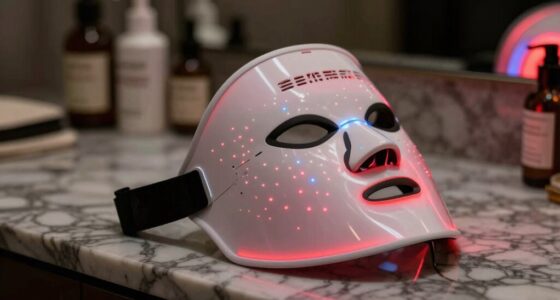
In contrast, LED therapy uses light-emitting diodes to deliver specific wavelengths of light directly to your skin without the need for any photosensitizing agents. The light penetrates the skin at different depths, depending on the wavelength, and interacts with your skin cells to promote healing and reduce inflammation. Because it doesn’t involve any chemicals or intense energy, LED therapy is generally gentler and safer for sensitive skin. Its mechanism encourages increased blood flow, stimulates fibroblasts, and enhances cellular repair, which can improve skin tone, reduce fine lines, and calm irritated skin. While the treatment efficacy of LED therapy is often more subtle and gradual compared to PDT, many users appreciate its minimal side effects and comfort.
The differing mechanisms of PDT and LED therapy mean their effectiveness varies depending on your specific skin concern. PDT tends to deliver more dramatic results for stubborn issues like acne or precancerous cells but may involve some recovery time. LED therapy offers a more soothing approach, making it suitable for ongoing skin maintenance, redness, or inflammation. Ultimately, your choice should consider the severity of your skin concern, your skin sensitivity, and the results you’re aiming for. Consulting with a skincare professional can help you determine which treatment’s mechanism and efficacy are best aligned with your needs.
Frequently Asked Questions
How Long Does Each Therapy Session Typically Last?
A typical session duration for photodynamic therapy usually lasts around 30 to 60 minutes, depending on your specific treatment plan. LED therapy sessions are generally shorter, often taking about 20 to 30 minutes. The treatment length varies based on your skin condition and goals. You’ll find that photodynamic therapy tends to be more intensive, while LED therapy offers a quicker, more relaxed experience.
Are There Any Age Restrictions for These Treatments?
Age restrictions for photodynamic therapy and LED therapy vary based on your skin condition and treatment goals. Generally, these treatments are suitable for adults, but minors may need parental consent and medical approval. Your healthcare provider assesses your age and overall health to determine treatment suitability. If you’re considering these therapies, consult with a specialist to confirm they’re appropriate for your age and skin needs, ensuring safe and effective results.
Can These Therapies Be Combined With Other Skincare Procedures?
Yes, you can combine photodynamic therapy and LED therapy with other skincare procedures. These treatments often offer excellent combination benefits, enhancing overall results. However, treatment compatibility depends on your skin type and specific conditions. Always consult your skincare professional to create a tailored plan that safely integrates multiple procedures, ensuring you get the most effective and safe outcomes without adverse effects.
What Are the Potential Side Effects or Risks Involved?
Imagine your skin as a delicate canvas, where safety concerns and long-term effects come into play. You might experience redness, swelling, or sensitivity after treatments, but these typically fade quickly. While risks are minimal when performed by professionals, there’s a chance of uneven skin tone or scarring. Always weigh these potential side effects, and consult with your specialist to guarantee your skin’s health and safety are prioritized for lasting, beautiful results.
How Soon Can Results Be Expected After Treatment?
You can typically expect to see visible improvements within a few days to a week after treatment. The treatment timeline varies depending on your skin type and condition, but most people notice some changes soon after. For ideal results, multiple sessions may be necessary. Keep in mind that patience is key, as full benefits often develop gradually over several weeks, revealing clearer, healthier skin.
Conclusion
Ultimately, understanding the difference between photodynamic therapy and LED therapy helps you make informed choices for your skincare. While both treatments use light to improve your skin, they serve different purposes and have unique benefits. Remember, “a little knowledge is a dangerous thing,” so research thoroughly and consult with a professional. Whichever you choose, guarantee it aligns with your skin goals, and you’ll be well on your way to healthier, happier skin.